

Three Years of Grief: The October 7 Anniversary
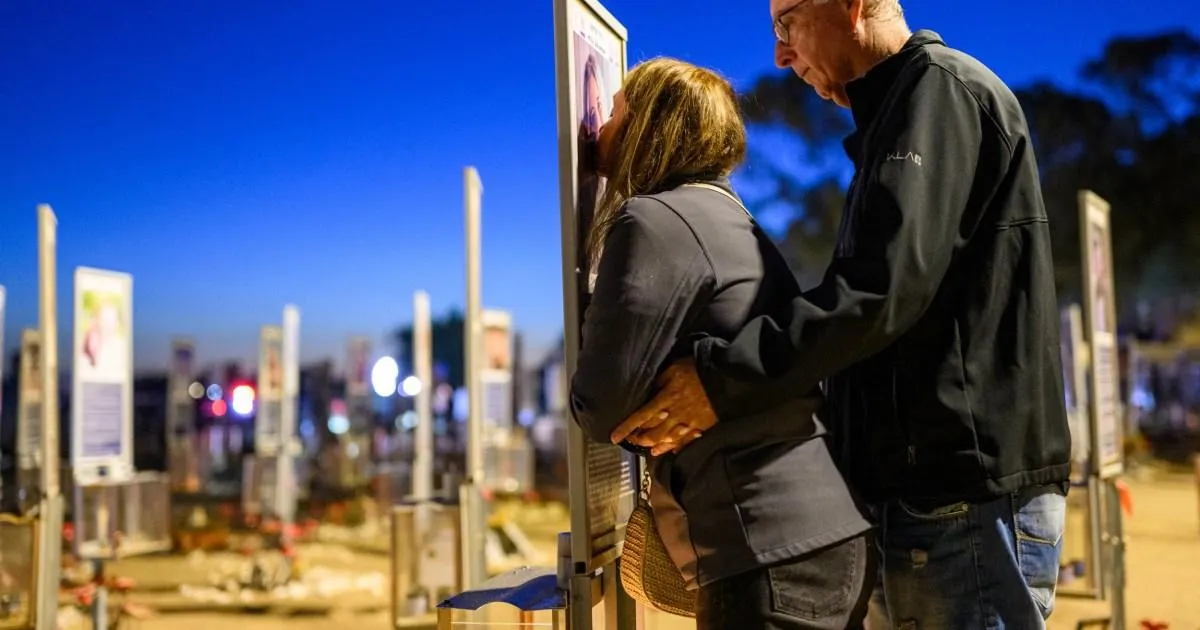
Today, the air in Israel carries a weight that has become tragically familiar. Thousands of families and friends have gathered across the country, their faces etched with sorrow, to mark the third anniversary of the October 7 attacks—a day that fundamentally altered the landscape of the region and left wounds that time has done little to heal. The anniversary brings with it a flood of memories, as communities come together in collective mourning, their personal grief intertwining with national tragedy. For many, the day begins not with sunrise but with the haunting recollection of that fateful morning, when the world as they knew it shattered into a thousand fragments. The ceremonies, the tears, the silent embraces—all serve as poignant reminders that for those who lost loved ones, every day since has been a journey through grief that shows no sign of diminishing.
It has now been three years since thousands of Hamas-led militants breached the border into southern Israel following a devastating barrage of rockets that lit up the sky in the predawn darkness. What followed was a coordinated assault of unimaginable brutality, as armed fighters stormed army bases, overran farming communities, and descended upon an outdoor music festival that had become synonymous with joy and freedom. The militants murdered approximately 1,200 Israelis, the vast majority of them civilians—women, children, elders, young people with their entire futures ahead of them—while seizing 251 others as hostages, plunging families into a nightmare of uncertainty that continues to this day. The scale of the attack, its coordination, and its sheer savagery shocked the world and left a nation reeling from a blow unlike anything it had experienced in decades.
At precisely 6:29 in the morning, the exact moment the attack had begun three years earlier, the music—the same track that festival revellers had been listening to when death descended from the sky—stopped abruptly, replaced by a profound moment of silence that echoed across the nation. The symbolism was deliberate and powerful: the music that represented life, celebration, and freedom had been forever silenced by the chaos of war. Additional moments of silence and memorial events were scheduled throughout the day, each one providing another opportunity for a grieving nation to pause and remember those who were lost. In Tel Aviv, an installation depicting bodies appeared on the beach this morning, a stark and visceral artistic statement that transformed the city’s familiar shoreline into a memorial site, forcing passersby to confront the human cost of the conflict in ways that statistics and news reports cannot convey.
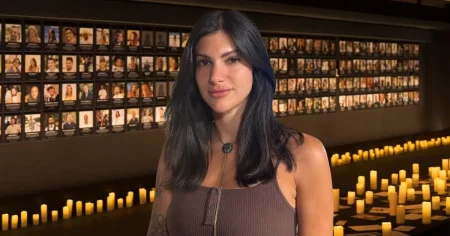
Israeli hostage May Hayat, who survived the ordeal, shared her harrowing account of how October 7 unfolded, describing the confusion and terror that accompanied the sudden eruption of violence. She recalled the surreal disconnect between the joyful music still playing and the chaos unfolding around her, as people began running in every direction without explanation. “We suddenly saw people running, but the music was still playing,” she said, her words capturing the dissonance of that moment. “We didn’t understand what was happening until we saw the rockets in the sky.” Her story represents one of countless personal narratives, each a thread in the larger tapestry of loss and survival that defines this anniversary. Each story, each memory, each tear shed today represents a life forever changed, a family forever incomplete, a community forever scarred.
This year’s anniversary arrives with an added layer of tension and controversy, as revelations have emerged that Prime Minister Benjamin Netanyahu reportedly received warnings before the attacks from both the United Arab Emirates and Egypt, yet failed to act on them. Netanyahu has dismissed the report as an “absolute lie,” but the damage to his credibility has already been done. The Prime Minister, already facing significant criticism for his handling of the ongoing conflict from within his own country, now faces the prospect of elections later this month with questions swirling about his judgment and leadership during one of the most consequential periods in Israel’s history. The political turmoil adds another dimension to an already painful anniversary, raising questions about accountability, responsibility, and the lessons that can be learned from tragedy, even as the nation struggles to process its grief.
Meanwhile, across the world, hundreds of pro-Palestinian protests have been planned to draw attention to the devastating toll the conflict has taken on the Palestinian people, with an estimated 74,000 Palestinians killed in the ensuing violence—most of them civilians, including women and children. Wael al-Dahdouh, Al Jazeera’s Gaza Bureau Chief, spoke to the ongoing suffering, painting a picture of a crisis that has not truly ceased, even as the intensity of the fighting has shifted. “The only thing that’s really changed is that the large-scale killings have decreased, but they have not stopped,” he noted, his words capturing the ongoing nature of the tragedy. In London, a pro-Palestinian student march has been organized under strict conditions imposed by the Metropolitan Police, who have directed participants to gather at Lincoln’s Inn Fields before proceeding to Russell Square, with the rally required to disperse by 2 p.m. Deputy Assistant Commissioner James Harman acknowledged that the date would be one of “mourning and reflection” for many people in London, while also recognizing the deep concerns within Jewish communities about the potential for disruption and hostility.
As we reflect on this solemn anniversary, we must recognize that behind the political debates, the security assessments, and the diplomatic maneuverings are real human beings whose lives have been irrevocably altered. There is no single narrative, no simple truth, no easy resolution to the complex and painful reality that has unfolded over these three years. There are only people—Israelis and Palestinians alike—who have lost parents, children, siblings, and friends; who have been displaced from their homes; who have witnessed horrors that will never fade from memory; and who continue to wonder whether peace and normalcy will ever be possible. The ripple effects of that single October morning have extended far beyond the borders of Israel and Gaza, touching the lives of millions who watched from afar, who felt compelled to take sides, who marched in solidarity with one community or another, who struggled to make sense of a conflict that seemed to defy understanding.
The human cost of this conflict cannot be measured in statistics alone, for each number represents a person with hopes and dreams, a story that began long before the violence and should have continued long after. It is in the faces of the children who have grown up surrounded by conflict, learning to fear the sky rather than marvel at it. It is in the silence of parents who will never hear their children’s voices again, and in the emptiness of chairs at family gatherings where someone should be sitting. It is in the newsrooms where journalists struggle to document suffering, in the hospitals where medical staff work under impossible conditions, in the schools where teachers try to create some semblance of normalcy for traumatized students. The human spirit, remarkably resilient though it may be, can only absorb so much pain and loss before it begins to fracture, and communities across the region are feeling those fractures deepen with each passing day.
In the midst of grief, though, there are also stories of resilience, courage, and humanity that deserve recognition. There are survivors who have found the strength to rebuild their lives, who have turned their pain into advocacy for peace, who have reached across the divide to recognize the shared humanity in those they have been taught to see as enemies. There are volunteers working tirelessly to provide aid to those in need, regardless of their nationality or faith. There are ordinary people performing extraordinary acts of kindness in the shadow of extraordinary cruelty. These stories do not diminish the tragedy, but they do remind us that the capacity for love and compassion remains, even in the darkest of times. They offer a glimmer of hope that someday, somehow, this cycle of violence and retribution might be broken, and that future generations might know a different reality than the one we have bequeathed to them.
As the world marks this anniversary, we must ask ourselves what we have learned and what we have yet to understand. The conflict has exposed the limits of military solutions, the fragility of peace agreements, the dangers of dehumanization, and the profound costs of political failure. It has forced us to confront difficult questions about identity, security, justice, and the meaning of liberation. It has demonstrated that trauma transcends borders, that grief knows no nationality, and that the cycle of violence ultimately serves no one. The conditions imposed on the London protest, the safety measures in public spaces, the divisions in communities around the world—all reflect a global society deeply polarized by events that continue to reverberate. Yet even in this polarization, perhaps there is an opportunity for genuine dialogue, for listening across differences, for recognizing that the legitimate aspirations of all people in the region deserve to be heard and addressed.
For now, however, the focus must remain on the memory of those who were lost and the families who continue to grieve. Three years is both a long time and a short time in the journey of bereavement—long enough for the initial shock to fade, but not nearly long enough for the pain to heal. The ceremonies, the moments of silence, the installations, the tears—all are acts of remembrance that honor the dead and comfort the living. They affirm that those who were killed will not be forgotten, that their lives mattered, that the injustice of their deaths will not be ignored. They also serve as a somber reminder that the promise of “never again” remains unfulfilled, that the unresolved issues that led to this tragedy remain unresolved, and that the work of building a more just and peaceful future cannot wait. We owe it to those we have lost, and to those who continue to suffer, to keep that work alive, even as we pause today to mourn and remember and reflect.