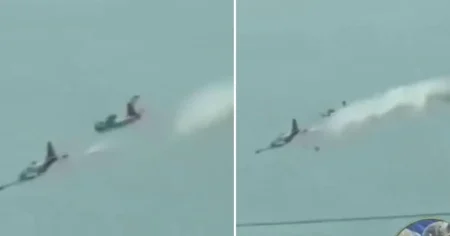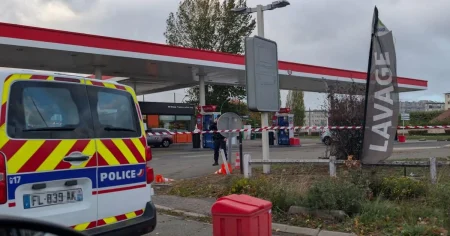



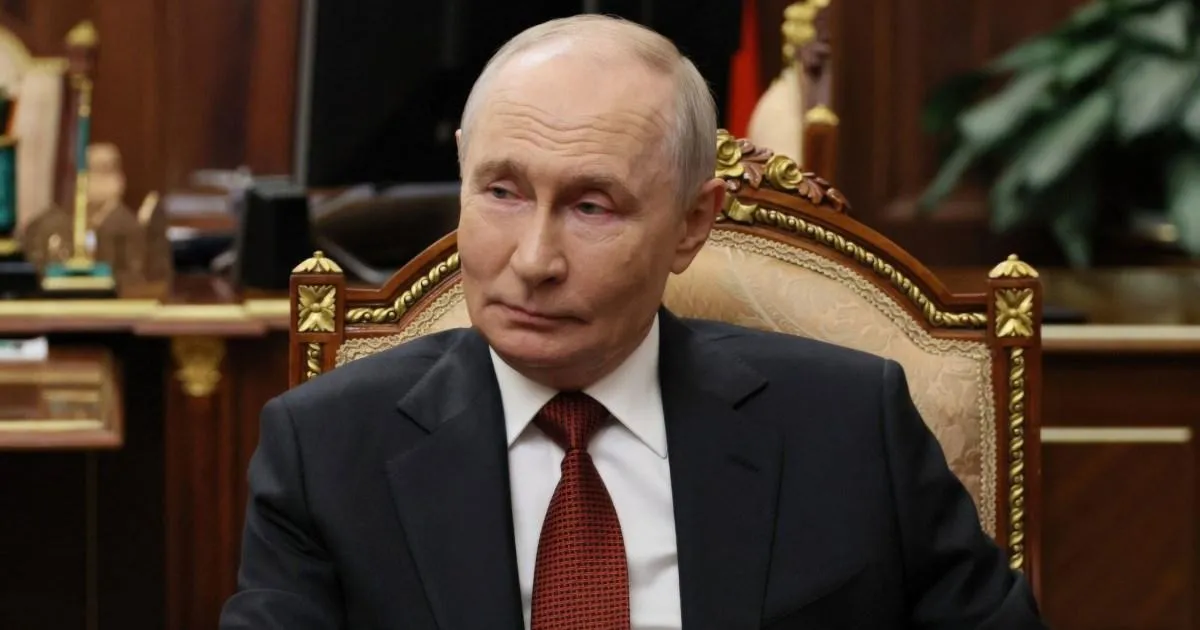
Amid the quiet hum of everyday European life, a series of violent and unexplained events has begun to punctuate the news cycle, leaving a trail of scorched earth and nervous questions in its wake. Throughout this month, explosions and fires have erupted at major arms manufacturing plants across the continent, transforming industrial sites into scenes of chaos and smoke. While the immediate damage is measured in destroyed property and disrupted supply chains, the true target of these attacks appears to be something far more abstract: the unity and resolve of the NATO alliance itself. These incidents are not being viewed as random industrial accidents but as the visible, fiery fingerprints of a shadowy campaign, widely suspected to be orchestrated by the Kremlin. The strategy, according to Western intelligence sources, is a calculated act of geopolitical testing, designed to probe the alliance’s defenses and sow discord without triggering a full-scale military response. It is a new kind of warfare, fought not on a traditional battlefield, but within the vulnerable infrastructure of sovereign nations, using sabotage as its primary weapon and fear as its intended objective.
The most recent incident in this suspected campaign unfolded in the Baltics, where national security services detained three citizens in connection with a brazen act of arson. The target was a facility belonging to Milrem Robotics, a prominent Estonian-based drone manufacturer that has been a key supplier of military technology to Ukraine. The fire, which broke out in mid-August, gutted part of the building, an act of destruction that Estonian Prime Minister Kristen Michal has stated is being investigated as a potential act of sabotage with suspected Russian involvement. This specific attack underscores the clear nexus between the commercial entities supporting Ukraine’s war effort and the retaliation they now face. These companies, which range from large conglomerates to specialized tech firms, have found themselves on the front lines of a covert conflict. By striking at their physical infrastructure, the perpetrators are not just attempting to slow production; they are sending a chilling message to any entity that chooses to support Ukraine, aiming to deter future assistance through the threat of arson, explosion, and economic ruin.
This latest event is by no means an isolated occurrence, but rather a piece of a larger, more disturbing mosaic. Since the onset of Russia’s full-scale invasion of Ukraine in February 2022, the European continent has seen a disturbing uptick in unexplained fires and explosions at various sites. This month alone, major blasts have been reported at significant arms manufacturers in both Bulgaria and Italy. In Bulgaria, a powerful explosion rocked a plant owned by EMCO, a major private arms producer known for manufacturing 155mm artillery ammunition for Ukraine, while in Italy, a fire broke out at a munitions factory near Rome, with the cause initially reported as an unexplained blaze in a gunpowder processing unit. While local officials in both countries have been cautious in assigning blame, the simultaneous timing and the nature of the targets have led many analysts to connect the dots, pointing to a coordinated campaign of disruption. A senior NATO official has publicly stated that Russia has “accelerated its destabilisation campaigns” against member states, using a combination of cyberattacks, assassination attempts, and physical sabotage to exert pressure and achieve strategic objectives without engaging in direct, conventional warfare.
The modus operandi of this alleged campaign is particularly insidious, as it often relies on the use of proxies and unwitting assets. Western intelligence sources have claimed that the Kremlin is increasingly outsourcing these destructive tasks to local criminal gangs, providing them with payment and plausible deniability. This “hybrid war” approach is designed to be deniable, making it difficult to definitively prove state sponsorship and complicating any official response. It creates a grey zone of conflict, where attacks happen in the open but responsibility remains murky, allowing the aggressor to achieve its goals of creating tension and increasing the cost of supporting Ukraine, all while maintaining a veneer of innocence. The strategy is to make the support for Ukraine feel perilous, to foster an atmosphere of anxiety and discord among NATO allies, and to test the limits of how far they can push before a decisive, unified response is triggered. It’s a game of geopolitical chess, where pieces are sacrificed as proxies and the board is the European industrial landscape.
In the face of these provocations, the North Atlantic Treaty Organization has been forced to recalibrate its own defensive posture. NATO Secretary General Mark Rutte has publicly condemned the suspected sabotage as “reckless and dangerous,” and has called for a response that is “clear, swift and decisive.” This rhetoric signals a growing recognition that conventional military deterrence alone is insufficient to counter the asymmetric threats posed by sabotage and hybrid warfare. The alliance is now strengthening its ability to monitor hostile activities, share intelligence, and protect critical infrastructure, acknowledging that the battle is no longer solely on the front lines in Ukraine but also within the industrial heartlands of its own member states. The challenge lies in crafting a response that is firm enough to deter further aggression but measured enough to avoid an escalation that could trigger Article 5, the alliance’s mutual defense clause, and plunge the continent into a larger, more catastrophic conflict.
Meanwhile, as Europe grapples with these fiery attacks on its own soil, Ukraine marked its Independence Day with a resolute show of force, turning the tables and demonstrating its own capability to strike deep into Russian territory. Ukrainian forces launched successful overnight strikes against three logistics centers belonging to Ozon, a massive Russian online marketplace often dubbed the “Amazon of Russia,” which Ukraine claims supports Moscow’s military. The attacks, which engulfed the warehouses in flames, send a clear message of retaliation and resilience. This action serves as a powerful counter-narrative, highlighting that while Russia may wage a covert war of sabotage across Europe, Ukraine is willing and able to bring the conflict directly to the heart of Russia’s commercial and logistical infrastructure. It’s a stark reminder that the war is a two-way street, with both sides employing long-range strikes and asymmetric tactics to disrupt the other’s economy and war effort.
Ultimately, these events paint a picture of a deeply unstable and dangerous geopolitical landscape, where the boundaries between war and peace, and between state and non-state actors, have become dangerously blurred. The fires burning at arms factories in Estonia, Bulgaria, and Italy are not just industrial accidents; they are the kindling of a larger proxy conflict, a testing of NATO’s resolve that could have profound consequences for global security. The strategy is to erode public support for Ukraine by creating instability and fear within European countries, making the cost of support feel immediate and personal. As the alliance works to strengthen its defenses and as Ukraine demonstrates its own capacity for long-range retaliation, the world watches with bated breath. The question that lingers is not whether these attacks will stop, but how far both sides are willing to go in this escalating and dangerous game of cat-and-mouse, where the stakes are nothing less than the future of the post-Cold War security order.