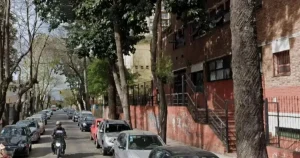


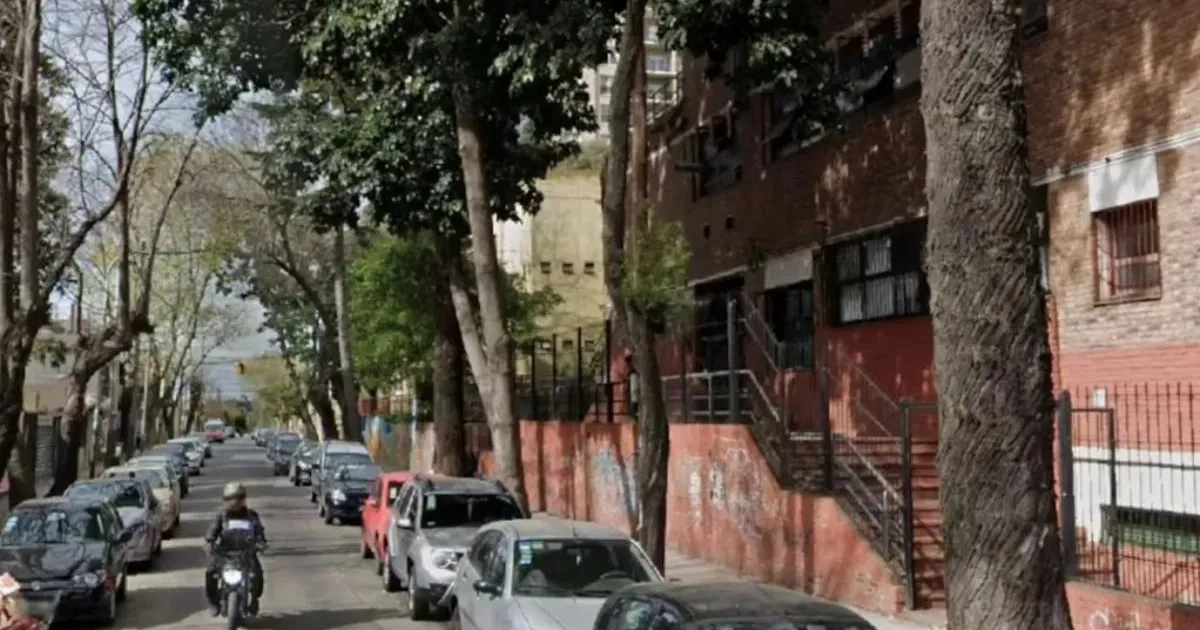
This is a tragedy that no parent should ever have to live through, and yet the details are almost too ordinary to believe. It began as an everyday morning in Quilmes, a suburb on the outskirts of Buenos Aires, where a young mother named Guiliana Gomez was doing something countless mothers do each day. She was walking her older son to nursery school, and in her arms she carried her twelve-day-old baby, Lucas. The morning was probably unremarkable: perhaps the sun was bright, perhaps the streets were busy, perhaps she was thinking about what she needed to do later, or simply focusing on getting her son to class on time. There was no reason to suspect that the walk would become a nightmare. But as she passed beneath a large avocado tree growing near the nursery entrance, one of its heavy fruits came loose and fell. Avocados, when they fall from a great height, are not soft; they are dense, heavy objects that gather momentum as they drop. This one weighed more than a kilogram and fell from a height of over thirty feet, striking the newborn directly on the head. Lucas began screaming immediately, and the chaos that followed was as confusing as it was terrifying. Parents nearby heard the cries and rushed over. Some began shouting for an ambulance. Guiliana, realising what had happened, felt her legs go weak and nearly fainted. A witness described holding the baby while his mother stood frozen in horror. The little boy was not bleeding, but he was writhing and crying, and the adults around him knew, in the pit of their stomachs, that something deep inside him had been broken. What should have been a safe, simple walk to school had turned, in a split second, into the worst moment of a mother’s life.
The emergency response did not make things better. It took twenty minutes for an ambulance to arrive, and for the frantic parents and traumatised mother, those were almost certainly the longest twenty minutes they had ever endured. Lucas was a newborn, small and vulnerable, and no one at the scene was equipped to treat a head injury of this kind. The witness later told reporters that Lucas wasn’t bleeding, but he writhed and suddenly started crying, and that was when his mother realised what had happened and almost fainted. When the ambulance finally arrived, the crew discovered that they did not have the right equipment to help such a tiny baby. Even in the best circumstances, a fractured skull in a twelve-day-old infant would have required immediate, specialised medical care. But the ambulance was not ready for this emergency. Lucas was eventually rushed to the hospital, where doctors operated on him, trying desperately to relieve the pressure on his brain and repair the damage caused by the blow. He was placed in intensive care, connected to monitors and machines, surrounded by the cold, sterile language of medicine that gives desperate parents hope even when little hope remains. His family waited, watched, and prayed. Perhaps they believed that his youth and strength would help him pull through. But the damage was too severe. Lucas suffered multiple skull fractures, and the force of that single falling fruit was more than his tiny body could survive. After days of struggling, with his parents beside him, the newborn died. The word “days” in a news report cannot convey what those days were like: the beeping of machines, the silence of doctors, the desperate hope in his mother’s eyes every time she looked at her son’s face. Lucas had been in the world for less than two weeks, and now he was gone.
What makes this tragedy even more painful is the fact that it was entirely preventable. The tree that killed Lucas had been a known danger for a long time. Ms Gomez said that local residents had been asking the council to prune the tree or cut it down since 2025. This was not a hidden hazard, or a sudden, unforeseeable accident that caught everyone by surprise. There had already been a complaint from a father who was knocked unconscious by a falling avocado from the same tree. Other children, she said, had nearly been hit as well. The nursery sits in a community where parents walk their children past that tree every day, and those parents could see the danger hanging over their heads. They complained. They warned the authorities. And nothing was done. In a public space where small children are constantly present, a tree with heavy fruit weighing more than a kilogram should have been managed responsibly. Pruning is not expensive, and removing a hazardous tree is not a difficult task. But the local council failed to act, despite being repeatedly told about the risk. And then, after Lucas died, the council came and cut the tree down “in secret,” according to his grieving mother. That detail is devastating. It suggests that the authorities understood, only after a child had died, that the tree was a danger. They removed it quickly, quietly, perhaps to avoid accountability, perhaps to prevent further scrutiny. But the damage was already done. A tree that should have been cut down or pruned long before had claimed a life, and the council’s belated action was a cruel reminder that the warnings had been ignored for so long that they had to become fatal to be taken seriously.
The mother’s grief is channelled into a demand for justice, and no one could blame her. “They didn’t come to prune the tree beforehand to prevent this,” Ms Gomez said. Her words are simple, but they carry the full weight of a parent who will spend the rest of her life wondering what might have been if only the officials had listened. She also spoke of the local government’s response to her loss, saying they referenced a psychologist to speak to her after her newborn’s death. It was a gesture that may have been intended to help, but it felt hollow. She said that no one else called her. No one followed up. No one offered any real consolation, any honest apology, or any acknowledgement that this could have been prevented. Instead, she was left with an empty promise of psychological support and the crushing burden of trying to make sense of a death that made no sense at all. “They’re going to have to take responsibility,” she insisted. That is not a statement of vengeance; it is a plea for accountability. She does not want her son’s death to be brushed aside as a freak accident. She wants the officials who ignored the complaints to look at what they failed to do. She wants them to understand that their inaction had consequences, and that those consequences now sit in the heart of a mother who should be waking up every morning to feed her baby, not talking to reporters about his death. The local prosecutor is investigating the tragedy, and perhaps that investigation will reveal exactly what went wrong. But any legal outcome will not bring Lucas back. It will not undo the moment when that avocado fell, or the twenty minutes of waiting for an ambulance, or the days of watching a tiny newborn struggle in a hospital bed.
There is something profoundly unsettling about how ordinary this tragedy is. A tree outside a nursery is a familiar sight. Avocado trees are common in many parts of the world, and their fruit is beloved by humans, not feared. But when a heavy fruit hangs above a place where children gather, it becomes a silent danger. The fact that parents had already been hurt, and that children had narrowly escaped before, makes this all the more chilling. The story of baby Lucas is not just a story about a freak accident; it is a story about the failure of public institutions to protect the most vulnerable members of the community. It is about how warnings are often ignored until it is too late, how a bureaucratic request can be lost in paperwork while a tree continues to grow and bear fruit, and how the people who are supposed to keep public spaces safe can become the very reason they are not. For the older brother who was being dropped off at nursery school that morning, the memory of that day will be permanently tied to the hole in his family’s life. He is too young to understand the full meaning of what happened, but he will grow up knowing that his little brother died while their mother was taking him to school. That is a burden no child should carry, and no parent should have to explain. The randomness of the tragedy makes it terrifying: if a twelve-day-old baby can be killed by a falling avocado in his mother’s arms, then nowhere seems truly safe. But the preventability of it makes it unbearable, because it did not have to happen. The tree was known to be dangerous. The complaints had been made. The accident was waiting to happen. And the only thing that was missing was someone doing their job.
Moving forward, the death of Lucas must serve as more than a headline, although no lesson will ever be enough to console his mother. It should be a reason for communities everywhere to look at the trees in their own neighbourhoods and ask whether they are safe. Are there schools, nurseries, playgrounds, or public walkways where heavy fruit hangs over the heads of children? Have residents filed complaints that went unanswered? Have local authorities acted before a tragedy occurred? These are not small questions; they are matters of life and death. The response to this tragedy also needs to be examined. The ambulance that arrived after twenty minutes did not have the right equipment to care for baby Lucas. In an emergency involving a newborn, every second counts, and having the correct tools available is not a luxury; it is a necessity. The local government tried to offer counselling, but no one followed up with the grieving mother. That too is a failure. A psychologist referral is not the same as support. Support means showing up, calling, listening, and accepting responsibility. Support means ensuring that the people harmed by institutional failures are not left to navigate their grief alone. Lucas was only twelve days old when his life was tragically cut short. He was just beginning to open his eyes to the world, just starting to be held, loved, and known by his family. He did not get the chance to grow up, to play with his older brother, to celebrate birthdays, or to learn what it means to be alive. But his death should not be forgotten. It should be remembered as a warning and a call to action. The council may have cut down the tree in secret, but the story cannot be hidden. The mother will not let it be hidden. She is demanding justice, not for revenge, but because her son deserved to live, and because every child who walks past a dangerous tree deserves to be protected. In the end, the most human thing we can do is to grieve with her, to hear her words, and to insist that no one should ever have to bury a newborn because of a piece of fruit and a government’s negligence. Baby Lucas may have lived for only twelve days, but his story, and the questions it raises, will last much longer.