

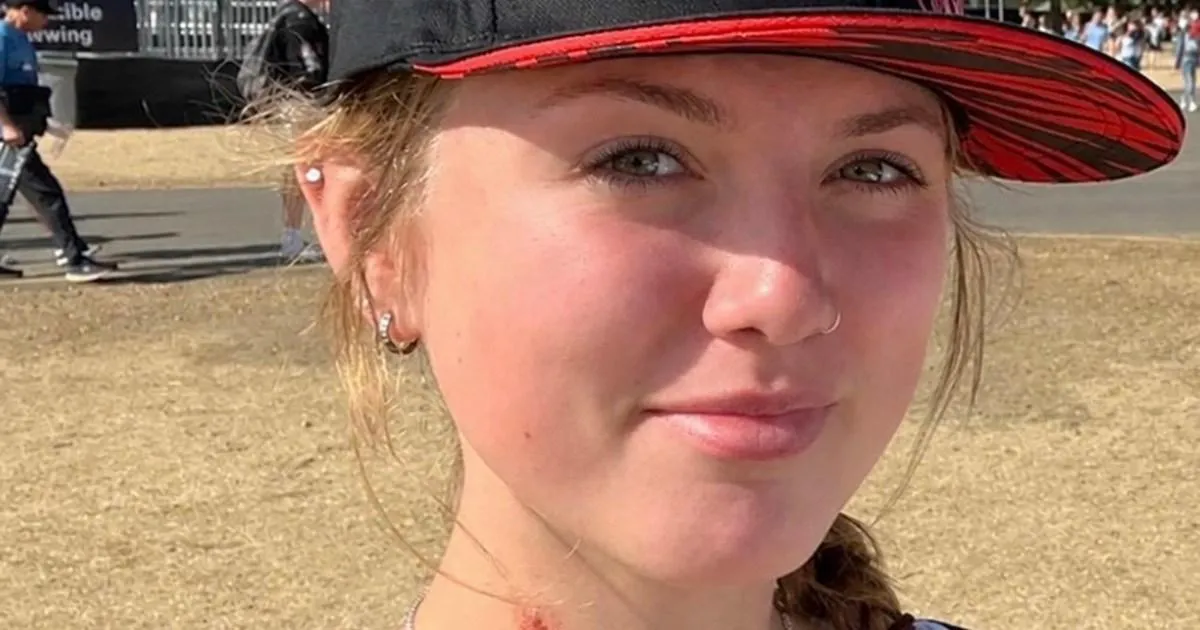
On a Sunday morning that began like any other in the quiet countryside of Suffolk, a peaceful road near the village of Little Stonham became the scene of a tragedy that would leave two families shattered and a community struggling to make sense of the loss. The East of England Ambulance Service alerted Suffolk Constabulary at 10.15am to reports of a serious collision on Debenham Road, a winding rural stretch where the usual traffic is likely to be local people going about their errands or perhaps those out for a weekend drive. A Peugeot carrying two teenagers and a Volkswagen had collided, and the early reports were grave. When emergency crews arrived, they found that one of the Peugeot’s occupants—a young man travelling as a passenger—had already died at the scene. The driver, 19-year-old Amelia Miller from Stowmarket, was seriously injured and was taken to Addenbrooke’s Hospital in Cambridge, one of the country’s leading trauma centres, where doctors worked to save her life. For several days, her family waited in hospital corridors, living through the nightmare that no family should ever have to confront. But on Thursday, they received the news they must have dreaded: Amelia had died of her injuries. Those in the Volkswagen, according to police, sustained minor injuries. Minor, however, is a word that only speaks to the body; it cannot measure the emotional shock of surviving a crash that killed two young people. What had started as an ordinary Sunday journey ended with emergency lights flashing on a quiet lane, with two young lives cut short, and with a grief that will remain long after the wreckage has been removed and the road reopened.
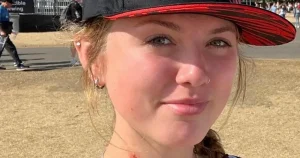
Amelia Miller was, in the words of the family who loved her, “full of life and energy” and such a “special person.” Those words are simple, but they carry the full weight of a life that cannot be reduced to a headline or a statistic. In their tribute, released after her death was confirmed, her family painted a portrait of a young woman who could never be contained by ordinary labels. She was a daughter, a sister, an aunty and a cousin. She had been a keen dancer in her younger years, moving with discipline and passion, but eventually her creative spirit found a new outlet: photography. She was someone who looked at the world through a lens and searched for moments worth keeping. She loved heavy metal and rock music, the loud and raw and untamed sound of it, yet she was also someone who could appreciate the occasional farming song. That seemingly unlikely combination—headbanger and countryside music lover—is precisely what made her so human and so memorable. She loved the freedom of having a car, that first real taste of independence that so many teenagers treasure. But her heart belonged to motorcycles. On her 125, she would ride through the countryside not just for the thrill of the road but in search of photographs. Her favourite subjects, her family said, were bikes and animals, and “often being goats.” It is a strange and wonderful detail: a young woman with a camera and a bike, stopping in a field to photograph a group of goats, finding beauty and humour in the ordinary world. That was Amelia. That is how she should be remembered—not as a victim, but as a person with quirks and passions, with a sharp eye and a free spirit.
Her family also revealed that school had not always been easy for her. Amelia struggled in the classroom, they said, yet she left with fantastic grades. That honesty is moving, because it speaks to the reality of so many young people who do not fit neatly into the school system. The classroom can be an unforgiving place for those who think differently, who need a different kind of environment, who find their talents are not measured by standard tests and rigid expectations. Amelia’s family did not hide any of this. Instead, they celebrated the way she overcame those struggles and achieved more than enough academically. More importantly, they remembered how she blossomed around adults in the workplace, where her sharp mind and quick wit could take centre stage. In a professional environment, Amelia found the space to be herself. She was sharp, funny, observant, and capable. She left an impression with everyone she met—a phrase that tells us she was not someone who passed quietly through life. She had a presence. She sparked conversations, challenged assumptions, made people laugh, and made them remember. There is something deeply unjust in knowing that a person like that, with so much energy and so much potential, could be taken away in an instant on a country road. She did not get the chance to finish her story, to become the photographer she wanted to be, to ride her bike further, to see more of the world, to fall in love, to grow old. But in the time she had, she lived vividly. Her family’s tribute is not merely an obituary; it is a love letter, a way of making sure that the world knows exactly what was lost when Amelia Elizabeth Miller died.
The second victim of the crash, Amelia’s passenger, has not been publicly identified. While Amelia’s name has appeared in news reports and her family has shared their tribute with the public, the young man who died beside her remains unnamed—at least for now. It is worth pausing on that fact. He, too, was somebody’s son, somebody’s friend, somebody’s reason to hope. He, too, was travelling in a car on a Sunday morning, unaware that it would be his last journey. His family is grieving in private, perhaps grateful that their names have not been thrust into the public eye. But the loss is no less real. The joint Norfolk and Suffolk serious collision investigation unit is now examining every detail of what happened on Debenham Road. They are appealing for witnesses and for anyone with information to come forward, quoting incident number 37/61603/26. Investigators will reconstruct the movements of both vehicles, the speed involved, the road conditions, the visibility, the weather, and every decision made in the seconds before impact. They will try to answer the question that has no satisfying answer: why did this happen? Meanwhile, the occupants of the Volkswagen, who walked away with minor physical injuries, must live with their own memories. They are survivors, but they are also witnesses to a sudden and terrible event. They will carry the sound of the collision, the sight of the wreckage, and the knowledge that two people did not survive. No investigation can undo that. No conclusion can bring anybody back. The best that the justice system can do is to provide clarity, and for the families involved, even that may feel like too little.
This tragedy on a rural Suffolk road is also a reminder of how fragile life can be and how quickly an ordinary moment can become catastrophic. Rural roads present their own particular dangers. They are often narrow, winding, poorly lit, and lined with hedgerows and trees that hide hazards around every corner. There is no room for error, no second chance if a driver misjudges a bend or drifts across the centre line. Young drivers and riders are especially vulnerable, not necessarily because they are careless, but because experience is something that cannot be learned except through time—and time is precisely what Amelia Miller no longer has. She loved her car. She loved her motorcycle. The freedom that came with them meant the world to her. It is heartbreaking to think that the very freedom she so passionately embraced also placed her in harm’s way. No one getting into a car on a Sunday morning expects to die. No one expects to be the subject of a police appeal or the reason for a closed road. But the road does not care about age, or joy, or photography, or the heady rush of independence. All it takes is a moment of misjudgement, a patch of ice or gravel, a glance away at the wrong second, or simply a chain of events that no one could have predicted. We will not know exactly what happened on Debenham Road until the investigation is complete. But we can all take something from this story before the details are known: every time we get behind the wheel or throw a leg over a motorcycle, we are accepting a responsibility that extends far beyond ourselves. We are responsible for our passengers, our fellow road users, and every person waiting at home for us.
In the end, there are no words that can truly comfort a family who has lost a daughter and a young man who was a passenger and a friend and a companion in that disastrous journey. The family of Amelia Miller did not have to share their private grief with the public. But they chose to do so, and in doing so, they gave the rest of us a glimpse of the person she was. She was a dancer and a photographer. She loved heavy metal and rock music, and an occasional farming song. She loved the independence of a car but was truly passionate about motorcycles. She took photographs of goats and bikes and animals. She struggled with school but still managed to achieve fantastic results. She blossomed in the workplace, where her sharp mind and wit could shine. She left an impression with everyone she met. These are the details of a real life, not a statistic. And the young man who died beside her must not be forgotten either, even though his name has not been made public. He was part of this story, and he shared its heartbreaking ending. Police are still asking anyone with information about the crash to contact the serious collision investigation unit, quoting reference 37/61603/26. Maybe someone saw something, maybe a dashboard camera captured something, maybe a piece of the puzzle will make the outcome easier to bear. But in the meantime, the community must hold space for two grieving families, for the survivors who are shaken but alive, and for the truth that life can change in a second. Amelia Miller was only nineteen. She was full of energy, full of wit, and full of life. She is gone now, but not forgotten. Her family called her special, and that is exactly what she was.