

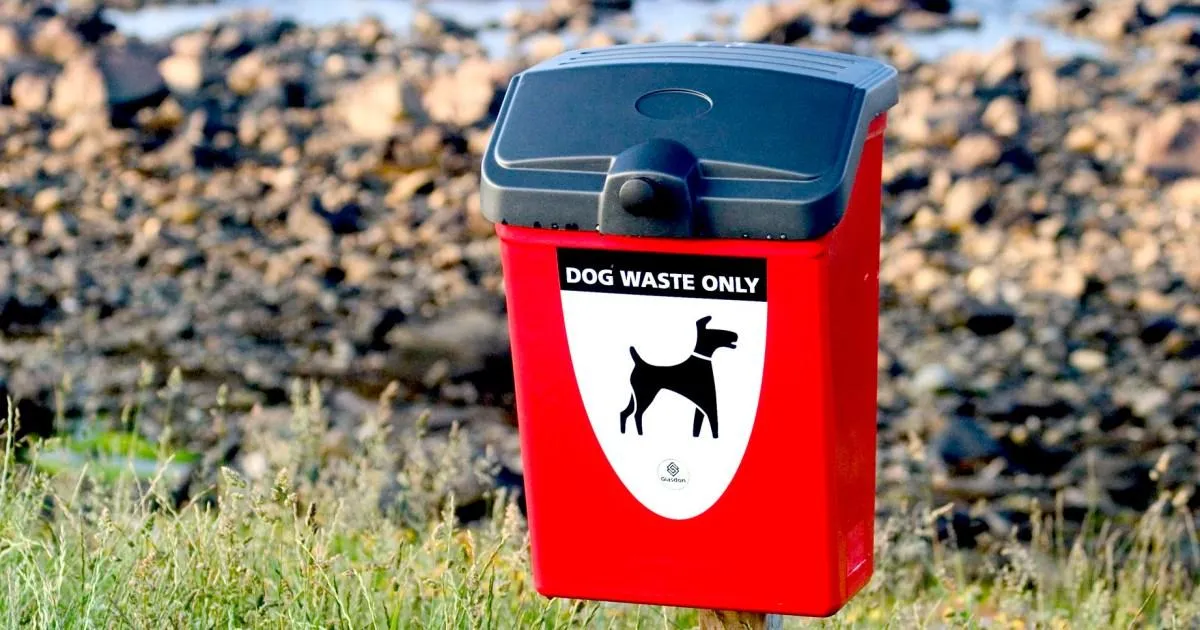
Anyone who has ever owned a dog knows the peculiar little moment of weighing a warm, freshly bagged bundle in one hand while scanning the horizon for a bin. It is a mundane but universal ritual, part of the unglamorous contract we make with our four-legged companions. In west London, that ritual is about to change for tens of thousands of pet owners. Hillingdon Council has announced plans to remove all seven hundred of its dedicated dog waste bins, a decision that will reshape the morning walk for dog owners in parks, along pavements, and on every grassy verge in the borough. From now on, the official guidance will be simple: put your pet’s poo in an ordinary litter bin, or if none is close by, take it home in the bag and dispose of it there. The council insists that this is not a thoughtless cut, but a careful financial and environmental decision. Removing the bins will save roughly £160,000 a year, and of that saving, £60,000 will be reinvested in extra street cleaning. The rest will ease the pressure on a council budget that, like every local authority in the country, is being stretched in a dozen different directions at once. Hillingdon currently collects around 14.5 tonnes of dog mess every month, but officers say this does not justify keeping a separate collection service. The existing network of ordinary litter bins, they argue, can absorb that load quite comfortably. For the council, this is a businesslike cost-cutting measure. For dog owners, it is something more emotional: another small erosion of the tacit support system that makes pet ownership in a crowded city possible, and the latest example of the quiet, grinding tension between what communities want and what governments can afford.
Hillingdon’s rationale is not without logic, and it is worth understanding before dismissing the plan out of hand. Dedicated dog waste bins require a separate collection service, with dedicated vehicles, crews, and disposal routes. That service costs money, and money is exactly what Hillingdon, like many London boroughs, does not have to spare. The council’s report describes scrapping the dog bins as the most effective and efficient option available, and it is difficult to argue with the basic arithmetic: removing 700 bins and relying on ordinary litter bins saves £160,000 every year, while still providing somewhere for dog owners to put their waste. The council did not rush into this without considering alternatives. One option was to keep all the bins exactly as they are. Another was to remove only the bins that sit within a short distance of an ordinary litter bin. But officers rejected both ideas, because each would still require a separate dog waste collection service, and the whole point is to eliminate that costly parallel system. Instead, Hillingdon will place stickers on litter bins in parks and popular dog-walking spots with a simple, cheerful message: “I can take dog waste too.” Then, in phases, the familiar green dog bins will be removed from streets and parks across the borough. The council seems to believe that this is a straightforward change, a logical tweak in a city that has to become smarter about how it spends money. And in one sense, they are right: bagged dog waste is just waste, and it does not need a special bin to make it disappear. But the story does not end there, because the gap between what is on paper and what happens in real life is often where good intentions go to die.
The Ruislip Residents’ Association has been quick to point out that gap, and their concerns are grounded in the daily experience of people who actually live with the current system. They warn that many dog bins already overflow under the existing collection service, which suggests a system at breaking point, not one with spare capacity. If dedicated bins are already struggling to cope with the sheer volume of dog waste produced in Hillingdon, then expecting ordinary litter bins to simply absorb all of that waste seems optimistic at best and dangerous at worst. The residents’ association has also criticised the council for not publishing a map or list showing exactly where dog owners are supposed to dispose of their pets’ waste once the dedicated bins disappear. Without that information, they argue, the plan becomes vague and difficult to enforce, and the burden falls on dog owners to guess where they are allowed to throw the bag. It is easy to imagine the practical consequences. A dog owner walks to the park, picks up after their dog, walks towards the usual bin, and finds it gone. They scan the area, see no ordinary litter bin within reasonable walking distance, and face an unpleasant choice: carry a bag of dog poo for another twenty minutes, or find a quiet corner and discreetly leave it where no one is looking. For many people, the first option is acceptable. For some, it is not. And in a community with children playing on the grass, elderly residents navigating uneven paths, and parents pushing prams, the thought of more dog mess being left behind is not an abstract inconvenience. It is a genuinely unpleasant and unhygienic prospect that affects everyone who uses public space, dog owner or not.
The council, for its part, did not exactly shrug off these concerns. Its own report acknowledged the risk that removing the bins could lead to an increase in dog fouling, which is a refreshing admission of reality. But the report then went on to say that this risk could be managed through signage, public information campaigns, and enforcement. That sounds good in a council chamber, but anyone who has ever tried to catch a person who lets their dog foul a pavement will know that enforcement is much easier said than done. Dog fouling is a fleeting, often anonymous offence; by the time a warden or enforcement officer arrives, the dog and its owner are long gone, leaving only the evidence behind. Public information campaigns are also a tricky tool, because they tend to preach to the converted. The dog owners who clean up after their pets are not the problem; they are already doing the right thing. The problem is the minority who have never picked up a single bag in their lives, and no sticker on a litter bin is going to reach them. Perhaps the most troubling part of the story is that the decision was approved without a formal public consultation. The residents’ association was particularly stung by this, and it is easy to understand why. A decision that affects every park, every pavement, and every dog owner in the borough deserves at least a real conversation with the people who live there. Hillingdon’s residents are not being treated as partners in a shared challenge; they are being presented with a fait accompli, and then asked to trust that everything will work out.
There is also a broader context here that is worth considering, because Hillingdon is not an island and this decision does not happen in a vacuum. Dog ownership has boomed in the years since the pandemic, and across London, parks and green spaces are busier than ever with people and their pets. That means more paws on the ground, more bags being carried, and more waste in total. At the same time, local government funding has been squeezed relentlessly, and every council in the country is looking for things to cut that will not bring immediate political disaster. Dog waste bins look like an easy target. They are not glamorous, they are associated with an unpleasant topic, and people who do not own dogs might wonder why such a specialised bin exists at all. But in a dense urban environment, the dedicated dog bin serves a purpose that goes beyond convenience. It creates a visual and psychological prompt that says, this is a place where dog waste is expected, and here is what to do with it. Remove that prompt, and the chain of responsibility weakens. The council’s approach also raises questions about what we expect from public services and what we are willing to do ourselves. Yes, dog owners have a personal responsibility to clean up after their animals, and nobody should need a special bin to be a decent human being. But public services exist because personal responsibility alone is not always enough. We do not just rely on people to be good; we design our environment to make it easy for them to be good. We put bins on streets, benches in parks, and lights on dark paths, because we know that convenience shapes behaviour. When we make the right choice easier, more people make it. When we make it harder, even responsible people start to cut corners, and the community pays the price.
In the end, Hillingdon’s decision is a gamble, and the odds are unknown. The council hopes that most dog owners will simply adapt, that ordinary litter bins will be enough, and that the promised street cleaning will keep the borough looking respectable. They might be right. The money saved is significant, and putting dog waste in ordinary bins is not unreasonable; many other places already do exactly that without descending into chaos. But there is a real risk that this cost-saving measure will lead to more dog mess on the pavement, more arguments between neighbours, and more frustration for the many diligent owners who will now have to carry their dogs’ waste for miles just because the council decided to save a few thousand pounds. The residents’ association is not asking for nothing; they are asking for transparency, for a proper map of disposal points, and for a real consultation before a permanent change is made. Those are modest, reasonable demands. Perhaps the most human way to look at this is through the eyes of a parent walking a child to school, or a nurse coming home from a late shift, or an elderly person slowly making their way to the shops. They are the ones who will have to step carefully, look down, and watch where they walk. They are the ones who will notice whether the promise of extra street cleaning actually materialises. This is not just a story about bins and budgets; it is a story about how a community treats its public spaces and the people who share them. Whatever happens, Hillingdon will be watching its pavements a little more closely, and the rest of the country will be watching Hillingdon.