

A senior African health official has issued a stark and deeply human warning: the Ebola outbreak currently tearing through the Democratic Republic of Congo could reach the United Kingdom. Since May, the virus has sickened roughly 10,000 people across the DRC, and almost 5,000 of them have died. Those are not just numbers. They are mothers, fathers, children, nurses, farmers, and neighbours whose lives have been upended by a fever that can turn a healthy person into a patient fighting for breath and bleeding from the gums within days. The outbreak has already crossed borders, with cases reported in Kenya, Nigeria, and possibly Uganda, making this the widest geographic footprint of any Ebola outbreak on record. Dr Jean Kaseya, the director general of the Africa Centres for Disease Control and Prevention, is not mincing words. He wants every country, including the UK, to stop assuming this is someone else’s problem. “We want all countries to know that they are not safe if they don’t take appropriate measures,” he said. “Each country, not only in the African region, but all continents, must now increase the preparedness level and the possibility for treatment. We don’t want to see the UK and other countries become a hotspot.” His words are meant to shake us out of complacency, not to panic us, but to remind us that diseases do not carry passports and that a threat to one community is, in a very real sense, a threat to every community. For anyone in the UK reading this, the instinct may be to sigh and think, “That’s far away.” But Kaseya’s warning, echoed by public health experts around the world, is that distance is no longer the shield it once was.
The parallels to the early days of the coronavirus pandemic are impossible to ignore, and Kaseya himself has drawn them. In early 2020, many countries convinced themselves that Covid was a distant problem, that borders and oceans would protect them, and that the “zero risk” mindset was a reasonable way to go about daily life. Then the world watched as flights landed, clusters appeared, and the virus travelled from one continent to another in a matter of weeks. The current Ebola outbreak carries the same uncomfortable lesson. Travel is global, and so is vulnerability. In Kenya, travellers passing through the Jomo Kenyatta International Airport in Nairobi are already being screened for signs of the virus. In the UK, the UK Health Security Agency is paying close attention. Dr Sam Collins, the agency’s head of guidance, clinical and public health response, told Metro that while the outbreak is very serious, the immediate risk to the general public in the UK remains low. “The UK is well prepared to respond safely and effectively to the risk of imported cases arising here,” he said. That reassurance matters, but it comes with active measures behind the scenes. Public health officials are screening healthcare workers and humanitarian aid workers who return from affected areas, checking for symptoms and making sure that anyone who might have been exposed does not slip through the net. The UKHSA is also working closely with the World Health Organization and other partners to monitor the situation in real time. The message from Kaseya is not that the UK is about to be overwhelmed, but that preparedness is the price of safety. The moment a country assumes it has zero risk is the moment it becomes most exposed. The virus does not announce itself in advance, and by the time a case appears, the clock is already ticking. Screening, surveillance, and swift isolation protocols are not bureaucratic details. They are the difference between a contained case and a widening outbreak.
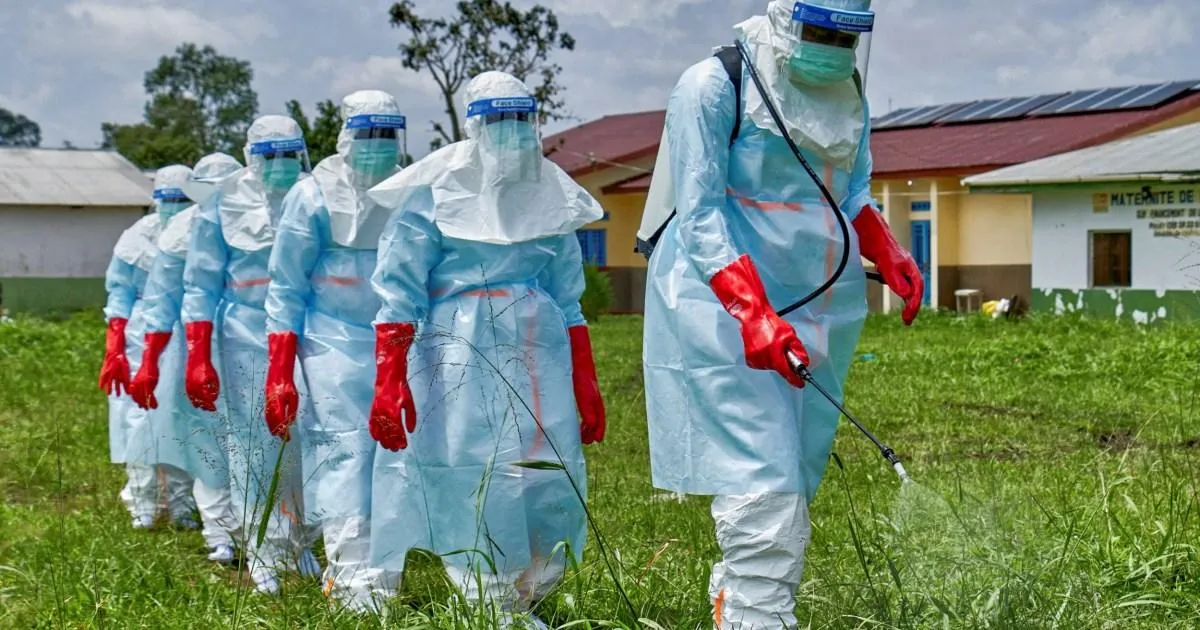
What makes this particular outbreak even more frightening is the nature of the virus itself, and the strain behind it is known as Bundibugyo. Unlike some other Ebola strains that have devastated parts of Africa in the past, there are currently no vaccines and no specific treatments for this strain. That is a terrifying reality for the people living in affected communities. Ebola spreads through direct contact with the bodily fluids of someone who is infected, including blood, saliva, vomit, faeces, and sweat. It does not travel through the air like Covid, which is a small mercy, but it is highly contagious in the right conditions, especially in homes and clinics where protective equipment is scarce. A person infected with Ebola cannot spread the virus until they begin showing symptoms, and those symptoms often start innocently enough. Within 21 days of exposure, someone may develop a fever, aches, pains, and fatigue, symptoms so ordinary they could be mistaken for the flu or a bad cold. That is why so many cases go undiagnosed at first. But the infection can then progress to what experts call the “wet” phase, where diarrhoea, vomiting, and internal bleeding take over. Some patients bleed from the gums and nose. The virus attacks the nervous system, leaving people irritable, confused, and in severe distress. Even those who survive can be left with lasting damage, including vision and hearing loss, joint pain, chronic fatigue, and neurological problems. And there is another cruel element: when someone dies of Ebola, their body remains highly infectious. Funerals, which should be a time of mourning and community support, can become places of transmission, where loved ones who touch the body to say goodbye are themselves exposed. This is not just a medical emergency. It is a cultural and emotional one, as families are forced to balance the rituals they hold dear with the need to break the chain of infection.
The outbreak began in Ituri Province in the northeastern part of the Democratic Republic of Congo, and it has since become the fastest-spreading wave of Ebola ever recorded. This is Congo’s seventeenth outbreak in recent decades, a staggering statistic that reflects both the persistence of the virus and the chronic fragility of the region’s health systems. According to the Congolese health ministry, the speed of this outbreak is unprecedented. The previous major outbreak, which began in 2018 and was declared over in 2020, took more than ten months to reach the death toll that this outbreak reached in just three, at more than 1,550 deaths. Since then, the numbers have continued to climb, with the Ministry of Communication and Media reporting more than 9,800 confirmed cases and over 4,700 deaths across eight provinces and dozens of health zones. The virus has also moved beyond Congo’s borders. Kenya has reported nine cases, including two deaths. Nigeria announced its first case in this outbreak last week, after a patient returned from a trip to Uganda and was subsequently taken to Switzerland for treatment. That detail alone shows how quickly the virus can travel across borders and across continents, and why Kaseya describes the geographic extension of this outbreak as unprecedented. “It is the first time three African regions have been affected by Ebola,” he said. The disease is no longer confined to a single remote corner of the continent. It has become a regional crisis with global implications. And while the risk to the UK remains low for now, the spread to Nigeria, the most populous country in Africa, is a reminder that an outbreak can leap from rural villages to crowded cities to international airports in a matter of days. Every new case is a test of the global health system, and every delay in response makes the next case more likely.
Experts believe this outbreak got out of hand because early surveillance and testing failed to detect the virus when it first emerged. In the early days, the warning signs were likely there, but they were missed. Deep cuts to aid funding, chronic underinvestment in local health systems, and violent attacks on healthcare workers all hampered efforts to contain community transmission. In some areas, health workers have been threatened, injured, or killed, forcing clinics to close and leaving communities without access to care. In that kind of environment, a virus does not just spread through biological contact. It spreads through fear, mistrust, and the absence of basic safety. People who are sick may stay home because they are afraid of going to a clinic. They may seek help from traditional healers or mobile churches, not because they do not want medical care, but because the formal health system has failed them before. The result is a perfect storm: a virus with no vaccine or treatment, in a region where trust in public health institutions is fragile, where aid money has been slashed, and where the people trying to fight the outbreak are themselves under attack. This is not just a tragedy for the Congo. It is a global failure of solidarity. The world has known for decades that Ebola outbreaks will keep happening, and that the only way to stop them is to strengthen health systems at the local level, to pay health workers fairly and protect them, to build laboratories capable of detecting viruses early, and to invest in public health infrastructure before the next emergency arrives. Instead, the international community tends to respond only when the flames are visible, and by then the fire has already spread. Kaseya’s warning is a plea to break that cycle. The human cost is not abstract. Every death is someone’s beloved, and every survivor carries memories that no statistic can capture. When we talk about this outbreak in terms of case numbers and death tolls, we risk forgetting the faces behind the figures, the mothers burying children, the nurses who keep showing up to work despite the danger, the communities who are doing everything they can to protect themselves with almost nothing.
And yet, amid all of this fear and loss, there is still room for a different kind of response—one rooted in preparation, compassion, and the simple recognition that we are all connected. The UK Health Security Agency’s Dr Sam Collins has said the UK is well prepared to respond safely and effectively to any imported cases, and that matters. But preparation is not just about what happens after a case arrives. It is about what happens before, in the countries where the virus is already spreading. It is about funding surveillance systems, supporting local health workers, and making sure that vaccines and treatments are developed not just for the strains that rich countries fear, but for the strains that poor countries are dying from right now. It is about remembering that the Bundibugyo strain has no vaccine, and asking why the world has not invested more urgently in making one. It is about hearing Kaseya’s words not as a threat but as a warning from someone who has seen what happens when the world looks away. “We don’t want to see the UK and other countries become a hotspot,” he said. That is not an accusation. It is a hope. And it is a hope that can only be realized if every country, in Africa and beyond, takes the outbreak seriously, not as a distant problem but as a shared one. For readers in the UK, the message is not to panic. The risk remains low, and the health authorities are paying attention. But the deeper message is that no one is truly safe until everyone is safe. Ebola does not care about borders, wealth, or status. It cares about bodies and fluids and the moments of care between people. To humanize this outbreak is to understand that the families in Ituri are not so different from families in London, Manchester, or Glasgow. They want what everyone wants: to live, to love, to mourn, and to be safe. The least the rest of us can do is to look straight at this crisis, acknowledge the human beings at the center of it, and act as though their lives matter—because they do. And perhaps, if we do that, the warning will not become a prophecy. The virus may not reach the UK. But even if it never touches these shores, the memory of this outbreak should stay with us, a reminder that health is a common language, and that in the end, we all share the same fragile, precious bodies.