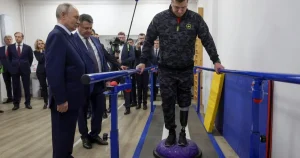


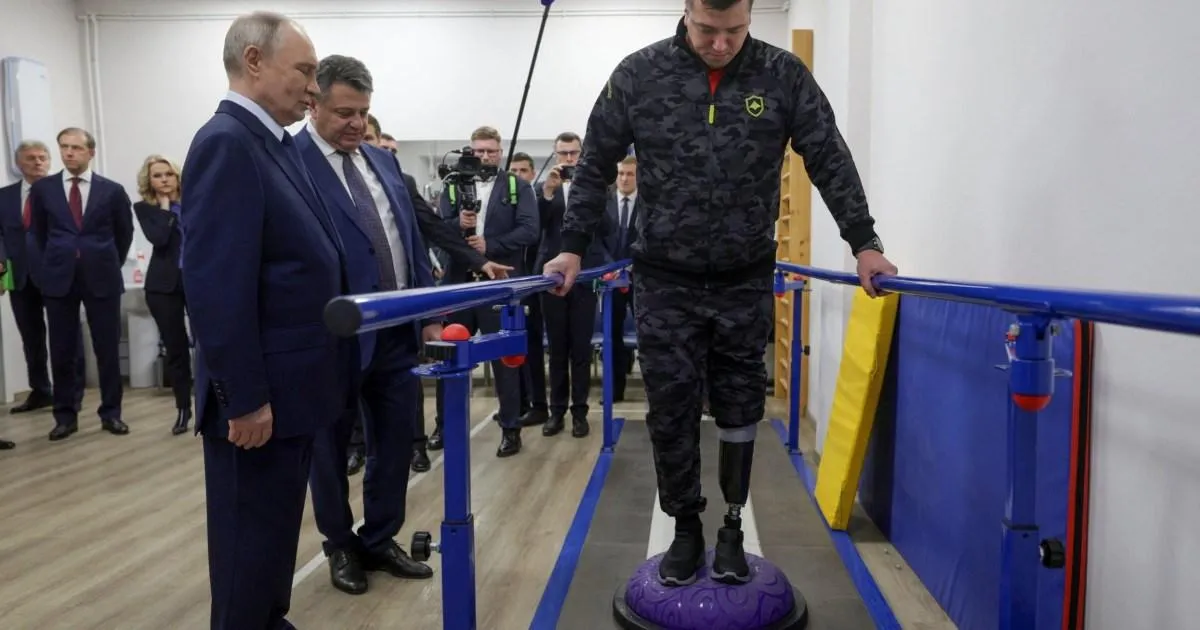
Behind the quiet desperation of Russian homes, a new and heartbreaking reality has settled in. Husbands, sons and brothers are coming back from the front lines of Ukraine in numbers that have no recent parallel, many of them carrying wounds that will define the rest of their lives. They arrive in hospital wards and train stations, missing arms, missing legs, their faces hollowed by exhaustion and pain. These are not just statistics from a distant battlefield; they are fathers who can no longer lift their children, young men who once dreamed of careers and families, and now face a future of rehabilitation, prosthetics, and a brutal adjustment to a body that no longer feels whole. The war that Vladimir Putin started in February 2022 has consumed an estimated 1.2 million Russian soldiers, either killed, wounded or missing, and the true scale of this human catastrophe is only beginning to be understood. As the fighting grinds on with no end in sight, the wounded are piling up faster than the state can cope, and the grim evidence of this is now visible in the most unexpected place: the prosthetics imports of the Russian government.
What makes this particularly stomach-churning is where Moscow is turning for help. Despite the endless stream of state propaganda about enemies at the gates and the dangers of NATO expansion, Russia has been quietly spending millions to buy artificial limbs and joints from NATO countries. In the first half of 2026 alone, Russia imported around £66 million worth of prosthetics from Germany, more than five times the amount it bought before the war. Belgium and the Netherlands, also NATO members, have also appeared on the list of suppliers, and the total value of these imports from EU countries reached £126 million in just six months. The irony is so sharp it would be almost comic if it were not so tragic: the very alliance that Russian state media blames for the war is now being paid to fix the bodies of the soldiers destroyed by it. It is a strange and uncomfortable dependence, one that reveals both the desperation of the Kremlin and the catastrophic failure of its own military-industrial system to meet the needs of its wounded men.
The reason for this surge in demand is as simple as it is horrifying. The war has become what many analysts have called a meat grinder, sending wave after wave of soldiers into battle with terrible losses. The physical toll is staggering. In 2024 alone, the Russian ministry of labour reported that disabled people in the country received 152,661 artificial arms and legs from the state, compared with 99,515 the previous year, a jump of more than 50 percent. Behind each of those numbers is a person whose life has been irrevocably changed, a family suddenly tasked with caring for a severely injured loved one, a community trying to absorb the shock of young men returning without limbs. Russia’s domestic prosthetics industry, despite its claims of technological advancement, has simply not kept up with the skyrocketing demand. It is one thing to produce missiles and drones, quite another to create the delicate, personalised devices that allow an amputee to hold a spoon, to walk to the shop, to feel like a person again. The state has been forced to look abroad, to the very countries it claims to despise, because its own production lines cannot deliver what the wounded need.
The financial cost of this catastrophe is almost beyond comprehension. The money spent on prosthetics, £126 million in just six months, could have built a thousand new schools, or two hundred modern hospitals. It could have given every Russian child born since the start of the war around £9,400, a significant boost for struggling families. It could have more than doubled pensions for the elderly, many of whom live in poverty while the state pours billions into the war effort. Instead, that money is being spent on the aftermath of violence, on the shattered bodies of soldiers who were told they were going to Ukraine to save their country and instead found themselves in a brutal, futile conflict. On top of the prosthetics, Russia is reportedly paying more than £71 million every single day in benefits to wounded soldiers and their relatives. That is not a sign of strength; it is the price of a war that has already failed. It is a daily drain on the economy, a constant reminder that every rouble spent on compensating the wounded is a rouble that cannot go to roads, healthcare, education or any of the things that make a country worth living in.
The mockery from Ukraine has been merciless, and understandably so. One Ukrainian report sarcastically noted that Russia is at war with NATO, and yet still orders its prosthetics from the same alliance. “You could have ordered them from friendly North Korea or Myanmar,” the report joked, highlighting the absurdity of a country that claims to be fighting the West while secretly depending on Western technology to patch up its soldiers. The breakdown of the spending makes the point even more starkly: around £34 million went on artificial arms, legs and related components, while another £31 million was spent on artificial hips, knees and other joint replacements. This is not a small, marginal expense. This is the central maintenance of a military machine that is chewing up its own people at an industrial pace. And what does it say about the future? A generation of young Russian men is being permanently disabled. They will need prosthetics for decades, not months. They will need repeated surgeries, physical therapy, psychological support and long-term care. The state may be buying limbs now, but it is buying a future of dependency, suffering and bitterness that will follow Russian society for a generation.
At the heart of this story are the human beings behind the numbers, the soldiers and their families who are paying for Putin’s ambitions with their bodies and their futures. There is no dignity in losing a limb in a war that should never have happened. There is no glory in a prosthesis bought from a country you were told was your enemy. The young men returning from the front are not heroes in any meaningful sense; they are victims, sent into a meat grinder by leaders who do not join them in the trenches. Their mothers will spend years caring for them, their wives will learn to navigate a new life of disability, their children will grow up knowing their fathers as broken men. And the Russian state, so eager to wave flags and play patriotic music, now finds itself reduced to buying artificial hips from Germany to keep the terrible machinery running. There is no victory in this, only an endless, grinding tragedy. As the war continues and the casualties mount, the prosthetics purchase orders will keep growing, a dark and undeniable record of a conflict that has devoured millions and will leave scars on every side. The only true solution is peace, but until that happens, the factories in NATO countries will keep producing, and the wounded will keep coming home, each one a living reminder of the cost of one man’s war.