

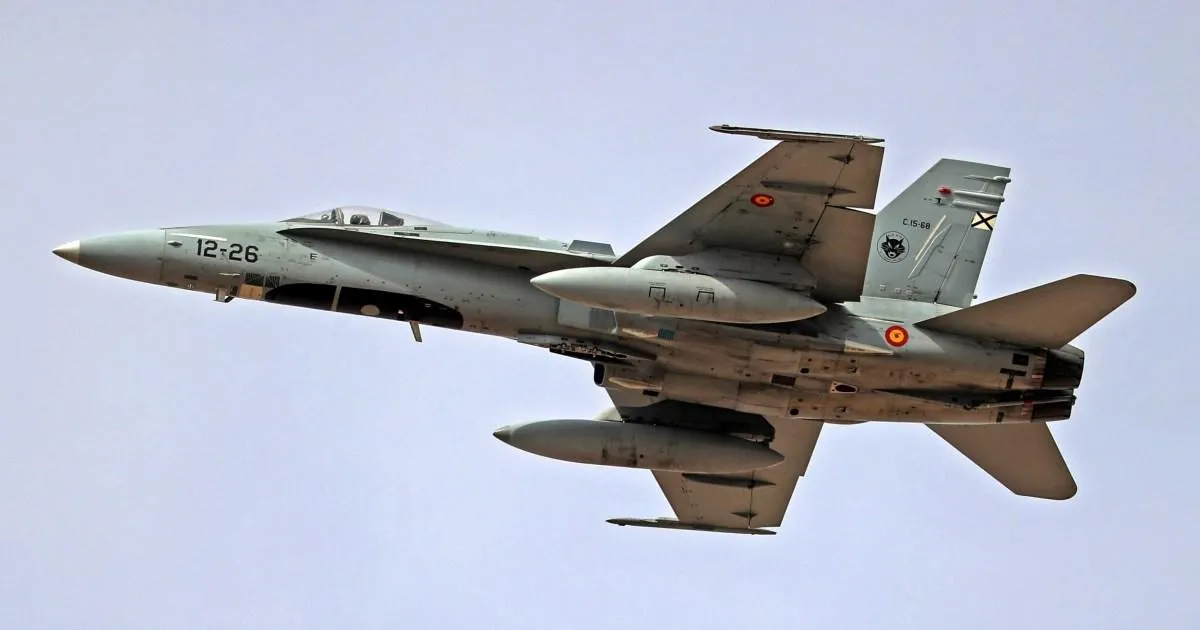
Early this morning, NATO air defenses were activated over Romania after an unidentified drone was detected entering the country’s airspace from the direction of neighboring Moldova. In response, two Spanish Air Force F/A-18 Hornet fighter jets, which were already on patrol as part of NATO’s enhanced air policing mission, were immediately tasked with intercepting the unauthorized aircraft. The operation began around 4:45 AM local time, and within roughly fifteen minutes, the pilots successfully engaged and shot down the drone, bringing the incident to a swift and controlled conclusion. The wreckage came down in an unpopulated area between two towns, and Romanian authorities have since secured the site to conduct a full investigation into the drone’s origin and purpose.
The Romanian Ministry of Defence confirmed the interception but has not yet officially identified where the drone came from or what its intended mission might have been. However, the incident has heightened concerns across the region, particularly given the ongoing conflict in neighboring Ukraine. Romanian Defense Minister Radu Miruţă addressed the situation in a public statement, emphasizing the country’s readiness and commitment to protecting its sovereignty. He described the action as a clear demonstration of Romania’s role on the front line of European defense, stating, “Romania is defending its airspace, and our allies stand with us. Vigilance, rapid response, and allied solidarity—these are the concrete guarantees of our security.” His words reflect the broader anxiety felt by NATO’s eastern flank members, who have repeatedly faced incursions and stray munitions since the start of the war.
This morning’s incident is not an isolated event. According to reports from Reuters, this is actually the fourth time this year that Romanian forces have had to shoot down an unmanned aircraft that breached their airspace. The frequency of these incursions has pushed Romania and its NATO partners to maintain a heightened state of alert, with jets often scrambled at a moment’s notice. The drones are believed to be part of Russia’s broader surveillance and attack operations in Ukraine, sometimes crossing borders accidentally due to navigational errors or being deliberately flown to test NATO’s reaction times and defenses. Each incident requires careful coordination between national military command centers and the alliance’s integrated air defense network, ensuring a rapid but proportionate response.
The pattern of these intrusions paints a larger picture of the war’s spillover effects across Eastern Europe. Beyond the drone interceptions in Romania, other NATO member states have also experienced similar violations. Last month, for instance, a cruise missile, believed to be Russian, landed in a field in Poland, leaving a crater over thirty feet wide. While no one was injured in that incident, it served as a stark reminder that the conflict in Ukraine is not contained within its borders. The debris from intercepted missiles and drones has also repeatedly fallen on Romanian territory, sometimes causing damage to civilian infrastructure. These events have forced local governments to build shelters and issue public warnings, fundamentally altering the sense of security for civilians living near the Ukrainian border.
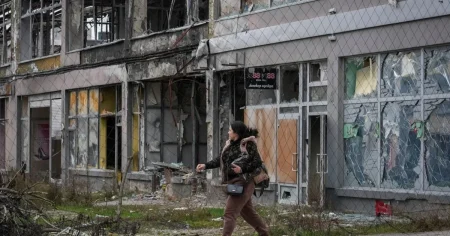
The human cost of the war continues to be felt most acutely inside Ukraine itself. In a tragic overnight attack on Kryvyi Rih, the hometown of Ukrainian President Volodymyr Zelensky, a combined missile and drone assault killed at least one woman and wounded six other civilians. Separately, in the eastern town of Galați, a drone strike hit a residential block of flats, starting a significant fire that required a massive evacuation of nearby residents. Two people were injured in that attack. Firefighters worked through the night to contain the blaze, while local officials began the grim task of assessing the damage to homes and infrastructure. These strikes are part of a relentless campaign by Russian forces to target civilian areas, aiming to break morale and disrupt daily life, even as the front lines remain largely static.
In response to the ongoing attacks, President Zelensky has continued to press for more military support from Western allies. In his latest public remarks, he confirmed that Ukrainian forces had successfully struck back against Russian military targets deep inside the country, including an electronics manufacturer, an airbase, and an oil facility. These long-range strikes are intended to degrade Russia’s ability to sustain its offensive operations and to target the logistical hubs that supply its troops. Zelensky reiterated that Ukraine’s ability to defend its cities and strike back at its aggressor depends heavily on receiving advanced systems and long-range weapons from its partners, urging them to speed up deliveries and lift restrictions on their use. The ongoing exchanges highlight a dangerous escalation cycle that continues to keep Europe on edge.