



Paragraph 1
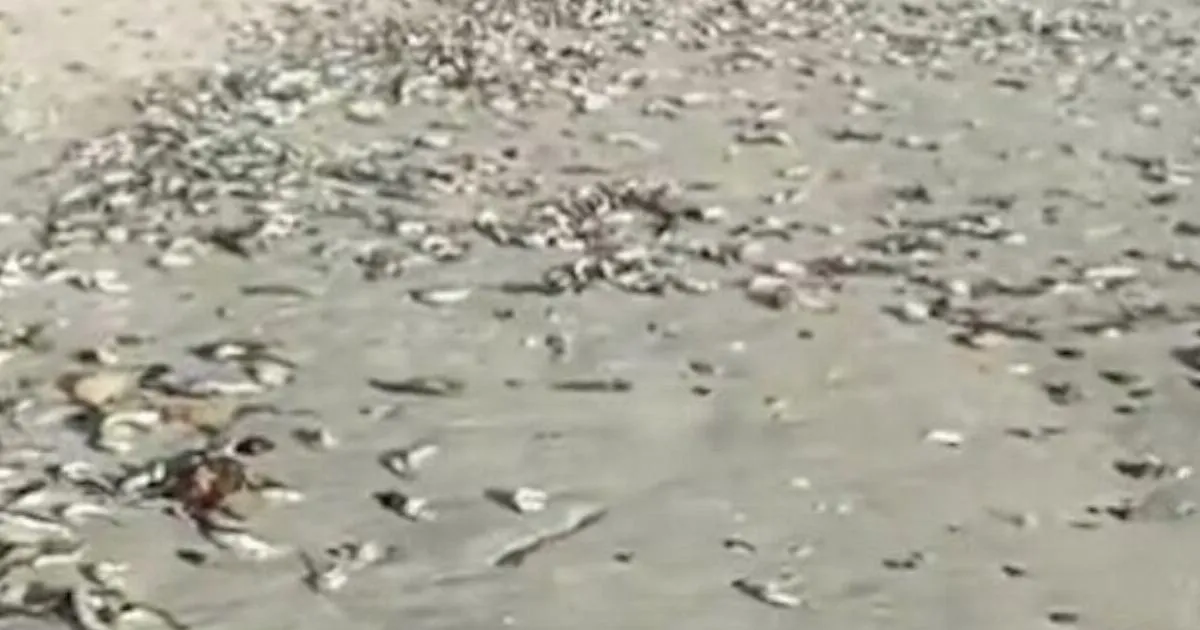
The ocean has always been a source of wonder and mystery, a vast, breathing entity that holds secrets we are only beginning to understand. Yet sometimes, it presents us with scenes so alarming, so deeply unsettling, that they jolt us out of our complacency and force us to ask difficult questions. Such is the case along the pristine, beloved shores of Cape Town, South Africa, where a silent, silver-scaled tragedy has unfolded. Imagine walking along the sand, the cry of gulls overhead, the cool Atlantic breeze on your face, and then looking down to find the tide line covered in thousands upon thousands of dead pilchards. Their bodies catch the sunlight, a glittering, gruesome carpet stretching along the beach at Bloubergstrand, with its iconic view of Table Mountain rising in the background. It’s a sight that immediately stops your heart and churns your stomach. This isn’t just a marine event; it’s a visceral, human moment of incomprehension and grief for the natural world we’re so intertwined with. We always think of the ocean as being so resilient, so vast and eternal, that it can absorb any shock. But here, on a quiet Monday morning in August, that illusion was shattered, leaving residents, scientists, and visitors alike staring in disbelief at a spectacle that felt more like a scene from a dystopian novel than their Sunday afternoon stroll. The first instinct is to wonder, “What could have possibly done this?” and the second, more frightening thought is, “What does this mean for us?”
Paragraph 2
Let’s paint a fuller picture, because the sheer scale of it is almost impossible to grasp from a distance. We’re not talking about a couple of hundred fish, or even a few thousand. We’re talking about a massive die-off that has turned the shoreline into a silvery graveyard. The footage, which has since gone viral across social media and news channels, shows the sand completely obscured by the small, silvery fish known as pilchards, or as some call them, sardines’ slightly larger, beefier cousins. They belong to the herring family, and they typically travel in massive, shimmering shoals that can turn the ocean into a living, breathing mass. Now, they lay lifeless, their scales catching the African sun. The beaches of Bloubergstrand, Milnerton, and Sunset Beach have all become sites of this ecological disturbance. If you’ve ever been to these spots, you know them as places of immense joy—kitesurfers skimming across turquoise water, families having picnics, dogs running wild. Now, the air carries a different scent, a faint but present odor of decay that signals something is profoundly wrong. And even more troubling than the dead fish themselves are the other victims of this event. Birds, trapped in the same cycle of life and death, walk unsteadily among the carcasses, some appearing listless and unwell. It’s a sobering reminder that in nature, nothing exists in a vacuum. When one link in the food chain suffers, the repercussions ripple outwards, touching even the most unlikely of players. This is no longer just a scientific oddity; it’s a personal tragedy for the people who live there, and a worrying sign that the ocean’s balance has been irrevocably tilted, at least for now.
Paragraph 3
So, what caused this massive die-off, this aquatic apocalypse-on-a-beach? Scientists from South Africa’s Department of Forestry, Fisheries, and the Environment (DFFE) have been working around the clock, collecting samples, and conducting necropsies on the unfortunate fish. Their initial findings have introduced a name that sounds like something out of a sci-fi movie: pilchard herpesvirus, or PHV. Now, before our imaginations run away with images of a “zombie fish” apocalypse, it’s important to understand exactly what they’ve found. They have detected the genetic material of this virus in the tissues of the dead pilchards. That’s a crucial finding, because PHV is nasty. It targets the gills, the very organs fish use to extract oxygen from the water. Imagine trying to run a marathon while someone is squeezing your throat—that’s the equivalent of what it must be like for a fish with this virus. Their gills become damaged, making it difficult to breathe, trapping them in a state of constant respiratory distress. However, and this is where the story gets even more interesting, the presence of the virus doesn’t necessarily mean it’s the shooter. It could just be the getaway driver. The DFFE spokesperson, Zolile Nqayi, was quick to emphasize this crucial caveat: “Sequencing has confirmed the presence of PHV genetic material, but this alone does not prove that the virus caused the deaths.” It’s a classic case of “correlation does not equal causation.” The virus could be an opportunistic infection that struck fish already weakened by something else, or it could be the primary culprit, the sole reason for their suffocating demise. The investigation is still very much a live wire.
Paragraph 4
If the novel suggestion of a herpesvirus seems dramatic, it’s because it is, but scientists are keeping an open mind, investigating a veritable detective’s list of other potential culprits. The ocean is a dynamic and volatile chemical soup, and sometimes nature throws a party that no one wants to attend. One primary suspect on their list is harmful algae blooms, commonly known as “red tides.” These algal blooms are natural phenomena, but certain species of algae produce powerful neurotoxins that are fatal to marine life. When these blooms appear, they can decimate entire fish populations in a matter of hours. Then there’s the matter of oxygen. The ocean’s oxygen levels fluctuate due to a complex interplay of temperature, salinity, and upwelling. A sudden drop in dissolved oxygen, often driven by seasonal changes or pollution, can cause widespread asphyxiation among fish. And of course, there’s the most obvious suspect: a sudden change in water temperature. Even a two or three-degree shift can be a death sentence for fish that are adapted to a specific thermal niche. These are the same fish that are the engine of the region’s bait fish population, so their loss is a blow to the entire ecosystem. But what makes this case so unique and worrying is that PHV has never been recorded in South African waters before. Yet, it has a dark and notorious history elsewhere. During the 1990s, this very virus was linked to massive, catastrophic sardine die-offs in Australia and New Zealand. In those cases, the outbreaks caused millions of dollars in losses to the economy and the ecosystem. So, while the virus is not new to the world, its arrival on the South African coast has raised alarm bells, and scientists are eagerly studying the genetic fingerprint of this particular strain to understand how and why it got here.
Paragraph 5
However, beyond the fish and the scientific debates over viruses and algae, this event has a very real and human face, and that face belongs to one of the most beloved, and tragically, most endangered creatures on our planet: the African penguin. These tuxedoed birds call these very beaches home, breeding and feeding on the pilchards and anchovies that are the lifeblood of this coastal ecosystem. When a food source disappears, so do the penguins. Marine biologists are already reporting with heavy hearts that penguins at three local breeding colonies are showing signs of malnutrition. They are losing weight. They are struggling to find enough food to sustain themselves and to feed their chicks. This is a direct and devastating consequence of a food web under stress. The positive spin is that this tragedy offers us a unique opportunity to understand how the ocean’s fragile systems work. It’s a living laboratory, if you will, to understand the ripple effects of a single species collapse. But there’s a ghost at the feast, a silent, creeping danger that authorities are concerned about. And that’s the human behavior around the fish. In the midst of this sadness, officials have had to issue a stern warning to the public: please do not eat the dead fish. It seems like common sense, but people are curious, and some might think they can get a free meal from the ocean. However, the same factors that kill these fish can also make them incredibly dangerous for humans to consume. The DFFE warns that dead marine animals are susceptible to rapid bacterial contamination, which can lead to severe food poisoning, and in some cases, even more serious health complications. It’s a quiet but firm reminder that when we meddle with the natural order, the consequences often end up on our plates.
Paragraph 6
As we stand on the shore, looking out at the vastness of the Atlantic, it’s natural to feel a mix of sorrow, anxiety, and perhaps even a little bit of fear when confronted with an event like this. This is not just a story about fish; it’s a story about the delicate, invisible threads that connect all of us to the world around us. It’s a story about how a single, seemingly obscure discovery on a beach can send shockwaves through science, economics, conservation, and our own personal sense of wonder. The investigation is far from over. In the coming weeks and months, we will learn more about the role of the virus, the temperature of the water, and the health of the plankton. But for now, the image that stays with me is not the piles of dead fish, but the faces of the people who live there, the local community, the kids with their ice creams, the surfers in their wetsuits, all looking on, silently asking the question we all want answered: “What have we done?” or maybe, “What did we miss?” There is an uncomfortable relevance to this story, a reminder that the ocean is not a limitless resource that will always absorb our abuses. It has a breaking point, and events like this, whether natural or man-made, serve as a stark warning that we are on the precipice of something significant. Our ability to react with compassion, curiosity, and a determination to understand is the only thing that will guide us through this uncertain time. The ocean has given us so much – let’s make sure we are listening to the lessons it is trying to teach us, even when those lessons come with a heavy heart and a beach littered with silver.