


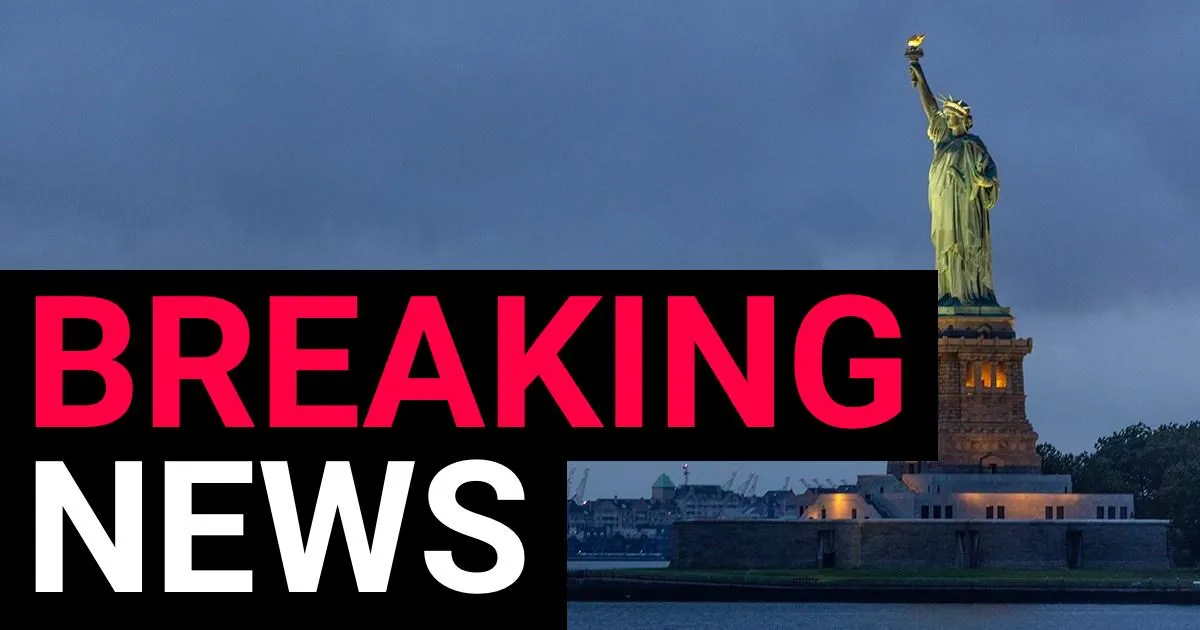
The waters surrounding the Statue of Liberty, typically a symbol of hope and new beginnings, became the site of a devastating tragedy this week when a 22-foot motorboat capsized in New York Harbor. What should have been a routine outing turned into a frantic emergency response as the vessel suddenly overturned, throwing its occupants into the cold, churning water. While the Coast Guard was able to mount a rapid rescue operation, successfully pulling a dozen survivors from the harbor, the incident took a heartbreaking turn that has left the local community and the nation reeling.
Among those caught in the chaos were a woman and an infant, who were trapped beneath the surface as the boat went under. Divers were deployed immediately in a desperate search, eventually locating the pair and bringing them to the surface. Both were unresponsive and in critical condition, prompting emergency responders to perform life-saving measures as they were airlifted to a Brooklyn hospital. Despite the best efforts of medical teams, it was later confirmed that both the woman and the five-month-old baby had succumbed to their injuries.
The atmosphere in the harbor following the incident was reportedly one of shock and somber stillness. A dozen people who had moments earlier been enjoying the sights of the city were suddenly fighting for their lives in the waves. The rescue crews, who work tirelessly to keep the harbor safe, were faced with the agonizing reality of a tragedy that struck so close to one of the world’s most recognizable landmarks. The loss of such a young life—a baby of only five months—has cast a heavy shadow over the city, turning a public tourist hub into a place of profound mourning.
At this stage, the investigation into what caused the vessel to flip is still in its infancy. Authorities are working to determine whether mechanical failure, human error, or sudden water conditions played a role in the disaster. The US Coast Guard has confirmed that investigators are actively working to interview the boat’s captain, hoping to piece together the sequence of events that led to the capsizing. Whether the victims were related remains unconfirmed, adding another layer of uncertainty to an already opaque and painful situation.
The tragedy serves as a grim reminder of how quickly the tranquility of the water can shift into a life-threatening environment. Even in the heart of a major metropolitan area like New York, the elements remain unpredictable, and the margin for error on the water is dangerously thin. As the maritime community and local officials wait for further details from the investigation, the focus remains on supporting the survivors and the families of those lost. The incident has prompted a renewed conversation about safety and vigilance, even in well-traveled waters where many assume they are shielded from such calamities.
Ultimately, behind the headlines and the official reports lie the shattered lives of the passengers involved. While the world waits for answers regarding the “why” and “how” of this disaster, the immediate human experience is one of unimaginable grief. As investigators continue their work and the community processes the loss, the memory of the victims serves as a somber call to hold our loved ones close. For those who witnessed or were involved in the rescue, the images of that day will likely linger long after the harbor returns to its busy, bustling routine, serving as a permanent, painful reminder of how fragile life truly is.