


Jeju has long been South Korea’s dreamscape, a place where lovers go to begin their lives together. With its black volcanic cliffs, emerald waters, waterfalls hidden inside lush green forests, and palm trees swaying against a horizon that feels almost too beautiful to be real, the island has earned its reputation as the nation’s quintessential honeymoon destination. Young couples pose for photographs under cherry blossoms, surfers ride turquoise waves, and tourists wander through labyrinthine lava tubes that seem to belong to another world. For decades, Jeju was a place you went to escape the noise of the city, to breathe slower air and believe in happy endings. But this year, that dreamlike image has begun to crack. In just three days, four people who had been reported missing on Jeju were found dead. Police have been careful not to link the deaths, and there is no official evidence that a single hand was behind them, yet something about the timing, the silence, and the botched investigations has unsettled the entire island. Questions are spreading faster than facts: How did so many missing people turn up dead so close together? Why were their cases closed so easily? And perhaps most haunting of all, how many more bodies are still out there, hidden in the dense forests and rocky shoreline of this beautiful, suddenly sinister place?
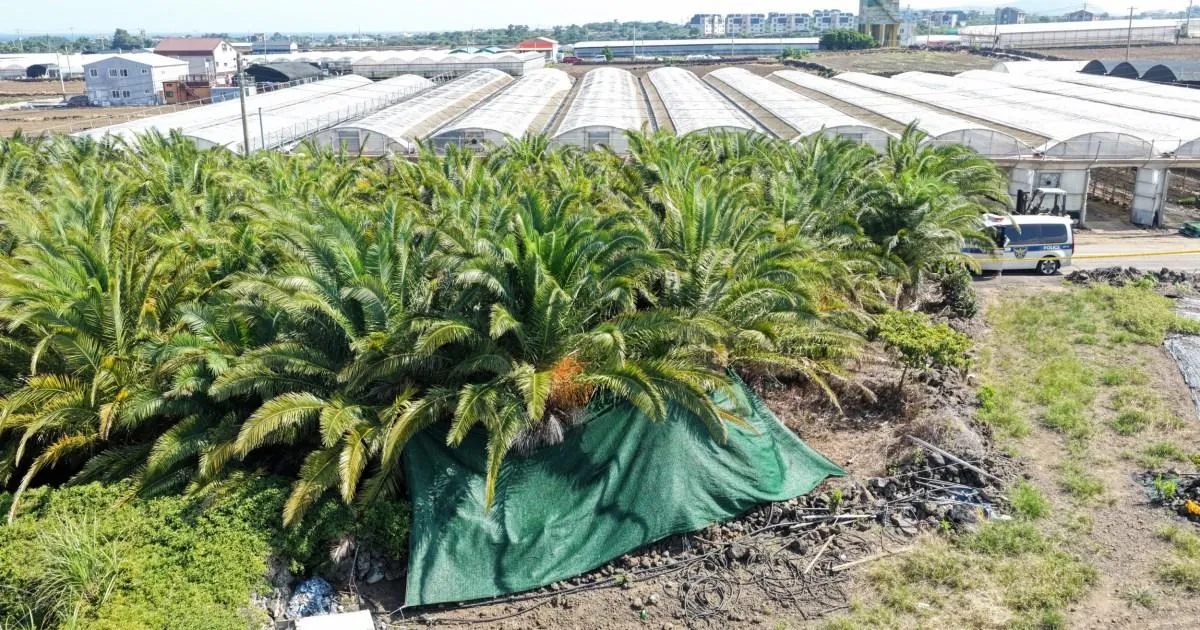
The case that has come to symbolize the public’s fear is that of Jang Mi-ran, a 37-year-old woman whose disappearance should never have been brushed aside. On May 13, Jang vanished from Jeju City, and her boyfriend went to the police in panic. Instead of a serious search, he says he was met with a detective, identified only by the surname Bu, who told him that Jang had called to say she was leaving and no longer wanted to see him. The case was quickly closed, treated as little more than a woman walking away from a relationship. But the explanation did not hold up. Investigators later found no phone records to support the detective’s claim that he had spoken with Jang at all, and nearby CCTV footage from the area had reportedly been deleted. More than a hundred days passed, while Jang’s weary parents refused to accept that their daughter had simply vanished into thin air. They launched another missing persons probe, and eventually, their worst fears were confirmed. Jang’s body was found hanging from a palm tree at a farm, less than a ten-minute walk from the spot where she was last seen. Police told her family it looked like suicide, but the circumstances were strange enough that her boyfriend could not accept the explanation. She had told him she found that place frightening whenever she passed it, he said, so he could not understand why she would go there, let alone die there. It was a statement heavy with grief, confusion, and the quiet anger of someone who felt the system had failed them.
The physical reality of the place where Jang was found only deepened the mystery. The farm was densely planted with Canary Island date palms, trees covered in sharp, hard spines that make them almost impossible to climb or even approach without injury. One local resident pointed out that even a strong man would struggle to hang a rope from one of these trees, because they do not have ordinary branches and the thick spines stab anyone who gets too close. The damage to the narrative of a simple suicide was already done. No phone records supported the detective’s version of events. The CCTV that might have shown what happened had reportedly disappeared. And police themselves admitted that while they currently believed no crime had been committed, they would forensically reconstruct the scene to assess whether any third party had been involved. For Jang’s family, every new detail felt like another wound. They had lost their daughter, but they had also been denied a proper investigation at the most critical moment. The officer who allegedly closed her case without ever truly checking on her was later seen being escorted to a court hearing, and Jang’s family attacked him on live television, their grief erupting into raw, desperate fury. He denied any wrongdoing, insisting he had contacted the missing people, but the damage to public trust had already been done. One officer, one careless decision, one deleted tape, and a woman’s death became not just a tragedy but a scandal.
Jang’s discovery was not an isolated horror. The same day her remains were found, another person who had been reported missing was discovered dead near a valley in Aewol-eup. The next day, a fisherman spotted the body of a man in his seventies floating in the same waters that surfers love, bobbing in the waves as if the ocean itself was giving up its secrets. Police also alleged that the same detective, Bu, had similarly closed the case of a man in his sixties, a man who was later found dead. The pattern was impossible for local residents to ignore. Nearly three hundred missing persons cases were suddenly being reviewed, with at least ten examined for possible improper closure. The authorities’ carefully measured language began to feel less like transparency and more like an attempt to manage a crisis. They said there was no evidence of widespread foul play, but the phrase “widespread” offered little comfort to families who had been told their loved ones simply wandered away or chose to disappear. The image of a police officer being perp-walked through a crowd of cameras, while a grieving family lunged toward him in front of the country, became a symbol of everything that had gone wrong. It was not just about one detective anymore. It was about an attitude, an assumption that Jeju was too peaceful for real crimes, a belief that a missing adult was probably just choosing to be gone, and a system that let grieving people beg for answers while bureaucratic indifference closed the file.
As the bodies were discovered, fear began to ripple far beyond Jeju’s shorelines. On social media, online sleuths began drawing maps of where the dead had been found, connecting dots that police had not connected themselves. Unfounded rumors of a serial killer on the loose spread through comment sections, and soon tourists who had planned visits to the island started cancelling their trips. For a place that depends on romance and relaxation, the sudden association with hidden graves and vanished people was devastating. Hong Hye-geol, a television personality who has lived on Jeju for seven years, posted about the strange loneliness of the island’s interior. She described cycling through deserted village roads, where you could stray just a little from a trail and find yourself somewhere no one would hear you scream. She said she would not recommend anyone, woman or man, go around alone there, even in broad daylight or on paved roads. Her words struck a nerve because they acknowledged something that tourism brochures never mention: that beauty can also mean isolation, that paradise can have corners where the world disappears. The island still welcomed more than a million foreign visitors in the first half of the year, and surfers still rode the waves, but the atmosphere had changed. People looked at the palm trees differently. They looked at the calm ocean differently. They understood, with sudden and uncomfortable clarity, that a place can be both stunning and unsafe, and that the two truths can exist at once.
Behind the headlines lies a broader, quieter tragedy of missing people all across South Korea. Last year, police received more than seventy thousand reports of missing adults, and since 2022, more than seventy thousand such reports have been filed every year. The vast majority are resolved within thirty days, according to official statistics, but the sheer number is dizzying. For every case that ends in a reunion, there are families who wait months, years, forever, with no phone call, no break in the case, no closure. Jeju is not the only place where people disappear, but the recent discoveries have forced the nation to confront a painful question: How many of those missing people are not missing at all, but lying somewhere unseen, their stories waiting to be told? Police have promised reviews, reconstructions, and renewed scrutiny, but promises do not bring anyone back. For Jang Mi-ran’s family, for the loved ones of the man in the valley, for the families of everyone who has ever disappeared on that island, the physical beauty of Jeju is now inseparable from the possibility of tragedy. The island remains what it always was, a place of wild coastline and quiet trails, of palm farms and hidden caves. But it is also a place where cases were closed too quickly, where evidence was allegedly ignored, where one woman’s fear of a spot was dismissed until it was too late. The truth may still be buried, but the public has stopped accepting easy answers. In the end, what Jeju needs is not just tourists returning to its beaches, but accountability, transparency, and the determination to search until every missing person is found. Until then, the island’s beauty will always carry a shadow, and every rustling palm tree in the wind will sound a little like a question no one has answered.