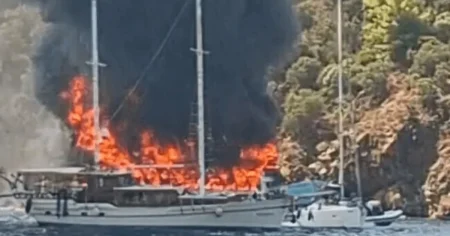

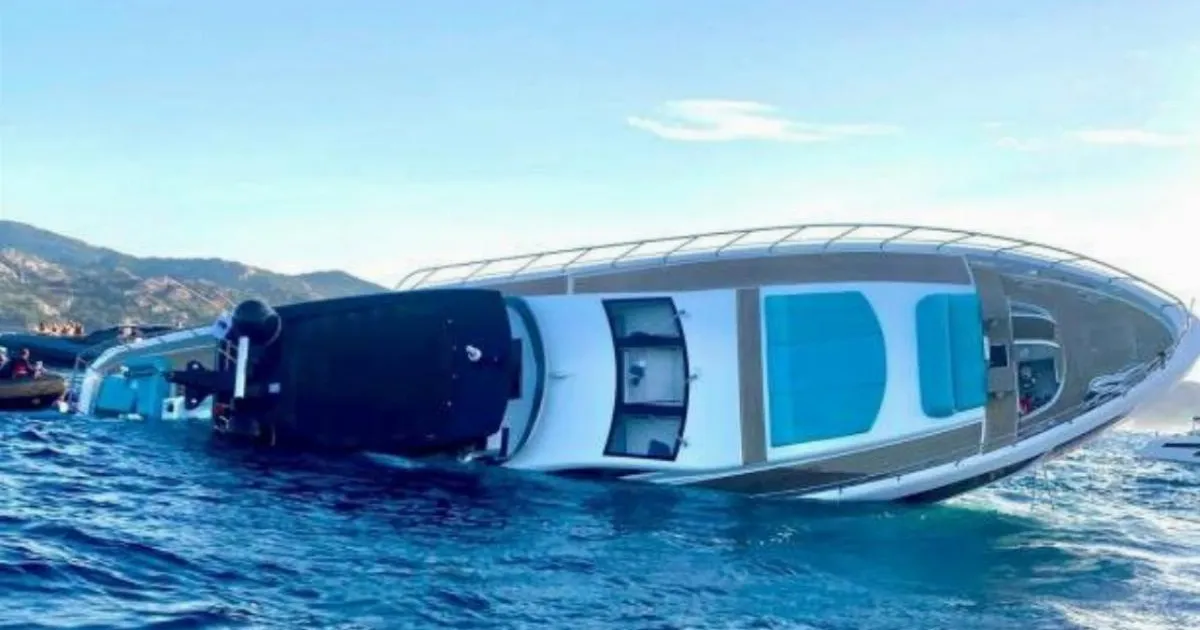
There is a particular kind of heartbreak that comes when something brand-new, painstakingly crafted and fiercely anticipated is snatched away in an instant. That is the reality now facing the owner of Angiola II, a gleaming 30-metre superyacht that sank off the coast of Sardinia only four days after it was delivered to him. The vessel, bought for £6.8 million, had just been unveiled to its owner as a freshly renovated masterpiece, the culmination of months and indeed years of work by Italian designers, engineers and boatbuilders. But on Tuesday evening, what should have been a dream voyage along the glittering Costa Smeralda turned into an emergency. Angiola II capsized between L’isola dei Cappuccini and Capo Ferro, two beautiful and familiar landmarks in one of the Mediterranean’s most exclusive stretches of water. Witnesses captured dramatic footage of the yacht leaning helplessly to one side, its sleek white hull beginning to slip beneath the surface as onlookers watched in disbelief. The cause of the disaster was a fire onboard, and the shock of seeing such a vessel go down so soon after its handover has rippled through the yachting community. There is something especially cruel about a shipwreck that happens before a boat has even had time to accumulate the scuffs, stains and small stories of normal life. A brand-new yacht is full of promise, polished wood and fresh upholstery, and the idea that it could suddenly become a sinking wreck in the same waters where it was meant to drift in style is almost impossible to process.
At the time of the sinking, the owner, an unnamed Italian businessman, was hosting 13 other people on board. It is not entirely clear whether that number included crew or whether the total amount of people on the boat exceeded its official capacity of ten, but what is known is that everyone made it off safely. According to Corriere della Sera, all passengers were evacuated onto other boats, a silver lining in what could have been a devastating tragedy. The fire broke out in the evening, and by the time the yacht sank it was already clear that no fuel leak had occurred, which offered authorities a little more breathing room as they turned from rescue to recovery. The exact sequence of events remains under investigation, and the yachting world is waiting with held breath for answers. For now, there is relief that a celebration did not become a funeral. The owner, who had only just taken possession of his new craft, will have to process the bewildering speed with which his investment and his joy went from triumph to wreckage. There is no official word yet on whether the fire started in the engine room, the galley or somewhere else, and until investigators release their findings, speculation will continue. But the emotional toll is already clear. The boat was not just a machine, not just a financial asset; it was the centrepiece of a new chapter in a man’s life. He chose it, paid for it, waited for it and hosted guests on it within days. Then, almost as quickly as it began, the entire experience ended in a scene of chaos, smoke and water pouring into a vessel that had been intended for freedom and leisure rather than disaster.
The lost yacht had its own history long before its latest owner came along. Built by Permare in 2020, Angiola II was one of six yachts under the Amer F100 line, a model that has earned a reputation for combining Italian design flair with serious performance. The vessel had previously sailed under the names Limbo and Arsana, and it had changed hands several times over its short but eventful life. Before being handed over to the Italian businessman just four days before the sinking, it had undergone an extensive renovation, presumably to ensure that it was in immaculate condition for its new owner. The technical details speak to the yacht’s ambitions. Four Volvo Penta diesel engines propelled the 30-metre vessel to a top speed of 28 knots, or roughly 32 miles per hour, and its five cabin rooms gave it an official capacity of ten people. The disparity between that official limit and the number of people reportedly on board during the sinking may become a focus of the investigation, though it is possible that the owner and guests were counted separately or that crew members were also present. Regardless, the vessel was clearly designed for elegant, intimate cruising rather than the raucous gatherings that sometimes dominate the image of the superyacht world. Its loss is not just a financial blow but the disappearance of a craft that had been deliberately refreshed and reimagined, filled with new paint, polished teak and the promise of sun-drenched days on the water. For a boat to be given a second life through renovation and then sink almost immediately afterwards is a particularly bitter twist, one that will linger in the minds of everyone who worked on her.
As the wreck rests on the seabed, authorities are working to recover it. A specialist 200-tonne tugboat has been deployed to the site, and containment barriers have been placed around the sunken boat to protect the surrounding marine environment. The absence of a fuel leak has made the recovery operation less urgent from an environmental standpoint, but the challenge of raising a 30-metre yacht from the sea should not be underestimated. The operation will be delicate, especially in a region as environmentally sensitive as the Costa Smeralda, where the clarity of the water is part of the region’s immense appeal. Meanwhile, the builders, Amer Yachts, have issued a carefully worded statement. The company said the vessel had been correctly maintained while it was under warranty, and CEO Barbara Amerio expressed both relief and sadness. “Like everyone else, we are relieved that passengers and crew are safe – and, like everyone else, we are awaiting official findings,” she said. Then came the line that anyone who has ever loved a boat, a car or any painstaking project will understand: “It is painful to see a boat sink to which we devoted a year and a half of work, cared for like all our boats, down to the smallest details.” Her words reflect the strange intimacy between creator and creation. For the yard, Angiola II was not merely a product in a catalogue; it was a labour of love, a showcase of skill, patience and craftsmanship that had been tested and refined over many months. To watch it tilt, fill with water and disappear is to watch part of that work vanish. Yet there is also a professional discipline in her response: no blame, no speculation, just a cautious hope that the official investigation will provide clarity and, eventually, lessons.
This incident takes place in one of the most beautiful and contested corners of the Mediterranean. The Costa Smeralda has long been a playground for the super-rich, its shores lined with yachts that seem to multiply every summer. Sardinia is routinely ranked among Europe’s top destinations for superyacht owners, drawn by clear water, dramatic landscapes and an atmosphere of exclusivity that is hard to find elsewhere. But that influx of luxury has not been universally welcomed. Locals have complained about private beaches being monopolised by visitors arriving on giant vessels, about overcrowding along the coastline, and about the environmental pressure exerted by so many large machines in relatively small bays. There is a certain irony in the fact that even in this world of perfect sunsets and polished decks, disaster can strike with little warning. A fire, a mechanical fault, a moment of inattention — the sea does not care about price tags. The sight of Angiola II struggling to stay afloat in the same waters associated with glamorous leisure served as a stark reminder that the sea remains an unpredictable force, capable of humbling even the most expensive toys. For those who live and work along the Sardinian coast, this is no surprise. For the rest of the world, it is a jarring image: a £6.8 million yacht, the product of an immense industrial and human chain, reduced to a wreck in the water, surrounded by smaller, more modest boats that had rushed to help. In a way, the sinking stripped away the glamour and revealed the fragile machinery beneath, a reminder that luxury is often only a thin veneer over the same mechanical realities that affect all boats.
Ultimately, the sinking of Angiola II is a story about expectations and fragility. The owner stepped aboard his new purchase expecting the beginning of something wonderful. The yard that built it expected to see their creation cruising gracefully for years. The guests who joined him expected an evening of luxury and laughter. Instead, they got an emergency evacuation, a waterlogged hull and a tangle of insurance claims. But there is also a human story of survival, and it should not be forgotten. The most important headline to emerge from Tuesday evening is not the loss of a boat but the fact that nobody died, nobody was seriously hurt, and everyone had a second chance. Boats can be rebuilt or replaced, though the memories and craftsmanship cannot be replaced so easily. As the investigation begins, those affected will have to wait to understand exactly what went wrong. The 200-tonne tugboat will eventually lift Angiola II from the sea, and engineers will pore over the wreckage, searching for the answer to a question that must haunt every yacht owner: how could something so new and so well cared for fail so catastrophically? For the rest of us, the image of the sleek hull slipping beneath the waves is a strange kind of memento mori, a reminder that wealth cannot buy absolute safety, but also that human lives, the true luxury, were spared. The Costa Smeralda will no doubt see another superyacht in those waters very soon, but none of those aboard Angiola II will forget the evening their dream became a near-miss. And perhaps, in time, that will be the story they tell: not the fire, not the panic, not the financial loss, but the gratitude that they all lived to sail another day.