


In the often-predictable world of local government, where debates typically revolve around potholes, waste collection schedules, and the minutiae of zoning laws, one German politician is shattering the mold in spectacularly unconventional fashion. While his colleagues might be agonizing over the nuances of public transportation routes or the frequency of street cleaning, Julien Ferrat, a newly elected city councillor in Mannheim, is pursuing a very different kind of civic agenda. His mission? To transform his city into a haven for nudists and swingers, and his primary tool for achieving this ambitious goal is nothing less than a full-blown swingers party held within the hallowed halls of the city’s town hall. The proposal has sent ripples of disbelief, amusement, and outright consternation through the conservative corridors of local administration, turning the city council into an unlikely epicenter of an international debate about the boundaries of public space and the nature of tourism promotion.
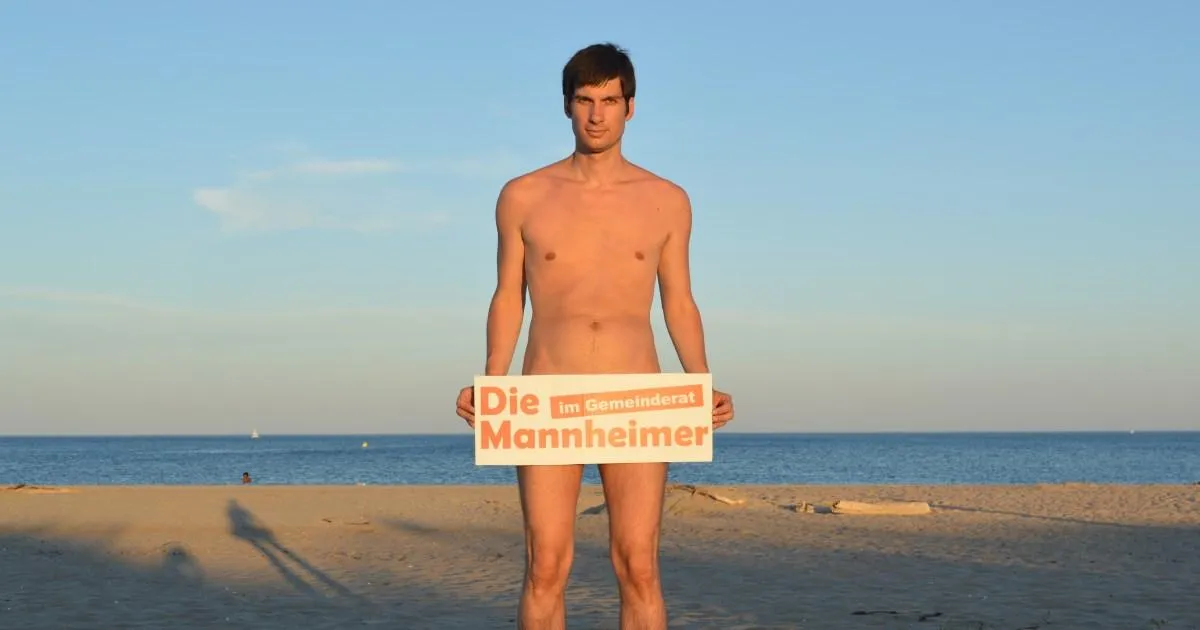
Ferrat, a 35-year-old representative of the local Mannheimer party, is not being coy about his intentions. He is an avowed nudist, an open swinger, and a man on a mission to destigmatize alternative lifestyles. For him, the swingers party is not merely a provocative stunt but a calculated piece of economic and social strategy designed to put Mannheim on the map for a specific, and often overlooked, demographic of traveler. He envisions his city as the perfect rest stop, a welcoming layover, for the thousands of nudists and lifestyle enthusiasts who make the long pilgrimage south each year to the world-renowned resort of Cap d’Agde in southern France. By offering a slice of that liberating culture in the heart of Baden-Württemberg, Ferrat believes he can attract a significant number of visitors who might otherwise simply pass by, injecting much-needed revenue into the local economy and positioning Mannheim as a progressive, open-minded destination in its own right. It is a boldvision that firmly places him in the spotlight, a position he seems to relish as he tirelessly works to shed light—and clothes—on a topic that most public officials would avoid at all costs.
The journey to this controversial proposal began, fittingly, on a sun-drenched trip to the very epicenter of naturism that he now hopes to emulate. Ferrat had previously organized a guided excursion for a group of nearly thirty locals to Cap d’Agde, the sprawling French resort that serves as the unofficial capital of the nudist and swinger world. It was during this excursion, while observing the logistics of travel, that the councillor’s political instincts kicked in. A significant geographical problem became glaringly apparent: the distance from northern Germany and Scandinavia to southern France is formidable, often impossible to traverse in a single day’s drive. This presented an opportunity. Seeing weary travelers forced to stop and rest, he imagined a destination that could serve as a welcoming, thematic halfway house. “For people in northern Germany or Scandinavia, Cap d’Agde is too far to reach in one day,” Ferrat explained, laying out his rationale with the precision of a seasoned economic developer. “If they are looking for somewhere to stay, we can attract them to Mannheim. If we can attract more nudists and swingers it would be a good way to create more income for the city.” The idea for a local swingers party, held in the most public and symbolic building in town, was his audacious attempt to put this plan into motion and capture the world’s attention in the process.
This grand plan to make Mannheim the “little sister” of Cap d’Agde has catapulted Ferrat into the national (and now international) media spotlight, a role he appears to embrace with considerable gusto. The town hall, he argues, is “perfectly suited” for such an event, and he confidently claims that a thorough review of the municipal rulebook has yielded “no house rules or municipal bylaws that explicitly prohibit” the hosting of sex events within its walls. He has spent his days touring Germany’s media circuit, extolling the virtues of his plan and gauging public interest. The response, he says, has been surprisingly positive. He estimates that around fifty locals have proactively reached out to express their interest in attending, though he pragmatically doubts that all of them will actually follow through when the time comes to put their names on the guest list. Among the intrigued is another local politician from a district council, indicating that his provocative idea has found at least some traction within the political sphere itself. For Ferrat, who lives in an open relationship, the parties are life-affirming events which he calls “the best,” a space where consenting adults can explore their “sexual adventures” in a safe and social environment outside of the confines of traditional mores.
However, for the city’s staid administration, the entire notion has landed with all the subtlety of a wrecking ball. They are, to put it mildly, “not amused.” The official response has been one of cool, bureaucratic dismissal, a stark contrast to Ferrat’s unbridled enthusiasm. A spokesperson for the city administration issued a statement to Metro clarifying their position, emphasizing that they had formally contacted Ferrat to request specific details, but had been met with a wall of vagueness. “The City of Mannheim contacted Mr. Ferrat to obtain information about the event at the City Hall that he had announced in the media,” the statement read. “Unfortunately, in his response he did not provide any of the specific information requested—neither a date nor a room, nor any indication of how the planned event relates to his mandate as a member of the municipal council.” Based on this frustrating lack of concrete planning, the administration concluded that they “assume” the planned event “cannot be held” at the prestigious venue. One can almost picture a senior official’s eyes rolling as they typed that final, dismissive sentence, relegating what Ferrat hoped would be a triumphant launch to a bureaucratic dead end.
The obstacles, however, extend beyond the mere denial of the venue. Ferrat has also revealed that his attempts to advertise the swingers party in the city’s official gazette were met with a refusal, a stark contrast to their willingness to run an ad for his Cap d’Agde trip the previous year. This institutional pushback has done nothing to dampen his resolve. Unfazed by the label of “craziest” local politician in Germany, which he does not dispute, Ferrat is digging in his heels. He is not prepared to let his vision be swept under the council chamber rug. “If they do not allow it, I will take legal action,” he stated defiantly, a clear promise to test the boundaries of municipal law. “If that doesn’t work then I will hold it in a private place.” This threat demonstrates a commitment that goes beyond mere publicity seeking; he is prepared to wage a costly and time-consuming legal battle for his principles, or at the very least, to find a workaround that ensures the party happens somewhere, regardless of the city’s wishes. His story has become a fascinating case study of the friction between an individual politician’s personal lifestyle, their role as a public servant, and the conservative institutional structures they are meant to represent.
Ultimately, Julien Ferrat’s audacious campaign is more than just an amusing story about a swingers party in a town hall. It is a deeply human narrative about the clash between an unconventional individual’s vision and the rigid, rule-bound world of civic administration. It raises poignant questions about the purpose of public buildings, the limits of political mandates, and the very definition of what constitutes a city’s image and economic strategy. While the city administration stands firm in its bureaucratic resistance, worried about the “reputation” of their hallowed halls, Ferrat remains a determined, bare-faced champion of a lifestyle he feels has been unfairly marginalized. He views his party not as an outrage, but as a civic invitation, a key to unlocking a tourism market that others have ignored. Whether his event ever takes place within the ornate rooms of Mannheim’s Rathaus remains a highly uncertain prospect, hanging in the balance between a councillor with a dream and an administration with a firm “nein.” But regardless of the final outcome, one thing is for certain: Julien Ferrat has ensured that the conversation about Mannheim is no longer just about boring stuff like libraries and bin collection. He has forced his city, and the world, to talk about something far more interesting, and in his eyes, far more liberating. In the grand and often staid panorama of German local politics, he has firmly secured his place as its most fascinating, and most exposed, outlier.