
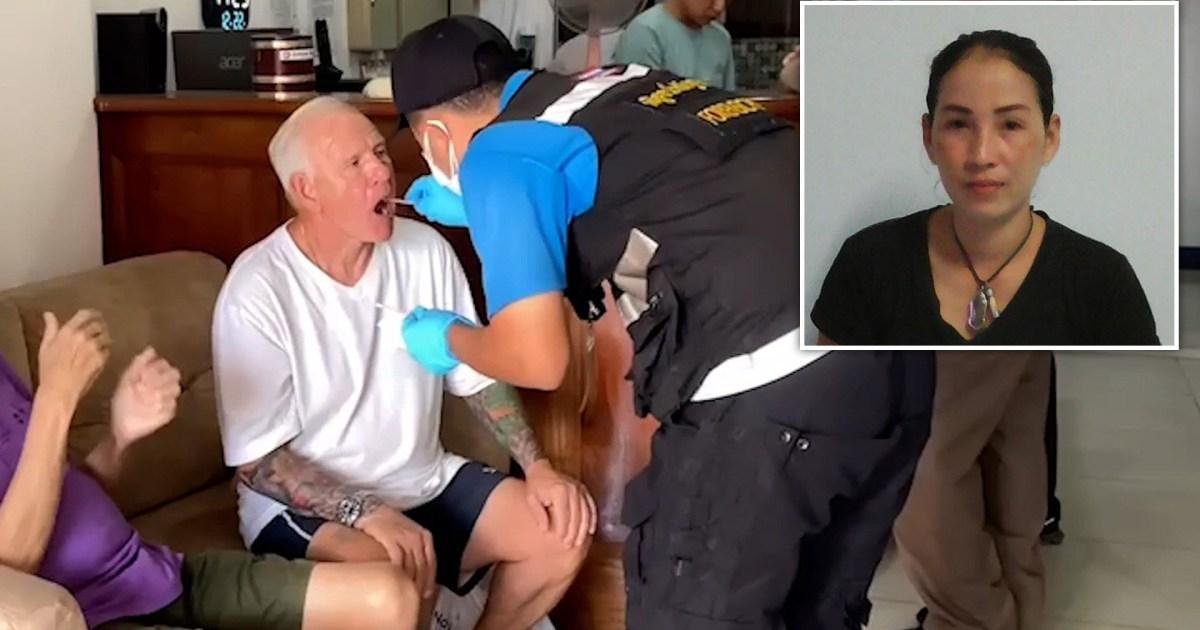
The perplexing death of a Thai woman in a Pattaya hotel room has sparked a police investigation involving a British tourist. 71-year-old Bearach Beataidh from County Down, Northern Ireland, became a person of interest after the body of 45-year-old Duangta Khampongsom was discovered in his hotel room. CCTV footage captured the pair entering the room together on December 18th, displaying affectionate gestures. However, Beataidh was seen leaving the room alone on December 22nd, and the grim discovery was made later that morning by a hotel caretaker who detected a foul odor emanating from the room. The caretaker, Prayoon Chinsai, used a spare key to enter the room and found Khampongsom’s decomposing body. Police subsequently located Beataidh at a nearby bar. He admitted to being aware of the body but claimed ignorance of her death, a statement that has fueled police suspicion.
The state of the room and the condition of Khampongsom’s body have raised numerous questions. Police Captain Puttharak Sonkhamhan noted the advanced state of decomposition, indicating that Khampongsom had been dead for at least three days. She was found partially clothed, wearing only denim shorts, with no signs of struggle or ransacking within the room. The presence of bodily fluids and blood on the bed further complicates the narrative. Given the evident signs of decomposition and the pervasive odor, authorities have expressed skepticism regarding Beataidh’s claim of not realizing she was deceased. The discrepancy between his statements and the physical evidence has led police to treat his version of events with caution.
Beataidh offered an explanation for Khampongsom’s presence in his room, stating that she was a prostitute from a nearby bar whom he invited to stay after she was allegedly assaulted. He claimed she was ill, experiencing vomiting and prolonged periods of sleep, which he perceived as exhaustion rather than a cause for alarm. He maintained that their last interaction was on December 19th and that he hadn’t noticed any unusual smell in the room, further justifying his claim of being unaware of her death. Despite his assertions of innocence, denying any involvement in her death, the police have taken swabs for DNA analysis and are meticulously reviewing CCTV footage to corroborate or refute his account.
The investigation is further complicated by the lack of a definitive cause of death. Khampongsom’s body was transported to Bang Lamung Hospital for a post-mortem examination, but the results have yet to be released. This crucial piece of information could provide valuable insight into the circumstances surrounding her death and potentially validate or invalidate Beataidh’s claims. The police are actively pursuing various lines of inquiry, including forensic analysis and witness interviews, to piece together the events leading up to Khampongsom’s death.
The contrasting narratives presented by Beataidh and the physical evidence found at the scene create a complex puzzle for investigators. The timeline of events, from the pair entering the room together to Beataidh leaving alone days later, coupled with his claim of not knowing Khampongsom was dead despite the advanced decomposition, raises serious questions. The absence of signs of struggle or forced entry further muddies the waters, leaving investigators to grapple with the possibility of a natural death versus foul play. The forensic analysis, including DNA testing and the post-mortem examination, will be crucial in determining the truth.
The investigation continues as Thai authorities work to unravel the mystery surrounding Duangta Khampongsom’s death. The conflicting information, the questionable timeline, and the unanswered questions surrounding the cause of death all contribute to the complexity of the case. As the investigation unfolds, the focus remains on gathering further evidence, including forensic analysis, witness testimonies, and a thorough review of CCTV footage, to determine the sequence of events and ultimately ascertain whether Bearach Beataidh played any role in Khampongsom’s demise. The case underscores the challenges faced by investigators when dealing with conflicting accounts and the importance of forensic evidence in uncovering the truth.