

On a clear morning in June, an Air India Boeing 787 lifted off from Ahmedabad, bound for London. It was a flight full of promise: people returning home, families traveling to visit relatives, passengers beginning new chapters in Britain. But within minutes, that promise was violently shattered. The aircraft crashed near a medical hospital, killing all 260 people on board, including 52 British nationals. It was one of the deadliest aviation disasters in recent memory, and it set off a search for answers that has now stretched well beyond a year. For the families of those lost, every new detail has been painful, and every official statement has been scrutinized. They want to know what happened. They want to know why their loved ones never made it to London. And perhaps most of all, they want to know whether the story they have been told is actually true. As the months passed, that question has become more urgent, more complicated, and more troubling. What began as a heartbreaking tragedy has evolved into a bitter dispute over evidence, timing, and the very integrity of the official investigation.
The first official shock came in July 2025, when India’s Aircraft Accident Investigation Bureau released a preliminary report. In it, investigators suggested that the Boeing 787’s fuel switches had been moved to the “cut-off” position immediately after takeoff, halting the flow of fuel to the engines. The implication was unmistakable: someone in the cockpit had deliberately or fatally erred in a way that brought the plane down. Media reports soon followed, suggesting that Indian investigators were leaning toward the theory that pilot action, possibly even self-sabotage, lay behind the crash. For the families of the pilots, and for the wider aviation community, this was a devastating allegation. It painted the flight as a deliberate act, not an accident. It turned grief into suspicion. The Federation of Indian Pilots publicly criticized the report, and lawyers representing the victims accused investigators of rushing to conclusions. Mike Andrews, a lawyer at the American firm Beasley Allen, was particularly vocal. He called the pilot suicide theory “rank speculation and conjecture.” He pointed out that the preliminary report was just that: preliminary. But the damage had already been done. The story of the suicidal pilot had spread around the world, and no matter how much anyone protested, it seemed to stick.
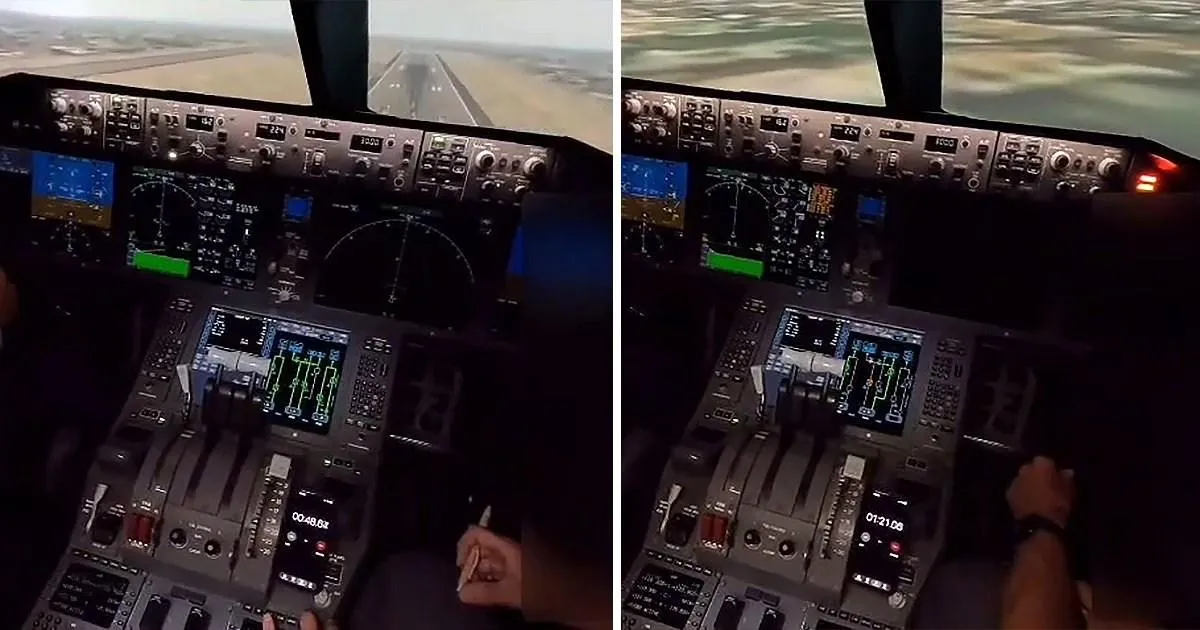
Mike Andrews and his legal team represented 130 victims and their families. They were not willing to accept the official timeline without question. So they decided to test it themselves. They brought experienced pilots to France and conducted a series of flight tests using the highest-level D simulator, the kind used to train and evaluate professional pilots in realistic conditions. Their focus was on a small but crucial piece of emergency equipment: the Ram Air Turbine, or RAT. The RAT is a backup generator that is designed to drop down from the underside of the aircraft and spin in the passing airstream to provide emergency hydraulic and electrical power when normal systems fail. It is a last-resort safety mechanism, a silent guardian that kicks in when the plane has already lost something vital. The AAIB’s preliminary report claimed that the RAT began providing hydraulic power within five seconds of the fuel switches being cut off. But Andrews’s tests appeared to show a very different story. According to the test data, the RAT would need between 14 and 18 seconds to provide power. That mismatch was not a small detail. It was a fundamental contradiction. If the RAT could not have deployed that quickly, then the official timeline made no sense. And if the RAT did not deploy in response to the fuel cutoff, then perhaps it deployed earlier — maybe even before the plane ever left the runway. Grainy footage obtained by the lawyers seemed to support this possibility, showing what appeared to be the RAT already extended while the aircraft was still on the ground.
This is not just a technical argument about switches and hydraulics. It is a matter of understanding what actually happened in the final moments of the flight. The RAT is not something that pilots deploy casually. It is an emergency measure, reserved for situations where the aircraft’s primary systems are already failing or have failed completely. If the RAT was already extended before the fuel cutoff, then the plane may have been experiencing an electrical or mechanical problem long before any alleged pilot action. That would mean the pilots were not the cause of the disaster, but perhaps victims of it, struggling to control an aircraft that was already in crisis. It would also mean that the official investigation may have misidentified the sequence of events, perhaps catastrophically so. In a letter sent to India’s AAIB, the US Department of Transportation, and UK officials, Andrews laid out his findings. He wrote that the evidence “tends to indicate that the RAT deployment (a potential symptom of electrical system failure) was not caused by alleged pilot induced fuel system changes.” In other words, something else was happening before the pilots supposedly moved the fuel switches. That something could have been an electrical fault, a fire, or any number of other failures. Andrews said he and his team felt confident that “something else is happening,” and that the AAIB would either have to revise its timeline or admit that it made a mistake.
For the families represented by Andrews, this controversy has been agonizing. They have had to watch the official investigation move slowly, releasing a preliminary finding that seemed to blame the dead pilots, then facing criticism, and then promising to conduct further tests. The emotional toll is difficult to overstate. Every time a new piece of information emerges, they are forced to relive the loss. They are also forced to confront a deeply unsettling possibility: that the authorities are not telling them the whole truth. When asked directly whether he believed the AAIB had been honest so far, Mike Andrews paused. The silence lasted sixteen seconds. Then he answered quietly: “I don’t know.” That pause said more than any speech. It reflected the deep uncertainty that now surrounds the investigation. Andrews said the families were “understandably frustrated” with how the case has unfolded. He acknowledged that there was no way to know what the AAIB would ultimately say in its final report. But he made it clear that the official narrative had already failed a basic test of credibility. If the investigators were truly confident in the pilot suicide theory, he argued, they would not need to conduct expensive new simulator tests. Yet in recent months, the AAIB has reportedly told India’s Supreme Court that it has carried out its own flight simulations. Andrews called this “hugely significant.” He said it suggested the investigators themselves had doubts. “If you are so convinced in the pilot suicide narrative,” he asked, “why are you running expensive testing?” For him, the very existence of those tests was an admission that the original theory was not solid.
The AAIB has defended its work. It insisted that its preliminary report was never meant to direct blame toward the pilots or encourage people to draw conclusions. It said the purpose of the report was simply to provide information about what happened, and that it was too early to reach definite conclusions. The body pointed to its record in investigating 92 accidents and 111 serious incidents since 2012. Boeing, for its part, has maintained that the 787 is safe and has deferred to the AAIB for details about the investigation. Air India’s leadership also stood behind the preliminary findings, saying that the report indicated nothing wrong with the aircraft, the engines, or the airline’s operations. Yet none of these assurances have eased the grief or doubt felt by those who lost loved ones. The final report, originally expected in June, has now been postponed until October. When it finally arrives, it could confirm the official theory, revise it, or admit that the truth is still unknown. For Mike Andrews and the families he represents, that process matters almost as much as the conclusion. They are not looking for retribution. They are looking for honesty. They want the victims to be remembered not as a footnote in a controversial report, but as people whose lives mattered. They want the pilots, whatever happened in the cockpit, to be treated fairly. And they want the public to understand that aviation safety depends on telling the truth, even when the truth is difficult. Until that happens, the memory of those 260 people will remain tangled in a web of suspicion and unanswered questions. The simulators may offer answers. The data may eventually reveal what happened. But no amount of technical analysis can heal the wound inflicted on the families, and no preliminary report can replace the full, transparent accounting they have been waiting for. The truth is not just an abstract ideal. It is the only thing that can begin to bring closure to a tragedy that never should have happened.