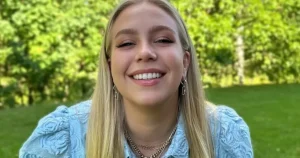

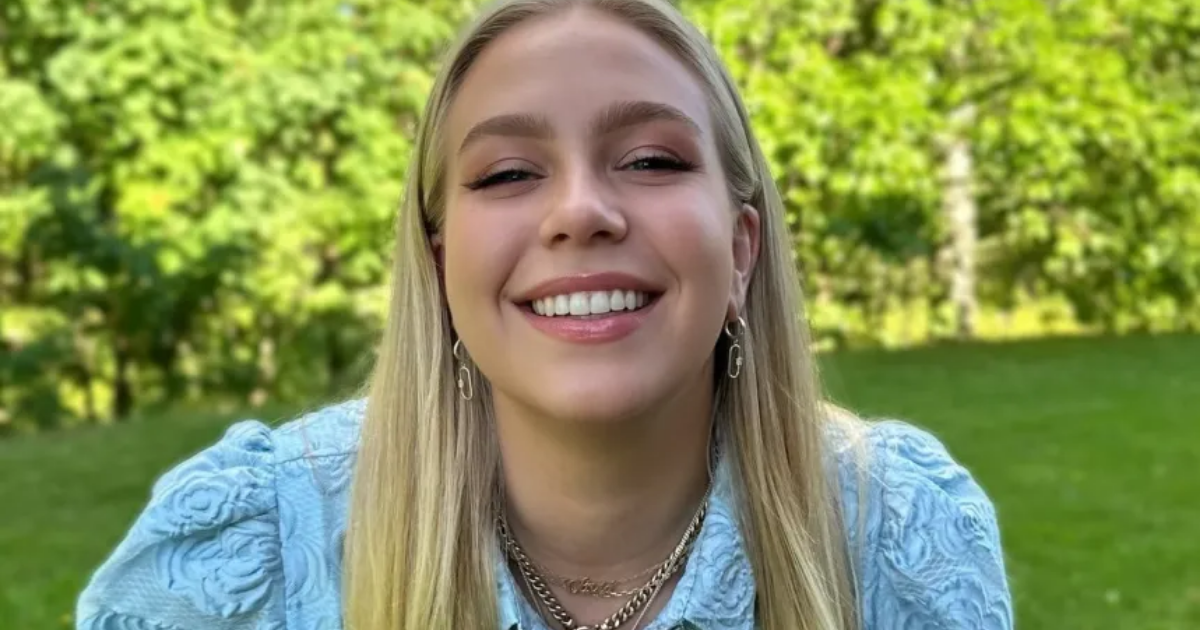
On a seemingly ordinary morning in Helsinki, a young woman walked into a private plastic surgery clinic hoping to change something about her body and feel more confident in her own skin. Olivia Oras, 27, was not just any patient. She was a daughter, a friend, a former influencer, and a survivor who had already faced more than most people could imagine. For years she had lived under the gaze of strangers—first as a teenager sharing her life online, then as a young woman trying to rebuild herself away from the spotlight. The liposuction she had booked was described as routine, the kind of procedure advertised on Instagram every day. But nothing about that day was routine. After the anaesthetic was administered, Olivia lost consciousness and never regained it. She was rushed to Helsinki University Hospital, where doctors fought to save her for several days. On September 3, she died. Her family, shattered by years of watching her struggle, filed a police report demanding answers. Police confirmed the investigation is in its early stages and are treating the case as possible aggravated manslaughter, which carries up to six years in prison. For those who followed Olivia’s journey, the tragedy is not just a headline. It is the story of a young woman who had survived so much—only to die in a place she believed would make her feel better. It is also a painful reminder that cosmetic surgery is never truly simple. Beneath the promise of a new body lies the reality of anaesthesia, incisions, and risk. For someone with Olivia’s history of anxiety and addiction, the decision to go under the knife deserved exceptional care. Instead, it ended in an unthinkable loss.
The investigation into her death has already exposed disturbing details about the clinic where Olivia was treated. While no individuals have been publicly identified, Helsinki Police raided the Plastic Surgery Center, the facility where the procedure took place. Investigators found that clients had been “seriously endangered” by clinicians working there—a phrase that suggests far more than a single tragic mistake. It points to carelessness, recklessness, and a failure to protect people who placed their trust in medical professionals. As a result, the company was ordered to immediately suspend operations at both of its locations. This was not a voluntary choice; it was a direct response to conditions that authorities deemed unsafe. The closure is an important step, but it also raises urgent questions about the wider cosmetic surgery industry. How many other clinics are operating in similar ways? How many other patients are being anaesthetised without proper screening? How many tragedies have been quietly dismissed as “rare complications”? Olivia’s family is not alone in wanting answers. Her case has sparked a much broader conversation about the pressure to look perfect, the influence of social media, and the ways in which profit can outweigh patient safety. The fact that this happened in Finland, a country with a highly regarded healthcare system, makes it all the more shocking. If it can happen there, it can happen anywhere. The manslaughter investigation will determine legal responsibility, but the deeper need is for systemic change: stricter regulations, more rigorous oversight, and a cultural shift in how we view procedures that are too often treated as casual upgrades rather than serious surgery. Behind every legal term in this case is a real young woman whose life was cut short, and whose loved ones now carry the weight of her absence.
Olivia’s public life began when she was just 14. She started sharing her daily life online at a time when social media was becoming a powerful force in shaping how young people saw themselves—and how they wanted to be seen by others. Her content found an audience, and she quickly became an influencer. In 2016, when she was 16, she agreed to take part in a documentary called The Perfect Selfie. The film followed her for 18 months and was described as a “modern coming-of-age story in the social media era.” It explored her relationship with the internet, with her followers, and with herself. The cameras captured both the glamour and the grit: the carefully staged photos, the comments, the pressure, the loneliness. For a teenage girl, this was an enormous weight to carry. The title of the documentary would later feel tragically ironic. Olivia was trying to perfect her image for the world while, inside, she was struggling to find herself. After the documentary was released, the attention became too much. She developed anxiety and made the brave decision to step away. She fled to Amsterdam, shut down her social media accounts, and attempted to disappear into a normal life. She took a job at a café and planned to study at university. It must have taken tremendous strength to leave behind the fame that so many people chase. But the past is not easy to escape, and the trauma of living under a public gaze left deep marks that remained with Olivia for years. She could walk away from the camera, but she could not walk away from the conditioned belief that her worth was measured by how she looked.
Life in Amsterdam was supposed to be a fresh start, but another trauma was waiting. While living in her apartment building, Olivia witnessed a friend die by suicide. The scene stayed with her, becoming a recurring image she could not shake from her mind. In a 2024 interview, she said, “I was just building the life of my dreams, but now I saw what happened in my eyes over and over again.” That sentence captures the cruelty of trauma: even as she tried to move forward, the past kept pulling her back. Olivia eventually returned to Helsinki to live with her parents, hoping that home would bring comfort. But the pain had already taken root. She began struggling with alcoholism and a sleeping pill addiction. Rather than hide these struggles, she chose to speak about them openly. In the influencer world, where everyone tries to appear perfect, Olivia’s willingness to share her flaws made her remarkable. She used her voice to talk about mental health, addiction, and recovery, even when it was uncomfortable. In 2022, she spent a month in an addiction facility. That was not a sign of failure; it was an act of courage. She was fighting for her life, the same way she had fought through anxiety, through fame, through loss. Recovery is not a straight line, and Olivia’s journey had ups and downs. But she never gave up. She kept looking for ways to heal, and she refused to let her demons define her. That fight deserves to be remembered as much as the tragedy of her death.
In the final chapter of Olivia’s life, there was purpose. Her father was diagnosed with pulmonary fibrosis, a progressive lung disease that makes every breath a struggle. Watching him fight the disease moved Olivia to act. She founded an organisation dedicated to supporting research into pulmonary disease. It was a mission born out of love, and it gave her a reason to keep going. She also returned to the professional world, taking on a role as Head of Community at an AI start-up and working in marketing for a wellness technology company. She was more than an influencer; she was a creative thinker, a team leader, a daughter who wanted to make her parents proud. Her career choices reflected a desire to do meaningful work, work that helped people. But the pressures of the beauty industry never fully disappeared. Olivia had spent years being judged on her body and her appearance. The documentary, her social media accounts, and the comments she received had all left their mark. It is impossible to know exactly why she chose to undergo liposuction, but it is not hard to understand. In a world that constantly tells women that their worth is tied to their looks, changing your body can feel like the only way to change your life. Olivia was not a vain person. She was someone who carried the weight of other people’s expectations, and she hoped that this procedure might relieve some of that weight. Instead, it took her away forever.
Olivia Oras’s death has sparked not only a criminal investigation but also a necessary conversation about safety in cosmetic surgery. It is a conversation that has been postponed for too long. Every year, millions of procedures are performed around the world, but they are often marketed as simple fixes, with little mention of the risks involved—risks of anaesthesia, infection, malpractice, and tragedy. Olivia’s case exposes the dark side of that industry. Yet amid the legal proceedings, the inspections, and the calls for regulation, it is important to remember the person at the centre of this story. Olivia was not defined by the procedure that killed her. She was defined by her resilience, her honesty, and her care for others. She was a survivor who spent most of her life trying to heal. She dealt with anxiety and addiction, but she also fought back. She built a foundation for her father. She made friends, found jobs, and dared to hope. Her story is not perfect, but it is real. That is what makes her death so heartbreaking. In the end, the title of that documentary asks us all a question: What is a perfect selfie? It is a lie. Perfection does not exist. But Olivia Oras did. She laughed, she struggled, she loved, and she lost. And she will not be forgotten. Her family and friends will keep her memory alive. The investigation will continue, and perhaps it will bring some measure of justice. But nothing can replace the loss. The only way to honour Olivia is to learn from her story—by demanding safer practices, by speaking openly about mental health and addiction, and by remembering that behind every social media profile is a real person with a fragile, precious life. Olivia’s life was precious. It ended far too soon, but it mattered. And that is not a lie.