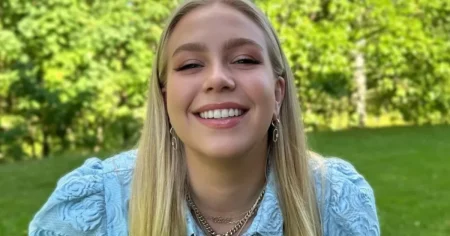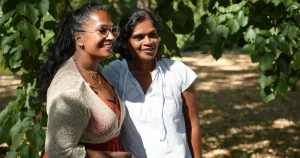

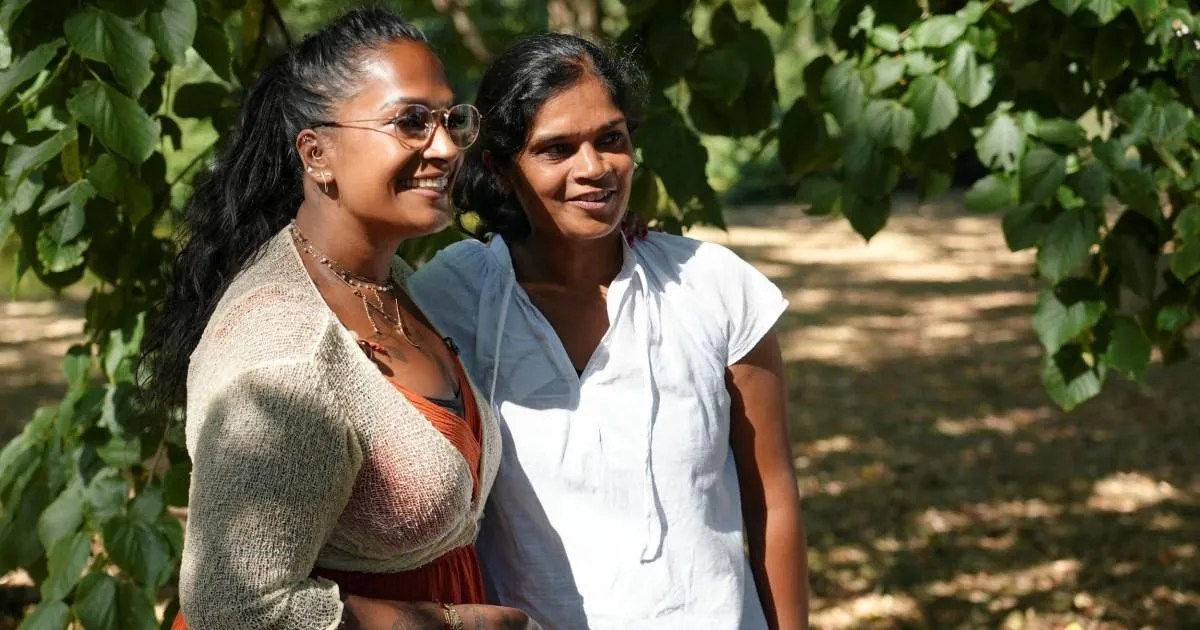
Some meetings feel less like coincidence and more like the closing of a circle. When Meena Geltink and Minal Tijssen first locked eyes as teenagers, neither could have known that the face looking back at them was the face of a sister. Meena, now 43, and Minal, now 44, had both been born in India and adopted as babies by Dutch families. They were raised in the Netherlands, surrounded by love, but also by the quiet strangeness of growing up with a face that did not match the family around them. Other children asked where they were really from. They learned to give short answers. They learned to smile past the questions. Then they met at an event hosted by the adoption agency their parents had used, a gathering intended to bring together children adopted from India. It was ordinary in intention but extraordinary in result. Everyone around them noticed what they could not yet name. “Look at yourselves in the mirror,” someone said. Meena looked at Minal and felt the floor tilt. “Oh my God, she has my nose! We have the same laugh.” It was as if she was seeing her own reflection in a body that had been living a parallel version of her life. Over dinner that first night, she kept looking at Minal, unable to stop. The way Minal narrowed her eyes when she grinned, the way she gestured with her hands, the way her voice lifted—it was all eerily familiar. They exchanged phone numbers the next day, and the friendship that followed felt less like a new relationship and more like remembering someone they had always known. For two girls who had spent their lives feeling different, finding each other was a profound kind of homecoming. They did not yet know they were sisters, but their hearts seemed to know anyway. It was the first clue in a mystery that would take decades to solve, a single thread pulling them toward a truth neither could yet imagine.
Their friendship grew in the language of teenage girls: letters, secrets, songs. Throughout their adolescence, Meena and Minal wrote to each other constantly, long letters that crossed the miles and carried the weight of their daily lives. They wrote about boys they had crushes on, about school and the feeling of being different, about going out with friends and the small dramas that felt enormous. They wrote about the Backstreet Boys, because that was who they were listening to, who they were dreaming about, and because music had a way of saying things they did not yet have words for. At some point they began to address each other as “Sis.” It was not a decision they made together, but a name that simply felt true. “We felt that way,” Meena later explained. They were sisters in spirit, sisters in laughter, sisters in the way their lives had been shaped by adoption. They were convinced that their connection could not be explained by coincidence alone. And yet, life has a way of loosening even the strongest threads. Minal moved to France, chasing a new life in a new country. Meena had her first child and was swept into the consuming world of motherhood. The letters stopped arriving. The phone calls became more infrequent, then stopped entirely. They did not say goodbye; they simply drifted, as people do, into separate futures. But the bond they had formed was not erased. It remained with them like a half-remembered melody, buried beneath the obligations of adulthood. They each carried the memory of a girl who looked like them, laughed like them, and called them sister. They just did not know when, or how, or even if, they would ever see her again. Still, somewhere in the back of their minds, the question never fully disappeared: who was that girl, and why did she feel so much like family?
Years passed. Meena continued to live in the Netherlands, raising her family, building her life. But the question of her origins never fully left her. In 2017, she went to another adoptees meeting, this one specifically for people adopted from India. The room was full of people who understood the particular ache of growing up between worlds, of loving the family who raised you while wondering about the one you never knew. At that meeting, Meena heard about DNA testing. The promise was irresistible: a simple swab of saliva, a laboratory analysis, and perhaps, a door opening to the past. She took the test. She waited. She hoped. But when the results arrived, there were no meaningful matches. No long-lost relatives appeared, no names of birth parents, no branches reaching out from an unknown family tree. The quiet was painful. She eventually deleted the app from her phone, telling herself she needed the storage space, though really she needed to stop hoping. It was easier to close the door than to stand in the doorway watching it remain empty. What she did not know was that, at roughly the same time, Minal was carrying her own questions. Living in France, building her own family, Minal had also never forgotten the girl from the adoption event, the one with her nose and her laugh. She had wondered, over the years, what Meena was doing, whether she was happy, whether she still thought of the letters. In April, while visiting her parents in the Netherlands, Minal took a DNA test of her own. Perhaps it was curiosity. Perhaps it was hope. Perhaps it was the same invisible thread that had guided them to one another as teenagers. Whatever the reason, the results would change everything.
In May, Meena received a Facebook message that stopped her heart. It was from Minal. The message read simply: “Remember me?” As if she could ever forget. Minal had attached a screenshot of her DNA test results, and the image was almost too powerful to look at. Meena stared at the screen, not quite understanding, not quite daring to believe. Her hands were shaking as she tried to open the DNA app she had removed years ago. She had to reinstall it, and then, in her nervousness, she typed the wrong password ten times. “I was so nervous, I entered wrong passwords 10 times before I was able to log in,” she said. When she finally got through, the screen displayed something that made the world go quiet: a 100 percent match. Meena and Minal were not merely friends who resembled each other. They were biological sisters. The revelation was staggering in its simplicity and its enormity. For years, they had called each other “Sis” without knowing the word was literal. For years, they had looked into each other’s faces and recognized something deeper than friendship. And now, with a single line of data, all of it made sense. The matching noses, the identical laughter, the way they finished each other’s sentences, the inexplicable bond that had refused to break across time and distance—it was all rooted in something profound. Meena felt as if she had been handed a missing piece of herself. “Minal was my missing puzzle piece I had waited so long for,” she would say later. The sister she had chosen as a teenager was the sister she had been born with. The story they had begun writing in childhood had suddenly gained a new chapter, one they never expected to be named together.
Since that discovery, Meena and Minal have been inseparable in a way that transcends distance. They speak every day, their conversations flowing easily from laughter to tears to ordinary details. They have introduced each other to their partners and children, watched their families mingle and bond, and woven two separate lives into one shared story. Meena’s children now know their mother has a sister. Minal’s children know their mother has a family she never knew she had. The two women, both now in their 40s, have discovered that their similarities go far beyond appearance. They catch themselves finishing each other’s sentences, moving in the same gestures, reacting with the same expressions. They share not only DNA but mannerisms, humor, and an instinctive understanding. Their reunion has also been a celebration of the families who raised them. The Dutch parents who adopted them as babies are part of the story too, the ones who gave them a foundation of love that made this reunion possible. There is no competition between the family you make and the family you find; for Meena and Minal, the circle has simply expanded. They are sisters with two families, two histories, two paths that converged in the most extraordinary way. The word “Sis” that they used in their teenage letters has become a permanent title, earned not by blood alone but by years of friendship, patience, and love. They have found in each other the answer to a question they did not always know how to ask: Where do I belong? The answer is: wherever you are, together.
Their story is bigger than one family’s miracle. It is a story about the many meanings of identity, the quiet longing that can live beneath even the happiest life, and the extraordinary power of modern science to bring people together in ways that once seemed impossible. For Meena and Minal, adoption gave them loving homes but also left them with unanswered questions. Their reunion does not erase those questions; it transforms them. They now know that the girl who looked like them was not a coincidence. They now know that the bond they felt as teenagers was rooted in something real. Their story offers hope to anyone who has ever felt different, fragmented, or incomplete. It reminds us that family is not only a matter of biology but also of choice, and that the people we love can turn out to be the people we were always meant to find. “Minal was my missing puzzle piece I had waited so long for,” Meena said. That simple sentence captures the ache and the relief of a lifelong longing finally fulfilled. In a world that often feels disconnected, their tale is a reminder that connection can appear when we least expect it, sometimes in the message of a stranger, sometimes in the face of a friend. The question “Remember me?” is no longer a request to be remembered. It is the beginning of a story that will never be forgotten. For Meena and Minal, the future is wide open, and they will walk into it together, side by side, still laughing with the same laugh, still sharing the same nose, still sisters.