


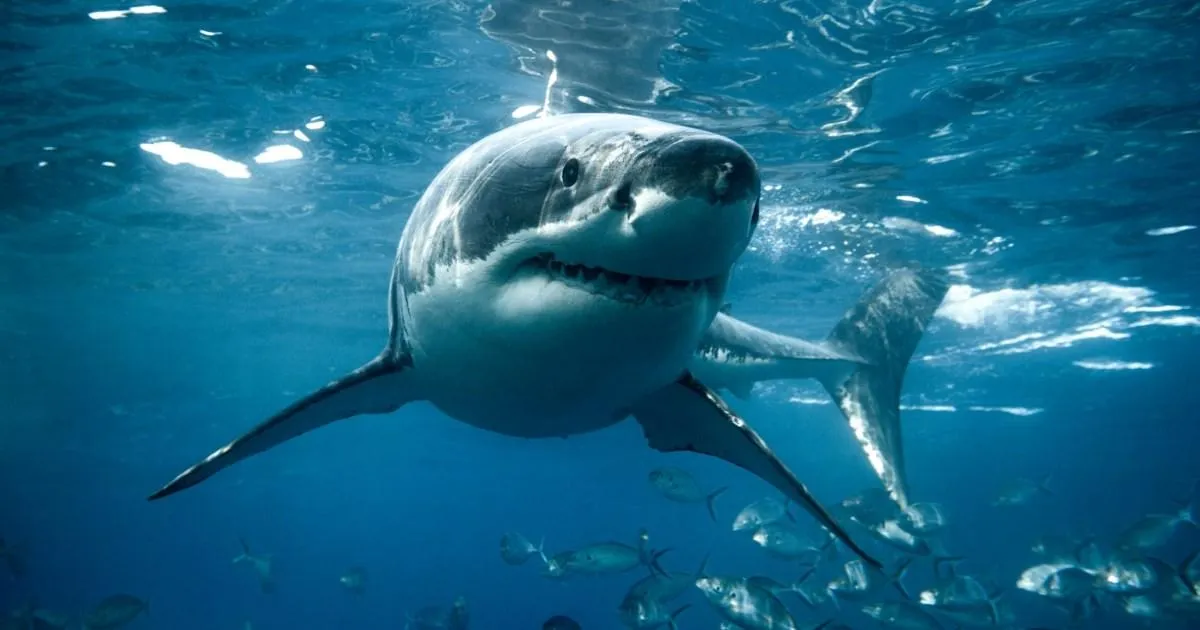
The vast, blue expanse of our oceans is undergoing a silent but significant transformation. Recently, marine scientists have tracked great white sharks pushing further north than ever before, with tagged predators like “Quint” and “Bella” venturing deep into the chilly waters off the coast of Newfoundland. While some researchers view this as a hopeful sign of a population rebounding from the lows of the 20th century, the broader context is far more complex. It turns out that these magnificent apex predators are not just exploring; they are responding to the shifting pulse of a planet under pressure, seeking refuge in cooler latitudes as their traditional habitats become increasingly inhospitable.
This migration pattern highlights the undeniable reality of climate change. As global sea temperatures rise, marine life is effectively being pushed toward the poles in a desperate search for the thermal “Goldilocks zone” they require to thrive. Expert Tom Hird, widely known as “The Blowfish,” explains this migration as a systemic shuffle. Sharks that once found comfort in specific latitudes are now forced to relocate, turning the ocean into a moving puzzle where every species is perpetually sliding toward cooler waters to survive the heat. It is a striking visual: the ocean’s giants forced into a constant state of flux because the environment they’ve relied on for millennia is no longer standing still.
When it comes to the UK specifically, there has long been a debate regarding the presence of great white sharks. While many assume these animals avoid British waters entirely, experts argue that our shores are actually quite hospitable. With abundant food sources like grey seals and tuna, our coastal waters fall well within the temperature range these sharks prefer. Hird suggests that the reason we rarely see them is not because they aren’t here, but because they are highly transient creatures. They treat our coastline like a fleeting service station—a quick stop to refuel before moving on. The idea that they are absent is likely just a limitation of human observation rather than a reflection of shark behavior.
However, as the climate crisis intensifies, even these fleeting visits may become a thing of the past for the UK. If warming trends continue, the conditions that make our waters attractive today will eventually push current shark populations even further north toward the Arctic. In their place, we may see the arrival of tropical species, such as hammerheads. These fascinating predators are evolutionarily equipped with sophisticated sensory “GPS” systems that allow them to detect bioelectricity under the sand. While their arrival might seem like a natural evolution of our marine biodiversity, it actually signals a disruption in the delicate balance of the global ecosystem.
This “musical chairs” scenario carries dire consequences for marine life, particularly for species already living at the poles. Hird uses the analogy of a crowded bus: as every creature shuffles one seat forward to escape the heat, the animals at the very end of the line—such as walruses, narwhals, and icefish—find themselves with nowhere left to go. This forced displacement is not an expansion of range, but a contraction of safety. When these specialized, polar-adapted animals are pushed out of their niches, the entire structure of the marine food web begins to fray, threatening the health of the very oceans we depend on for our own survival.
Ultimately, the most dangerous misconception we hold is that we should be afraid of these sharks. Statistically, the risk of a shark encounter is infinitesimally small compared to the everyday dangers we ignore, and sharks themselves are vital architects of a healthy sea. They have survived five major extinction events throughout history, proving their incredible resilience, yet they now face a sixth threat: us. Our mission must shift from worrying about shark sightings to worrying about the loss of shark populations. If we fail to protect these ancient survivors, we aren’t just losing a species; we are signaling the decline of the oceans that keep our world alive.