



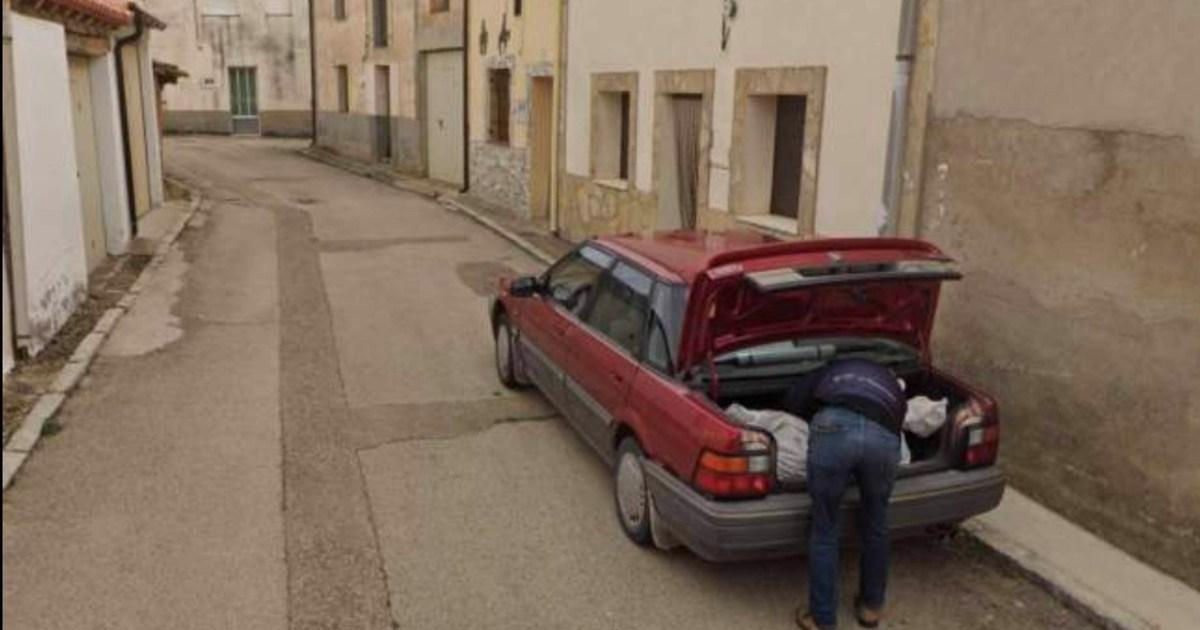
The quiet, unsuspecting streets captured by Google Maps Street View have inadvertently played a crucial role in solving a chilling murder case in Andalusia, Spain. A seemingly mundane image of a man loading white plastic bags into the boot of a red car, captured by the Google Street View camera, became a pivotal piece of evidence leading to the arrest of a couple suspected of murdering the man’s wife’s former lover. This macabre discovery unfolded over a year after the victim, a 33-year-old Cuban man, vanished without a trace, leaving his family in anguish and uncertainty. The victim had travelled from Cuba to visit his wife, only to discover her infidelity with a local bar owner, known as “The Wolf of Tayueco.” This revelation, coupled with the subsequent disappearance, sparked a complex investigation that ultimately led authorities to a graveyard in a small village near Tayueco, where a gruesome discovery awaited them.
The initial breakthrough in the case came from a concerned relative of the missing man, who had grown increasingly suspicious of messages purporting to be from him. The messages claimed he had met a new woman and was discarding his phone, a narrative that rang false to the relative. Alerted by this unusual behavior, the relative contacted the Spanish National Police, setting in motion a chain of events that would ultimately expose the horrifying truth. Using advanced forensic techniques, investigators located a portion of the victim’s remains buried within the cemetery. The discovery confirmed the family’s worst fears and intensified the search for the perpetrators and the remaining parts of the victim’s body.
The Google Street View image, discovered during the investigation, provided a crucial link between the suspected perpetrators and the disposal of the body. The image depicted a man matching the description of the wife’s lover loading bags into the boot of a car near the cemetery where the remains were later found. This visual evidence, combined with the suspicious messages and the subsequent discovery of the body, solidified the police’s suspicion of foul play. Simultaneously, searches of the couple’s homes and vehicles yielded further evidence relevant to the investigation, strengthening the case against them.
The suspects, the victim’s wife and her lover, “The Wolf of Tayueco”, were subsequently detained on suspicion of unlawful detention, though charges are expected to be upgraded to murder once the full extent of their involvement is established. While the remains found in the cemetery have yet to be definitively identified through DNA analysis, authorities are confident they belong to the missing Cuban man. The ongoing investigation seeks to uncover the specific details of the crime, including the motive, the manner of death, and the location of the remaining body parts. The case highlights the unexpected ways technology can be utilized in criminal investigations, with Google Street View providing a critical piece of the puzzle that may have otherwise remained hidden.
This tragic event serves as a stark reminder of the insidious nature of violence and deception, even within seemingly ordinary relationships. The victim, drawn to Spain by the promise of reuniting with his wife, was instead met with betrayal and ultimately, a violent end. The case also underscores the importance of vigilance and the significance of seemingly innocuous details, as exemplified by the concerned relative’s suspicion of the text messages. The relative’s intuition, coupled with meticulous police work and the unexpected contribution of Google Street View, has brought the perpetrators closer to justice and provided some measure of closure for the grieving family.
The investigation continues as authorities strive to piece together the complete picture of this horrific crime. The use of Google Street View as evidence underscores the increasing role of technology in modern criminal investigations, demonstrating its potential to unveil hidden truths and bring justice to those affected by violence. The story serves as a chilling reminder of the dark undercurrents that can exist beneath the surface of everyday life and the importance of relentless pursuit of justice for victims of crime. The case also raises questions about the ethics and privacy implications of readily available online imagery, as exemplified by Google Street View, and its potential impact on criminal investigations and the lives of those involved.