



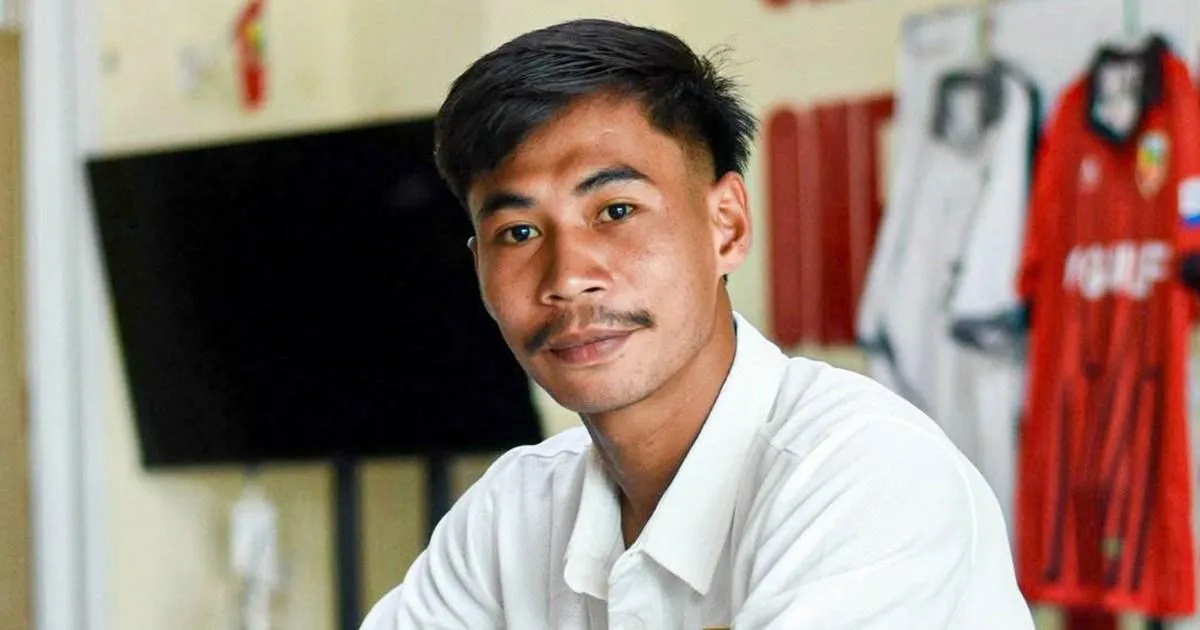
The tranquil atmosphere of the Santiphap Stadium in Narathiwat, Thailand, was shattered on August 4 when a routine football match turned into an unimaginable tragedy. As monsoon rains lashed the pitch, two teams—Sam Colt and Abu X Nong Sirin—continued to play through the downpour, a common occurrence for locals accustomed to the region’s volatile weather. However, in a split second, the environment shifted from a competitive sporting event to a scene of chaos and horror. A massive bolt of lightning struck the saturated field, directly hitting 24-year-old Safwan Awae, a promising winger whose life and career were cut short in the blink of an eye.
The footage captured during the incident provides a harrowing look at the sheer power of nature. As the lightning bolt hit, a cloud of smoke erupted inside the penalty area, throwing the match into immediate, panicked confusion. Safwan, a talented forward who had only days earlier achieved a personal milestone by signing a semi-professional contract with FC Yala for the Thai League 3, fell instantly. While teammates and bystanders rushed to provide life-saving assistance, the sheer force of the electrical discharge had devastating consequences, leaving twelve other players burned and traumatized by the strike.
Emergency services arrived at the scene with urgency, working amidst the torrential rain to stabilize the victims. Despite the desperate efforts of medical teams to resuscitate him, Safwan succumbed to his severe injuries. Police chief Thun Sirikhunt later confirmed the heartbreaking outcome, noting that every possible measure had been taken to save the young athlete. The loss has sent shockwaves through the local sports community, transforming a day that was supposed to be about passion and athletic camaraderie into a somber moment of mourning for a young man whose professional journey had only just begun.
Among those caught in the blast were players from both Thailand and Malaysia, as the match was part of the regional Golok Cup tournament. One of the injured, 22-year-old Malaysian footballer Alif Ezzahan Zulkifli, was among the twelve treated at a hospital in the Sungai Golok district. For the survivors, the recovery process will be as much about the psychological impact as it is the physical burns. The incident serves as a grim reminder of the unpredictability of the monsoon season, which dominates Southeast Asia from May through October and brings with it the constant threat of extreme weather events that can turn everyday activities into life-threatening dangers.
The football community has responded with profound sadness, rallying around the memory of a player described as having a bright future ahead of him. FC Yala, the club that had proudly welcomed Safwan to their ranks on July 30, posted a moving tribute on social media, expressing their grief and offering condolences to his grieving family. The language of the statement—invoking faith and resilience—reflects the deep emotional connection between the club and its players, highlighting how much promise was lost when the bolt hit the pitch. For those who knew him, Safwan was more than just a teammate; he was a dedicated athlete whose dream of playing in the Thai League 3 was tragically extinguished.
As the region continues to endure the height of the monsoon season, this incident forces a difficult conversation about safety protocols during sporting events in volatile climates. While football is a game played with passion in all weather conditions, the tragedy at Santiphap Stadium stands as a haunting testament to the dangers of underestimating nature’s force. The local community remains in shock, left to grapple with the loss of a vibrant young life while the twelve survivors begin their journey of healing. It is a sobering lesson on the fragility of human existence, serving as a reminder to cherish every moment, even—and perhaps especially—when the skies seem the most threatening.