


A powerful earthquake struck off the coast of Indonesia’s Flores Island in the early hours of Tuesday morning, shattering the quiet of the night and sending terrified residents scrambling for safety. The 7.7 magnitude tremor, which originated at a depth of 15 kilometers, brought down buildings, triggered a tsunami warning, and claimed the lives of at least five people. The Indonesian geological agency reported that the quake was felt strongly across the region, with its epicenter located in the sea, roughly 100 kilometers north of the eastern Indonesian island. The shallow depth of the quake amplified its destructive power, making the ground shake violently and causing widespread panic among the local population.
In the immediate aftermath, the focus has been on the human toll and the urgent search for survivors. Emanuel Melkiades Laka Lena, the governor of East Nusa Tenggara Province, confirmed the deaths of five individuals, all of whom were tragically killed in their sleep when the earthquake struck at around 2 a.m. local time. The timing of the disaster meant that many people were caught completely off guard, with no time to react or seek shelter before the violent shaking began. While the confirmed death toll stands at five, authorities fear that this number could rise as rescuers continue to comb through the wreckage. The initial reports suggest significant structural damage, and the full extent of the catastrophe is only just beginning to emerge.
The earthquake also sparked a frantic race to higher ground as a tsunami warning was issued by the Indonesian meteorological, climatological, and geophysical agency. The warning, which was in effect for several hours, sent a wave of fear through coastal communities. In the town of Maumere, located on the northern coast of Flores, residents described scenes of chaos as streams of people fled inland, abandoning their homes and vehicles as they sought safety from a potential wall of water. The terror was compounded by reports of concrete falling from buildings, including the terminal at the local port. In a harrowing incident, the collapse of a gangway at the ferry terminal threw several passengers waiting to board the inter-island vessel into the sea. Fortunately, they were quickly rescued, but the incident highlighted the sudden and unpredictable danger the earthquake posed.
Residents spent the long hours of the morning in a state of anxious vigilance, watching the ocean for any sign of an abnormal swell. One local man, Arnold Welianto, who lives in the village of Talibura in the Sikka district, described his terrifying experience to the BBC. He recounted being jolted awake by the violent shaking and immediately rushing to his child’s room. Upon emerging from his home, he witnessed the neighborhood in a state of mass panic. “Once we were outside, residents in our neighbourhood, which is located close to the shoreline, had already fled their homes and were heading toward the hills and crowding the roads,” he said. He added that the sea had receded, a classic sign of a potential tsunami, which caused people to ‘panic and run’ as the water level remained low for a considerable time before slowly returning to normal. The official tsunami warning was lifted at around 5 a.m. local time, bringing a cautious sense of relief to the frightened population.
Following the lifting of the warning, the immediate threat has shifted from a possible tsunami to the ongoing danger of collapsing buildings. The Indonesian disaster mitigation agency, known as the BNPB, has issued clear and urgent advice to residents. “Residents should also avoid entering buildings, especially those that have already sustained cracks or structural damage,” the agency stated in a release. They are encouraging people to remain outdoors in open spaces due to the high risk of powerful aftershocks, several of which have already been felt, with one reaching a magnitude of 6.1. The agency has also stated that a rapid assessment is currently underway to determine the full number of casualties and the extent of the overall impact, promising to provide verified information to the public as soon as the data is collected. In the meantime, thousands have been evacuated from vulnerable coastal areas, with around 2,000 residents reported to have been evacuated in the Nagekeo district alone.
This event serves as a stark and tragic reminder of Indonesia’s extreme vulnerability to seismic activity. The archipelago nation of more than 17,000 islands sits along the Pacific “Ring of Fire,” a horseshoe-shaped area of intense tectonic activity and fault lines. Earthquakes and volcanic eruptions are a frequent and often deadly occurrence. This latest disaster recalls the devastating earthquake and tsunami that struck the island of Sulawesi in 2018, killing thousands, and the massive 2004 Indian Ocean earthquake and tsunami which originated not far from the region and claimed hundreds of thousands of lives across multiple countries. The memory of these past tragedies underscores the deep-seated trauma and the life-or-death nature of the warnings that were issued in the pre-dawn hours on Tuesday.
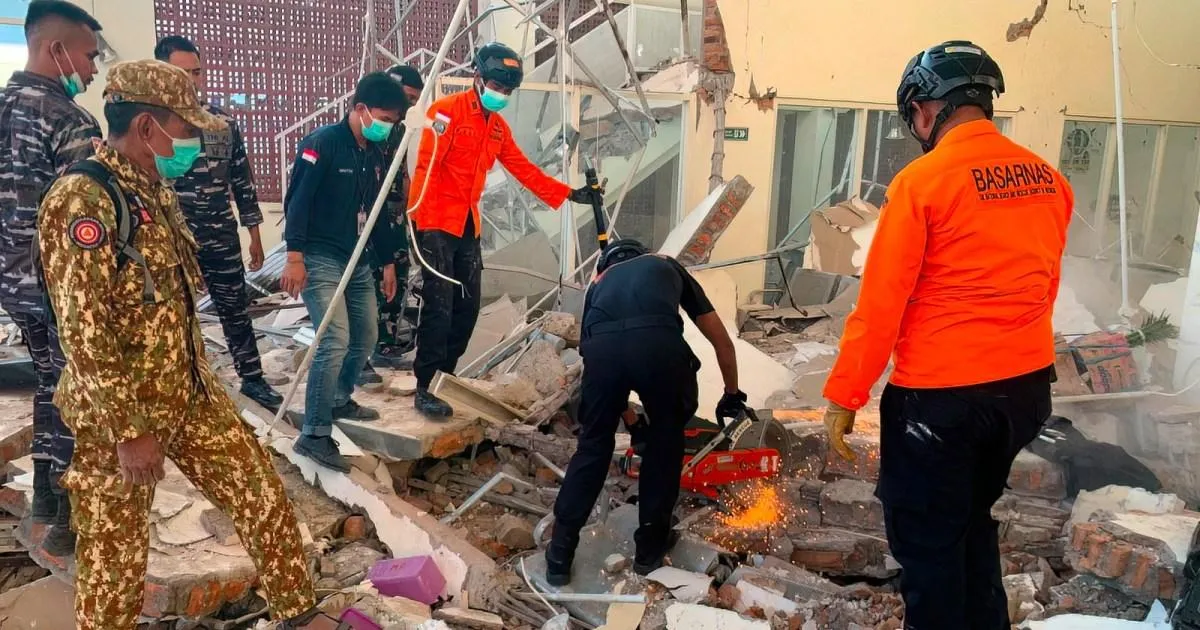
As the sun rises over the damaged coastline, the scale of the challenge facing the community becomes clearer. Search and rescue teams are working diligently, sifting through the rubble of collapsed houses and damaged public buildings to ensure no one is left trapped. The immediate priority is to provide medical assistance to the injured and shelter for those who have lost their homes. For the people of Flores, the trauma of the night will not quickly fade, but their resilience in the face of such powerful natural forces is a testament to their spirit. The coming days will bring a clearer picture of the damage, but for now, the focus remains on rescue, relief, and the daunting process of recovery, as a community begins to pick up the pieces after a terrifying wake-up call from the earth itself.