

Paragraph 1: The Scramble Over a Quiet Border
In the hushed, pre-dawn hours of a Baltic morning, the air over Latvia’s southern border was meant to be still. The municipality of Bali, a region of pine forests, rolling farmland, and sleepy villages, rarely makes headlines—unless something terrible is about to happen. On that particular day, the stillness was shattered not by thunder, but by the unmistakable sound of NATO fighter jets roaring past rooftops. What had triggered this sudden, violent spectacle was not an enemy aircraft but a single, wayward drone, buzzing like a confused hornet against the pale grey clouds. As locals looked up, they saw the jets bank sharply, their afterburners glowing like angry suns, chasing a target most couldn’t even see. The drone was a kamikaze, a weapon loaded with explosives, and its path was far from random. It was being pushed, shoved, and redirected by a force no one could see or hear—a spectral hand reaching out from Russian territory. Latvian defense officials would later reveal the chilling truth: Russian electromagnetic warfare systems had intercepted the drone’s control signals and actively turned it, forcing it to deviate from its original course and fly directly into sovereign NATO airspace. It was a provocative move, a calculated jab designed to test the alliance’s nerves. Within minutes, the Baltic Air Policing mission scrambled its fighters, tracked the intruder’s erratic, drunken flight pattern, and fired. The drone exploded in a burst of metallic confetti, its payload never reaching its new, unintended target. The immediate threat was neutralized, but the incident left a lingering, gut-wrenching feeling. This wasn’t just a malfunction or a weather error; it was a deliberate act of electronic violence, using a Ukrainian weapon as a proxy to poke the bear of the Western military alliance. The silence that followed the sonic boom was deafening, broken only by the panicked calls of residents and the urgent declarations of airspace threats across five border municipalities. Even Finland, just a short boat ride across the Gulf, clamped down on its own airspace, a ripple effect of fear spreading outward from a single, hostile nudge.
Paragraph 2: The Ghost in the Machine and the Inferno on the Sea
To understand why that drone was flying in the first place, one must look east, to the heart of a brutal, grinding war. The kamikaze drone was almost certainly Ukrainian, launched as part of a massive, coordinated strike aimed at one of Russia’s most vital economic arteries. For four harrowing hours, the skies above the Leningrad region, encompassing the historic city of St. Petersburg, were alive with the buzz of dozens of unmanned aircraft, all racing toward the Gulf of Finland. Their target was Ust-Luga, a colossal oil terminal and Russia’s largest Baltic port. This was not just an infrastructure site; it was a money pump, a giant metal beast that swallows crude oil and spits out the hard currency that funds Vladimir Putin’s war machine. As the Ukrainian drones descended, Russian air defenses erupted in a frantic symphony of flak and surface-to-air missiles. Official figures later claimed that over 553 drones were shot down amid the chaos, a staggering number that speaks to the scale of the assault. Yet, amid the defensive frenzy, one drone was not destroyed. Instead, Russian electronic warfare operators, specialists in jamming and signal spoofing, managed to hijack its flight path. They turned the weapon not against its Ukrainian pilots, but against the West, sending it careening into Latvian airspace as a deliberate provocation. The drone, a pawn in a larger game of geopolitical chess, was just a symptom of a much larger inferno. Back at Ust-Luga, the aftermath was catastrophic. Thick, black smoke billowed into the sky, turning the daylight into an eerie twilight. The port, a vital hub for oil exports and a notorious chokepoint for sanctions evasion, was ablaze. The fire wasn’t just a physical wound to Russian industry; it was a symbolic blow to the entire Russian economy, a roaring message that Ukraine could reach far beyond the front lines and strike the very engine room of the Kremlin’s war effort.
Paragraph 3: The Economic Pulse and the Fog of War
The significance of the Ust-Luga fire cannot be overstated. This port is the lifeblood of Russia’s energy exports, serving as a gateway for Russian crude and petroleum products to international markets, often bypassing international sanctions through shadow fleets and opaque trading schemes. Every tanker that leaves its docks loads with the financial fuel for Putin’s invasion. When the Ukrainian drones struck, they didn’t just ignite oil storage tanks; they struck a psychological blow at the heart of Russia’s financial stability. The Kremlin immediately confirmed the damage, acknowledging that their premier Baltic facility had suffered, even as they boasted about their robust air defense. The narrative was contradictory—claiming victory in the skies while the ground burned. The fire raged for hours, a towering pyre that could be seen for miles, a grim signal to global markets that the energy trade was now a legitimate battlefield. Meanwhile, the incident over Latvia highlighted a terrifying vulnerability for NATO. The drone that crossed the border wasn’t a Russian attack, but a Ukrainian missile tool weaponized by Russian electronic trickery. It raised a horrifying proposition: what if such a hijacked drone carried a larger payload, or crashed into a civilian settlement, causing mass casualties? Who would be blamed? The Ukrainian pilots who launched it, or the Russians who sent it on a deadly detour? This fog of war, thick with deliberate misinformation and electronic deception, is the new reality of modern combat. The alliance found itself in a queasy gray zone, forced to shoot down a Ukrainian asset to protect its own citizens, while simultaneously condemning Russia for its reckless behavior. It was a perfect illustration of how the conflict in Eastern Europe is bleeding outwards, turning neutral airspace into a shooting gallery and ordinary people into collateral damage in a shadow war fought with radio waves as much as bullets.
Paragraph 4: The Ripple Effect Across the Alliance
The immediate response from NATO was swift and deliberate. Declaring airspace threats across five Latvian municipalities and imposing curbs in Finland sent a clear message to the public that something serious had transpired. Yet, the official silence was deafening. Allies did not want to escalate, but they could not ignore the provocation. The Baltic states, historically the most hawkish and anxious members of the alliance, took the incident with the utmost severity. For them, this was the ghost of past Soviet aggression come back to life. The successful shoot-down of the drone by NATO jets was a textbook display of unity and preparedness, but it also exposed the complex nature of the threat. Because the drone was Ukrainian, NATO could not treat it as a traditional Russian aggression—it was an accident, a byproduct of Russia’s dirty tactics. However, every security analyst knew that this was a calculated act of hybrid warfare. Russia is not interested in a direct military engagement with NATO; it would lose that conventional battle. Instead, Moscow specializes in destabilization, using asymmetric tools like electronic warfare, cyber-attacks, immigration flows, and saboteur activities to create chaos and doubt. This drone incursion was a test balloon, a way to see how NATO would react, how fast the jets could scramble, and how anxious the political elite would become. It worked. Across Europe, headlines screamed about the “near miss” and the “escalation.” Border guards tightened security, and ordinary citizens were reminded that the war next door was not merely a remote conflict in the Donbas, but a creeping presence that could brush against their own quiet villages. The Baltic states, in particular, saw this as definitive proof of their repeated warnings that Russia views NATO’s eastern flank as a legitimate target for probing and harassing operations.
Paragraph 5: A Web of Sabotage and Unmasked Fires
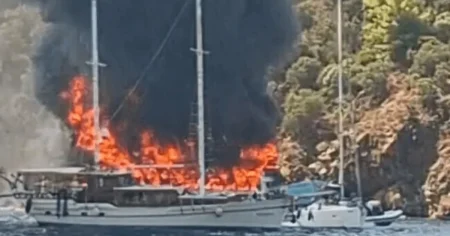
Echoing the drone drama, a series of other unsettling incidents unfolded across the continent, painting a picture of a widespread, diffuse assault on the infrastructure that supports Ukraine. In Italy, an explosion tore through an ammunition plant that supplies weapons to the Ukrainian armed forces. While initial reports were sketchy, the location alone was enough to raise eyebrows—this wasn’t random chaos, but a targeted disruption of logistics. The blast, which killed one worker and injured others, sent a chill through the defense industry, highlighting that manufacturing hubs in the West were no longer immune to the fallout of the conflict. Just hours earlier or later, across the North Sea, a massive explosion ripped through an oil terminal in the Port of Rotterdam, Europe’s largest port. This facility was linked to Gunvor Energy, a company founded by Gennady Timchenko, a close and long-time associate of Vladimir Putin. Six people were injured, and the terminal erupted in flames. While the cause was initially unknown, the combination of a Ukrainian-supplying ammo plant and a Putin-linked oil facility catching fire within the same organizational timeframe felt less like coincidence and more like a deliberate pattern—either through sabotage, surveillance, or a cascading effect of global instability. Far to the east, in the Russian city of Blagoveshchensk, six time zones from Moscow, another major fire broke out at the October Revolution Shipbuilding Plant. A fuel and lubricants warehouse blazed, sending up columns of smoke. It was unclear if this was directly linked to the war, but in a world where Ukraine has repeatedly struck deep into Russian territory, nothing could be dismissed as mere accident. These incidents, taken together, illustrate a horrifying trend: the supply chains and economic arteries of the warring nations, and their allies, have become prime targets for shadowy actors. The battlefield has expanded beyond the trenches of Ukraine to the industrial parks of Italy, the harbors of the Netherlands, and the shipyards of Siberia. It is a messy, uncoordinated but deeply alarming crumbling of physical infrastructure that underpins a global economy on edge.
Paragraph 6: The Human Cost and the New Normal
Amid the strategy, the electronic warfare, and the geopolitical posturing, it is easy to lose sight of the human beings caught in the crossfire. Imagine waking up in a quiet Latvian village to the roar of a fighter jet, your coffee trembling in its cup as the air itself vibrates with lethal intent. Imagine working the night shift at an Italian ammo facility, hearing a sudden thunderclap that sends shrapnel through your body, or standing on a dock in Rotterdam when the sky turns orange. These are not soldiers on a distant front; they are civilians, workers, and families going about their lives, suddenly swept up in a conflict that many of them had only read about on their phones. The drone incursion is a stark reminder that the violence of the Russo-Ukrainian war is no longer contained by national borders. It has mutated from a traditional invasion into a multifaceted, shadowy global struggle involving sabotage, cyber-attacks, and electromagnetic manipulation. For the people of the Baltic states, this is a terrifying normalization of danger. They share a border with a belligerent power that has shown time and again it is willing to use reckless tactics to intimidate and threaten. The successful interception yesterday is a small comfort, but the anxiety persists. Every mysterious rumble, every unexplained fire, every hard-to-explain drone sighting now carries the weight of potential catastrophe. The world has entered a new era where the ghosts of the Cold War have returned, wrapped in modern technology. The quiet fields of Latvia, the industrial ports of the Netherlands, and the assembly lines of Italy are now just as much a part of this conflict as the front-line trenches in the Donbas. The resilience of ordinary people is being tested, and as they look to the skies, they are forced to ask a haunting question: when will the next shadow descend, and whose side will the wind be on? The answer lies in the smoke-filled air, where the lines between sanctioned warfare and random terrorism have become terrifyingly, dangerously blurred.