


Paragraph 1: The Cataclysm Unleashed
In a breathtaking and terrifying display of nature’s destructive power, the serene landscape of the Nepalese Himalayas was violently transformed into a roaring hellscape on Wednesday, following a catastrophic glacier collapse in the neighboring Tibetan region of China. The avalanche of ice, rock, and debris plunged into the upper reaches of the Bhote Koshi river, displacing an immense volume of water that surged downstream with the ferocity of a tsunami, completely overwhelming everything in its path. Residents of the remote Rasuwa district, a rugged and thinly populated area bordering Tibet, described the event as a sudden, apocalyptic wall of dark water and mud that swallowed entire villages within minutes. Houses, bridges, livestock, and people were swept away indiscriminately, leaving behind a trail of deep mud, shattered structures, and twisted debris. Bishal Nath Upreti, president of the Nepal Centre for Disaster Management, poignantly described the horrifying scene, comparing the flash flood to a “tsunami from the sky,” emphasizing the sheer, dropping torrent of water and sediment that cascaded from the high peaks onto the flimsy settlements nestled in the valleys below. The initial impact was so sudden that there was no time for warning systems to be triggered effectively, leaving families to scramble in chaotic desperation as their homes dissolved around them. The full scale of the destruction is still being assessed, but the immediate toll is staggering—with hundreds of lives lost, hundreds more gravely injured, and entire communities rendered uninhabitable, the region has been plunged into a state of profound crisis. Rescuers and local residents recount harrowing moments of survival, with people clinging to rooftops and tree branches as the raging torrents carried debris downstream, while others who managed to reach higher ground could only watch in helpless horror as their neighbors and loved ones were consumed by the relentless floodwaters. The confluence of the Tsogyal and Purupqiangzangbu rivers, the very epicenter of this geological catastrophe, is now a churning disaster zone, a stark reminder of the fragile and volatile ecosystem of the high Himalayas.
Paragraph 2: A Nation Counts the Cost of Missing Souls
As the initial shock begins to subside, the grim task of accounting for the dead and the missing has begun, revealing a humanitarian tragedy of immense proportions. Official figures from Nepal’s National Disaster Risk Reduction and Management Authority (NDRRMA) indicate that at least 350 people have lost their lives in the flash floods, with a further 469 bodies having been formally recovered from the thick layers of mud and debris that now cover the valley floor. The number of unaccounted-for individuals remains terrifyingly high, with nearly 977 people still listed as missing—a figure that many fear will only rise as search teams reach the most remote, inaccessible hamlets that were completely wiped off the map. The international dimension of this disaster is particularly acute; at least 33 British nationals are reported to be missing, bringing the tragedy painfully close to homes thousands of miles away. Among the missing British citizens are individuals with deeply relatable human stories: a senior nurse from Kent who had traveled to volunteer or explore, a care agency director from Slough, a woman from Croydon on a spiritual pilgrimage, a devout South London Hindu priest who was leading a group of 11 UK tourists on a sacred journey, and a beloved couple from Coventry. Their families back in the United Kingdom are enduring an agonizing wait, desperately refreshing social media feeds and calling hotlines for any scrap of news, their lives turned upside down in a matter of hours. The British Embassy in Kathmandu has set up a dedicated emergency response team, working alongside local authorities to cross-reference passenger manifests, hotel bookings, and trekking permits in an attempt to piece together the whereabouts of these missing individuals. For every name on the official list, there is a family engulfed in a living nightmare of uncertainty; parents, partners, and children are clinging to the faintest hope of survival, even as the grim realities of the devastation become increasingly clear. The emotional weight of the disaster is felt not only in Nepal but across the globe, as communities in the UK grapple with the sudden, violent absence of their friends and neighbors.
Paragraph 3: The Pilgrim’s Trail and the Frozen Silence
The missing British nationals are not just tourists; many were deeply spiritual pilgrims on their way to one of the most sacred sites on Earth—Mount Kailash, a remote Himalayan peak in Tibet revered by Hindus, Buddhists, and Jains alike. The tour operator Kailash Journeys, which was coordinating several groups traveling to the region, has been thrust into the spotlight as the tragic link between the missing and their frantic families. Roshan Basnet, the general manager of Kailash Journeys, painted a heartbreaking picture of the confusion and fear that enveloped their groups when the flood struck. “We have yet to get the confirmation of what state they’re in,” Basnet said, his voice heavy with anxiety, explaining that the company had completely lost contact with their tour guide and the seven UK nationals who were traveling with him—five women and two men, all aged between 18 and 55. The descriptions of the missing individuals include specific details: a 14-year-old boy, a 54-year-old man, and a 53-year-old woman, each with their own unique story and reason for undertaking the arduous journey. The trail to Mount Kailash is notoriously dangerous even in the best of conditions, traversing high-altitude passes, glacial moraines, and treacherous river crossings. The Bhote Koshi river, which they likely followed, is a critical artery for this pilgrimage, a raging torrent that cuts through the landscape. The flood would have caught them entirely off guard, perhaps while they were resting in a village or navigating a narrow gorge, giving them no chance to escape to higher ground. The spiritual significance of the site makes the loss even more profound; for millions, completing this pilgrimage is the ultimate goal of a lifetime, a cleanse of sins and a path to salvation. Now, the pilgrimage has turned into a nightmare, and the very environment that held so much spiritual meaning has become a prison or worse, a grave. The silence from the mountains is deafening, and with every passing hour, the hope of finding these pilgrims alive diminishes, replaced by a grim determination to at least return their remains to their grieving families, if the harsh winter weather and unstable terrain allow.
Paragraph 4: The Looming Dam of Catastrophe
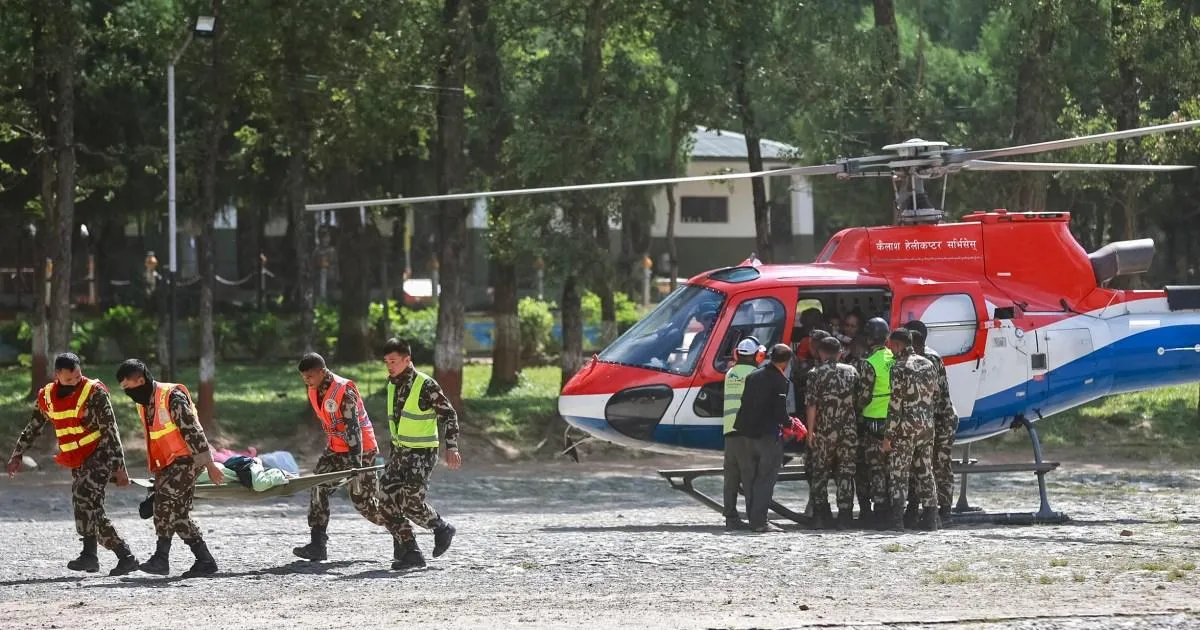
While the immediate rescue and recovery operations are underway, a secondary, potentially even more catastrophic threat is now dominating the attention of Nepalese authorities and international disaster experts: the formation of a massive glacial lake upstream, which could burst at any moment and unleash a second, devastating torrent of water onto the already ruined floodplain. The catastrophic glacier collapse and subsequent landslide not only caused the initial flood but also dammed the confluence of the Tsogyal and Purupqiangzangbu rivers, creating a natural barrier of ice, rock, and mud. Water is now pooling behind this unstable dam, rapidly forming a nascent lake that is growing by the hour. Satellite information provided by China’s Ministry of Water Resources has confirmed the alarming build-up, indicating that the newly formed barrier lake is expected to receive an additional three million cubic meters of water over the next three days—a massive influx from glacial melt, snowmelt, and continued upstream rainfall. The pressure exerted on this fragile, unconsolidated dam is immense, and a sudden breach could release a wall of water far larger and more destructive than the initial flood. Faced with this imminent threat, the search and rescue teams have been forced to make the agonizing decision to pause their operations for a period of 90 minutes, and potentially longer, to evacuate personnel and residents from the danger zone immediately downstream. The swift movement of water and rising lake level has created a ticking time bomb, transforming the rescue zone into a high-risk exclusion area. Local authorities are urging people to remain on high ground, and helicopters have been recalled to base, their blades still spinning as they await clearance to resume the desperate search. An officer on the ground confirmed the grim reality: despite the desperate pleas from families to keep looking for survivors, the safety of the rescue teams and surviving locals must take precedence until the hydrological situation stabilizes. The world watches with bated breath, as the fragile equilibrium of the mountains threatens to shatter once again, bringing with it the potential for a second wave of mass casualties.
Paragraph 5: An outpouring of International Support and a Nation’s Resolve
Amidst the unfolding tragedy, the international community has mobilized to offer tangible and emotional support to Nepal, with the United Kingdom stepping forward as a leading contributor. Foreign Secretary Ed Miliband addressed the nation on Thursday evening, his tone somber and resolute, confirming that the Foreign, Commonwealth and Development Office (FCDO) had activated its crisis center, with staff working “around the clock” to provide consular assistance to the families of the missing British nationals and to coordinate the deployment of aid. In a significant commitment, Miliband announced that the UK was offering an initial £5 million in aid to help the Nepalese government mount an effective response to the disaster. “We have offered an initial £5 million to help with the response to the effort in Nepal,” Miliband stated, underscoring the urgent need for immediate funding for search and rescue, medical aid, shelter, and food supplies for the thousands of displaced survivors. He also revealed that he had personally spoken with the Nepalese Foreign Minister, offering not just financial assistance but also the deployment of specialized UK search and rescue teams, engineers, and medical experts if required. Miliband’s words conveyed a deeply personal sense of solidarity, acknowledging the intrinsic connection between the British people who were caught up in the tragedy and the wider global community that shares the Himalayan region. The gesture of providing £5 million was met with cautious appreciation from Nepalese officials, who are desperately low on resources to cope with the overwhelming scale of the catastrophe. The aid is earmarked for immediate relief efforts, including the procurement of temporary shelter, clean drinking water, and sanitation facilities for the devastated villages. Beyond the government pledge, charities and individuals across the UK have begun fundraising campaigns, inspired by the shared pain of the missing pilgrims and the immense suffering of the Nepalese people. This outpouring of international solidarity offers a glimmer of hope amidst the darkness, reminding the survivors that they do not face this terrible ordeal alone, and that the world stands in mourning and support with them.
Paragraph 6: A Path Forward Through Ruins and Resilience
As the sun rises over the devastated valleys of Rasuwa, revealing the full, heartbreaking extent of the destruction, the immediate focus shifts from frantic rescue to the slow, painful process of recovery and rebuilding. Roads and bridges have been rendered completely impassable, cutting off entire villages from outside help, forcing aid deliveries to be conducted via helicopter and dangerous mule trails, severely hampering the distribution of essential supplies. The reconstruction effort ahead will take months, if not years, as engineers must clear massive debris flows, rebuild vital infrastructure, and shore up the unstable riverbanks to prevent future flooding. But beyond the physical rebuilding lies the deep emotional and psychological trauma that will linger for generations. The families who lost loved ones, the children who lost their parents, and the communities that lost their homes and livelihoods must find the strength to pick up the pieces of lives violently shattered by a force of nature beyond their control. The resilience of the Nepalese people, historically shaped by earthquakes, avalanches, and monsoon floods, is a powerful testament to their spirit; they have repeatedly demonstrated an incredible capacity to endure, support one another, and rebuild, even after the most devastating blows. For the British families waiting for news, the journey ahead is fraught with uncertainty and grief. The hope of finding survivors is fading with each passing moment, and they must now prepare for the heartbreaking possibility of farewell. The bodies of those recovered will need to be identified through dental records, DNA analysis, and personal effects, a complex forensic process that will take time to unfold. In the wider global context, this disaster serves as a stark and urgent reminder of the accelerating impact of climate change on the world’s high mountain regions. The warming temperatures are causing glaciers to melt at unprecedented rates, destabilizing massive ice formations and increasing the frequency and severity of glacial lake outburst floods. This tragedy is not a singular event but rather a portent of a more volatile future, urging nations to invest in early warning systems, robust infrastructure, and global climate action. For now, the world watches a small, wounded nation, but it also witnesses the indomitable nature of the human spirit—the steadfast courage of the rescuers, the unwavering solidarity of friends and strangers, and the quiet, enduring hope that even in the face of utter ruin, life will eventually be rebuilt, and the mountains will once again echo with the laughter of new generations.