



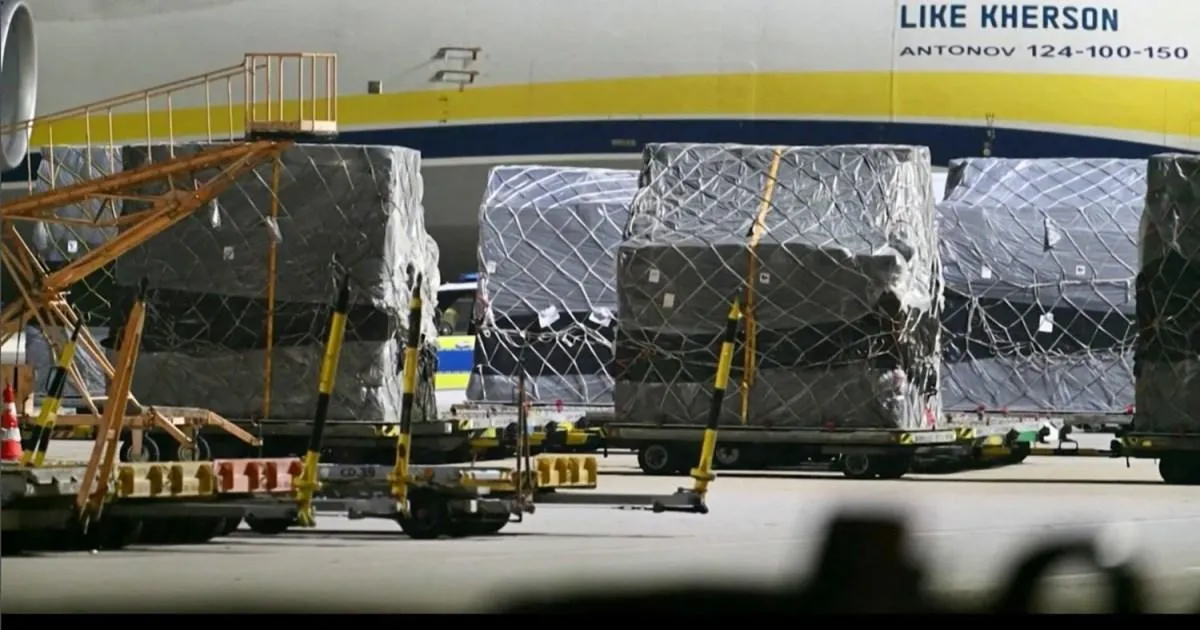
The recent discovery of an explosive-rigged drone near a Ukrainian cargo plane at Leipzig-Halle Airport has sent shockwaves through European security circles, marking a chilling escalation in what authorities fear is a targeted campaign of sabotage. Late at night, under the cover of darkness, law enforcement stumbled upon a drone equipped with a detonator and an unidentified hazardous substance sitting perilously close to an An-124 cargo aircraft. While bomb disposal experts managed to carry out a controlled, remote detonation—preventing what could have been a catastrophic loss of life—the incident has left officials scrambling to identify those responsible. The fact that this occurred at a major international logistics hub, which serves as a critical artery for both cargo and commercial transit, underscores how vulnerable global infrastructure has become to unconventional threats.
German authorities have officially launched an investigation into the incident as a suspected act of sabotage, though they remain cautious about pinning the motive on a specific entity as the inquiry unfolds. However, for many international observers, the discovery at Leipzig feels uncomfortably familiar. This is not an isolated event but rather the latest in a troubling string of security breaches involving logistics companies and aviation targets across Europe. The proximity of this drone to a Ukrainian asset raises immediate concerns about whether the conflict in Eastern Europe is bleeding into the heart of the European Union, specifically targeting logistical support lines that sustain Ukraine’s defense efforts.
The context surrounding this event is dominated by a series of suspicious fires and crashes that have plagued the logistics industry throughout 2024. Earlier this year, a DHL cargo plane traveling from Leipzig to Lithuania met a tragic end, resulting in fatalities and injuries. This crash was preceded by terrifying “test runs”—small, incendiary packages that ignited inside DHL warehouses in both Birmingham and Leipzig. Intelligence agencies, including MI6, have pointed fingers at Russian-backed operatives, characterizing these actions as a coordinated effort to destabilize Western logistical operations and create an atmosphere of persistent insecurity. The pattern suggests a deliberate attempt to probe the defenses of international freight networks, turning the global supply chain into a battlefield.
Beyond physical sabotage, a more invisible but equally dangerous campaign of electronic warfare has been playing out in our skies. For years, there has been a systematic attempt to disrupt civil aviation through sophisticated jamming of GPS and navigation systems. From the Baltic Sea to the eastern Mediterranean, tens of thousands of flights have reported interference issues that compromise safety and navigation. While the Kremlin has consistently denied any involvement, the sheer scale of the interference—affecting major carriers like British Airways, Ryanair, and EasyJet—speaks to a highly resourced state-level operation. This form of “grey zone” warfare is designed to be deniable, yet its impact on the safety of civilian passengers is undeniable.
This rising tide of interference represents a significant challenge to global diplomacy and aviation security. Historically, countries like Norway have attempted to address these electronic disruptions through formal bilateral meetings, only to be met with official denials from Russian counterparts. The persistence of these electronic attacks, which have been documented in various forms since the early days of the conflict in the Donbas in 2015, suggests that we are witnessing a long-term strategic pivot. The goal appears to be the normalization of risk—a way to force Western nations to constantly look over their shoulders, unsure of whether the next flight will be grounded by a jammed signal or a physical threat on the tarmac.
Ultimately, the attempted drone attack in Leipzig serves as a stark reminder that the “front lines” of modern conflict are no longer confined to specific geographic borders. They now extend into our airports, our warehouses, and the navigation signals guiding our daily flights. As investigations continue, the pressure is mounting on European security agencies to harden their infrastructure against these asymmetric threats. The era where logistics hubs and civilian transit zones could be considered neutral ground is effectively over. We are now living in a time where the safety of the skies depends as much on cyber-vigilance and counter-intelligence as it does on traditional air traffic control, and the challenge lies in protecting these essential systems without sacrificing the open, interconnected nature of the global community.