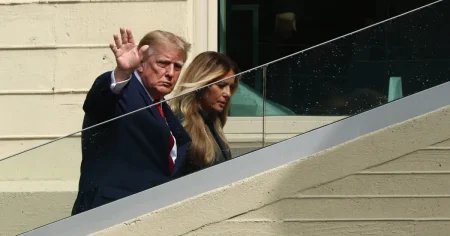


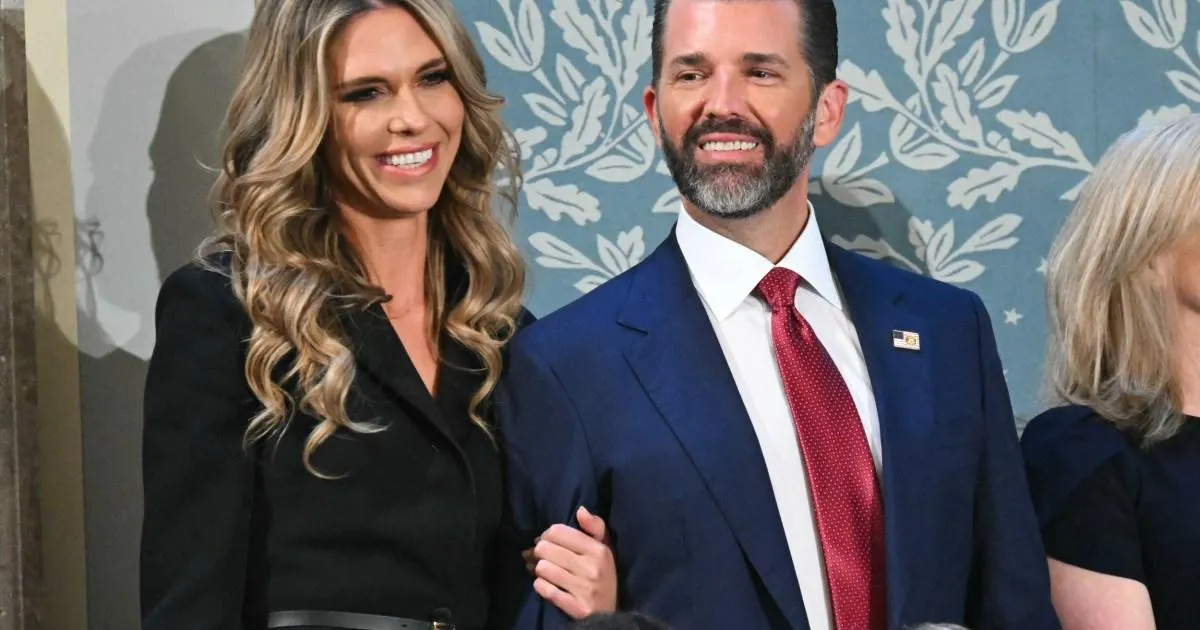
In the spring, beneath the pastel skies of the Bahamas, Donald Trump Jr. married Bettina Anderson in what was described as an intimate, lavish ceremony spread across several private islands. The wedding was meant to be a personal milestone—a joyful gathering of family and close friends, far from the noise of Washington politics. For a few days, the couple and their guests enjoyed sun-drenched celebrations, private dinners, and the kind of effortless luxury that only such a setting can offer. Bettina later described the event as “everything the couple dreamed of,” emphasizing the deep personal meaning of the occasion. But almost as soon as the photographs and press statements emerged, questions began to swirl. Who paid for this extraordinary event? The answer, revealed by the investigative nonprofit ProPublica, has reignited concerns about influence, loyalty, and the blurred lines between personal relationships and geopolitical power. The bill, according to the investigation, was allegedly footed by Umar Kremlev, a wealthy Russian businessman with close ties to the Kremlin. That revelation transformed a private celebration into a matter of public scrutiny, raising uncomfortable questions about why a Russian figure with ties to Vladimir Putin would choose to fund a wedding for the son of the President of the United States.
Kremlev, who heads the International Boxing Association, is no stranger to controversy. The IBA itself has been bankrolled by a Kremlin-linked energy company, and its financial operations have repeatedly drawn suspicion from Western officials and sports governing bodies. ProPublica’s investigation traced the wedding payments to an entity in Dubai that appears to be affiliated with the IBA, deepening the sense that this was not simply a generous gesture from a personal friend. For critics, the connection is alarming: a prominent Russian figure with close ties to the Kremlin effectively financed a major life event for the eldest son of the American president. The timing and context matter enormously. The United States and Russia remain locked in a fraught geopolitical relationship, with ongoing tensions over the war in Ukraine, cyberattacks, and election interference. In that climate, the idea that a Kremlin-aligned businessman would quietly cover the costs of a Trump family wedding feels far from innocuous. Supporters of the Trump family might dismiss the concern as political paranoia, but intelligence veterans and ethics experts argue that such gestures are rarely without strings attached. The fact that the payments were routed through an offshore entity only adds to the suspicion, suggesting a level of opacity that does not align with the idea of a simple wedding gift between friends.
Bettina Anderson has defended the situation passionately, rejecting the notion that the wedding gift carried any political or sinister meaning. In a public Instagram post, she wrote that she and Don were married privately on a Friday, surrounded only by their family. She described the day as intimate, deeply personal, and one of the most beautiful days of their lives. She acknowledged that their “dear friend” Umar had very generously hosted two incredible nights of celebrations after the wedding, and she framed it as an extraordinarily generous wedding gift from a friend. She lamented that something so personal and happy could be recast as political or sinister simply because of who someone is or where they come from. “Friendship doesn’t require a political motive,” she wrote. “Generosity doesn’t automatically come with an agenda. And sometimes a wedding gift is simply a wedding gift.” Her words are heartfelt and understandable; no bride wants her wedding to be dissected by the media or weaponized in political debates. But her defense also reflects a willful blindness to the broader context. When the friend in question is a powerful Russian businessman with direct ties to the Kremlin, and when the groom is the son of the president of the United States, the personal and political are inevitably intertwined. The public is right to ask questions, and the family’s insistence that it was all just friendship does little to quell the concerns of those who have spent careers tracking foreign influence.
Former intelligence officials have been among the most vocal critics, and their warnings carry particular weight. Frank Montoya Jr., a retired FBI counterintelligence operative, told ProPublica that paying for someone’s wedding creates an implicit obligation. He put it bluntly: “If I’m paying for your wedding, at some point, you’re going to owe me something.” He added that such a situation should be unthinkable for the son of the president, and he ended his statement with finality: “End of story.” Montoya’s perspective reflects the fundamental logic of counterintelligence: relationships built on financial favors are rarely reciprocal in a benign way. When a foreign national with ties to an adversarial government spends significant money on a presidential relative, the potential for exploitation is obvious. Even if Trump Jr. and Bettina believe the gift was purely friendly, the perception alone creates a vulnerability. Foreign actors often seek to build relationships with influential figures over time, establishing goodwill and familiarity that can later be leveraged. A wedding gift is a perfect icebreaker—it is personal, celebratory, and seemingly benevolent. But in the world of espionage and influence operations, there is no such thing as a free lunch. The fact that Kremlev is not just any Russian millionaire but a sports official backed by a Kremlin-linked energy company makes the situation even more concerning.
To understand the full context, it helps to look at Donald Trump Jr.’s personal history and position. He is the eldest child of Donald Trump and his first wife, Ivana, born before his siblings Ivanka and Eric. He also has two half-siblings, Barron and Tiffany Trump, from his father’s later marriages. Donald Jr. grew up in the glare of New York City wealth and privilege, eventually becoming a businessman and political surrogate for his father. He was previously married to Vanessa Trump, with whom he shares two children, Kai and Donald Trump III. That marriage ended in divorce, and Vanessa has since been romantically linked to golfer Tiger Woods. Donald Jr.’s relationship with Bettina Anderson, a Florida socialite, reportedly developed over time, and their wedding was described as a dreamlike event featuring close family and friends. But unlike a private citizen, Trump Jr. cannot separate his personal life from his role as the president’s son. His actions are scrutinized not just by the media but by foreign adversaries and domestic critics alike. Every relationship he forms, every gift he accepts, and every financial transaction involving his life is subject to interpretation. This is not a matter of being unfair to him; it is the standard that comes with being at the center of American political life. The public has a legitimate interest in understanding whether foreign actors are attempting to influence the president through his family, and any hint of such influence demands transparency.
Ultimately, the story of the Bahamas wedding is about more than a lavish celebration or a generous gift. It is about the fragile boundary between personal relationships and national security, and the ease with which that boundary can be crossed by those who understand how power works. Umar Kremlev may well have acted out of genuine friendship, with no hidden agenda or expectation of favors. But the relationship between a Trump and a Kremlin-linked Russian businessman is inherently weighted with geopolitical meaning, and no amount of Instagram posts can erase that. The public is left to wonder: Was this just a kind gesture between friends, or was something more subtle and insidious taking place? The lack of transparency around the payments, the involvement of an offshore Dubai entity, and the silence from Trump Jr. beyond his spokesman’s brief comment have all contributed to a sense of unease. In a democracy, the entanglement of foreign money and presidential family members is always a matter of concern, regardless of political affiliation. The American people deserve to know the full truth, not just the carefully curated version presented on social media. And while Bettina Anderson is right that friendship and generosity can exist without political motives, in the rarefied world of presidential families, perception is reality. When a Russian millionaire pays for your wedding, the world will always wonder what he expects in return.