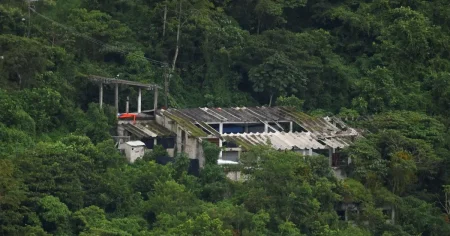


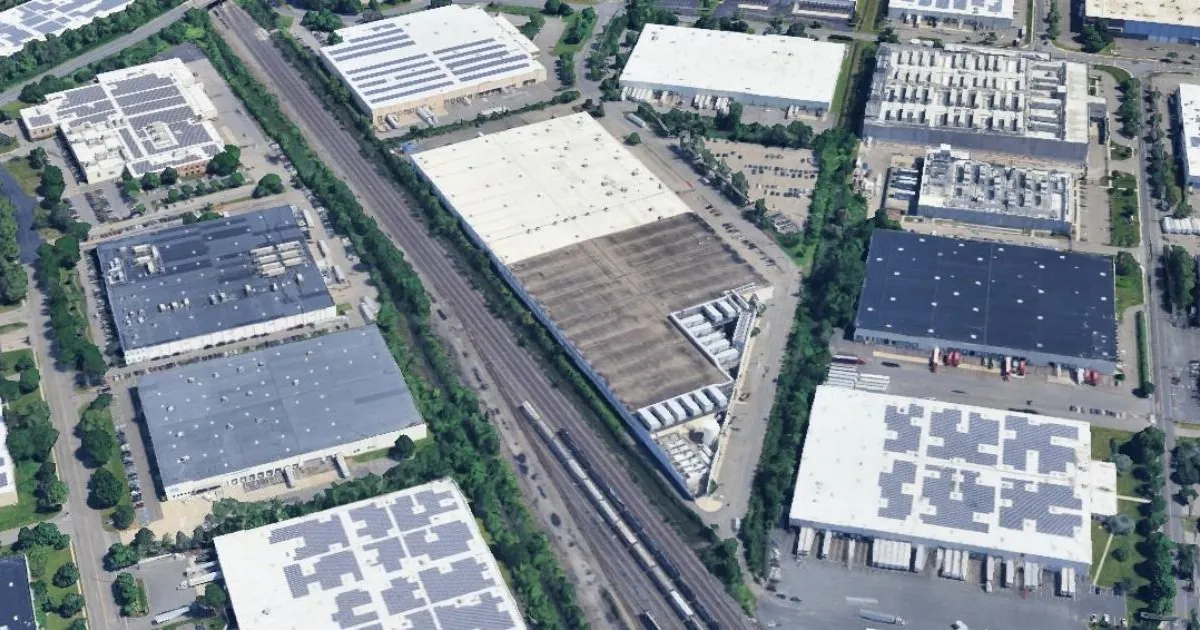
It began quietly, in the way so many environmental disasters do, on a Friday evening in Secaucus, New Jersey. There was no explosion, no fireball, no dramatic collapse—just a storage tank at a data center that somehow released its hold on thousands of gallons of fuel. By the time anyone realized what was happening, roughly 5,000 gallons of diesel had seeped out of Equinix’s NY2 facility, a sprawling data center near the Hackensack River in the northeastern corner of the state, and made its way into Anderson Creek, a narrow tributary threading through the New Jersey Meadowlands. The first signs of trouble would have been subtle but unmistakable: the sharp smell of diesel hanging in the damp marsh air, an iridescent sheen moving slowly over the dark water, the sudden stillness in the reeds where birds and insects should have been feeding. For the people of Secaucus, a town that has evolved from an industrial outpost to a residential community and tech corridor, the sight of emergency lights and workers in protective gear along the creek was deeply unsettling. Within hours, containment booms and vacuum trucks were being deployed, but the damage had already been done. Mayor Michael Gonnelli blamed a “computer glitch” for the release, a phrase that sounds almost mundane next to the reality of thousands of gallons of fuel polluting a wetland. It suggests a momentary failure, a blip in a machine, rather than the slow, toxic bleed that actually occurred. Equinix, which describes itself as the largest global data center and colocation provider for enterprise network and cloud computing, was more cautious, saying an investigation into the cause of the leak was still underway. The exact sequence of events remained unclear, but this much was certain: a living waterway, one that winds through the marsh and connects to the larger Hackensack River ecosystem, had been wounded, and the consequences would be felt long after the emergency lights faded.
The response was quick, organized, and, as far as initial damage control goes, effective. Employees at the Equinix facility detected the fuel release from a tank outside the building and immediately stopped the flow. They called in an environmental contractor, Clean Harbors, alerted the local fire brigade, and notified the New Jersey Department of Environmental Protection and the Hudson Regional Health Commission. By the time officials arrived, containment barriers had already been placed across Anderson Creek, and vacuum trucks were being positioned along the bank to suck up the mixture of diesel and water before it could travel farther downstream. For hours, workers in protective gear laid boom lines, checked the water, and skimmed the surface. The DEP later confirmed that the fuel had not reached the Hackensack River, a 45-mile-long waterway that flows through northern New Jersey and neighboring New York before emptying into Newark Bay. That was a relief, but a narrow one. Anderson Creek is not a forgotten drainage ditch. It is part of the Meadowlands, a vast tidal wetland that has been abused for more than a century and has slowly, stubbornly, been recovering. The mayor, Michael Gonnelli, noted that Equinix had been operating on the site since 2001 and that the company had never caused a problem before this time. “There’s a lot of complaints about data centers, I can tell you that,” he said. “But right now, they did everything they had to do.” His words carried a hint of reluctant approval, as if he knew the company deserved credit for a rapid response but did not want to sound too generous. For residents, the emergency was a reminder that the facilities powering the internet are not invisible, and the comforts of digital life have a physical price.
Environmental campaigners and experts were less forgiving. Hackensack Riverkeeper Bill Sheehan, who has spent decades defending the Meadowlands, called the leak a “slap in the face.” The phrase captures more than anger; it captures a sense of betrayal. For years, volunteers and conservationists have pulled trash from these waters, removed invasive plants, restored marsh grasses, and worked with agencies to undo the damage of past pollution. A spill from a sleek, modern data center, of all places, felt like a step backward. Sheehan explained why the loss of even a small creek matters. “The tributaries are the capillary system of the whole ecosystem,” he said. “All the water that runs off of our land goes into the creeks first, and then runs through the creeks out into the river.” In other words, what happens in Anderson Creek does not stay in Anderson Creek. The creek is a conduit, carrying water, nutrients, pollutants, and life between the marsh and the larger river system. Diesel fuel is a toxic mixture of hydrocarbons, including compounds like benzene and toluene, that can poison fish and other aquatic organisms. When it spreads across the surface, it cuts off oxygen exchange, suffocating plants and animals in the water below. When it soaks into the mud, it can persist for years, contaminating the food chain from the smallest worms and insects up to the fish and birds that feed on them. The Meadowlands is a place of remarkable biodiversity: herons stalk the shallows, turtles sun themselves on logs, and migratory birds depend on these wetlands as a resting place on their long journeys. The fuel that poured into Anderson Creek threatened all of that. Even if the spill was contained, the creek was hurt, and the healing would not be measured in hours or days.
The incident also raises broader questions about the booming data center industry and its hidden environmental footprint. Equinix is not a niche company; it is a global giant, providing space and power for servers that support cloud computing, streaming services, financial transactions, and countless other digital functions. Its NY2 facility in Secaucus is one of many data centers that have clustered in the Meadowlands region, attracted by large parcels of land, easy access to highways and airports, and the promise of economic development. These buildings are full of computers that run around the clock, generating heat and requiring enormous amounts of electricity. To keep the machines alive during power outages, data centers depend on backup generators and large tanks of diesel fuel. That fuel is supposed to be safely contained, but tanks can corrode, pipes can crack, and software can fail. The mayor of Secaucus acknowledged that data centers have generated complaints in the past, over noise, traffic, and pressure on public services. Yet he also gave Equinix credit for its response. This is the tension at the heart of modern development: communities want the jobs and tax revenue that data centers bring, but they also have to live with the risks. A “computer glitch” sounds like a minor inconvenience, but in a facility like NY2, a glitch can send thousands of gallons of diesel into a creek. The people of Secaucus are now left to wonder how many other tanks, in how many other data centers, are sitting quietly on the edge of a marsh, waiting for the next glitch.
Equinix has promised accountability. In a public statement, the company said a full investigation had been launched to establish the cause of the incident and to prevent future accidents. “We are working closely with those agencies, local officials, and community stakeholders to ensure a thorough remediation,” the statement read. “We remain committed to resolving this quickly, transparently, and responsibly.” Those words are reassuring, at least in tone. The initial response was textbook: stop the leak, bring in professional environmental contractors, notify regulators, and take action to prevent the fuel from reaching the Hackensack River. But environmental advocates are not content with promises. They want to know why the tank leaked, why existing monitoring systems did not catch the problem earlier, and what measures will be put in place to ensure this never happens again. They also want more than a surface cleanup. Diesel fuel that is vacuumed from the water is one thing; diesel fuel that has seeped into bottom sediment is another. It can remain there for years, slowly releasing chemicals into the water and affecting wildlife long after the emergency crews have packed up and gone. The DEP said the fuel had been contained, but a contained spill is not a solved spill. The investigation will need to determine whether the “computer glitch” was a one-time malfunction or a sign of deeper problems with the facility’s infrastructure. It will also need to determine whether the company’s maintenance and inspection practices were adequate. For the community, the wait for answers is difficult. But the people who care about the Meadowlands have learned to be patient and persistent. They will be watching, and they will hold Equinix to its promises.
In the end, the leak in Secaucus is not just a local mishap. It is a reminder of the tangled, often invisible relationship between the digital world and the physical environment. Every email, every video call, every online purchase depends on a vast network of data centers humming away on the outskirts of towns like Secaucus. Those facilities demand electricity, water, and fuel. They produce noise, heat, and waste. And as the world grows more connected, the demand for data centers is exploding, driven by artificial intelligence, the Internet of Things, and an endless appetite for streaming and remote work. More data centers mean more backup generators, more fuel tanks, more chances for something to go wrong. This spill should prompt regulators, company leaders, and local communities to ask hard questions before the next facility is built. Are the tanks protected against corrosion and accident? Are there secondary containment systems that can catch a leak before it reaches a creek? Are emergency plans tested, not just written? Is the environmental health of the surrounding community given the same priority as technical uptime? These are not abstract policy questions; they are questions that determine whether a computer glitch ends as a minor inconvenience or an ecological disaster. The Meadowlands has survived an extraordinary amount of abuse. It was once a dumping ground for some of the nation’s most toxic waste, and it has been brought back, piece by piece, by people who refused to give up on it. Anderson Creek will heal, though it may take time. The diesel will be cleaned up, the affected mud will be treated, and eventually the marsh will green again. But the memory of that Friday evening, the smell of fuel and the sight of oil on the water, will linger. It should linger. It is a reminder that the natural world is not a disposal system, and that our reliance on technology must never come at the expense of the rivers, wetlands, and creatures that sustain us. The people of Secaucus, and the environmentalists who speak for the creeks, will not forget. Neither should anyone else.