


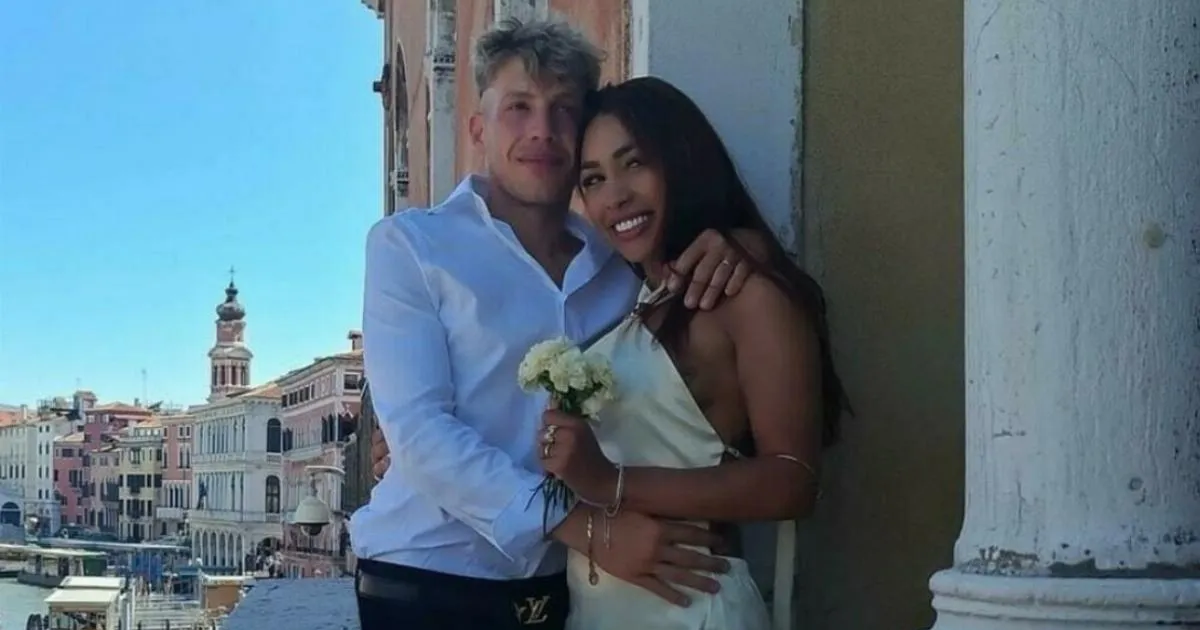
In the soft, dark hours before dawn on Saturday, September 12, the Venetian lagoon was quiet—until a sudden, sickening collision turned the Tessera Canal into the scene of a nightmare. Sean Michieli, 25, and his wife Gabriella Querino, 26, had been out on a small boat, doing something as ordinary as searching for bait. Sean had grown up in Burano, the tiny, vividly colored island in the northern part of the lagoon, and he knew these waters as well as anyone. Gabriella had come from Brazil to Italy two years earlier, bringing with her a love that had blossomed into marriage just a few months before. Their wedding was still a fresh and happy memory; their future was filled with plans, including the child they were expecting. Then, in the dimness between 5 and 6 a.m., a water taxi struck their small vessel. The impact was catastrophic. Sean suffered a severe head injury and abdominal trauma, and he was pulled from the water in critical condition. Doctors operated on him, desperately trying to save his life, but on Sunday evening, the young husband died. Gabriella was nowhere to be found. A massive search began almost immediately, with firefighter divers, jet skis, a maritime unit, and even a helicopter scouring the lagoon. The city watched and waited, hoping for a miracle. That miracle never came. On Tuesday morning, her body was discovered near the island of Campalto, nearly two kilometres from the place where the accident happened. Only later did the fuller tragedy emerge: Gabriella had been pregnant with the couple’s first child. What began as a brief holiday visit—a chance for a young husband to show his wife the places of his childhood—had become an incomprehensible loss. The couple had said “I do” only months earlier, and now they were gone, together, leaving behind two families, a community in shock, and a baby who would never be born. This is the story of a love that was just beginning when it was violently cut short.
The accident unfolded in a part of the lagoon that is both familiar and treacherous. The Tessera Canal is a busy waterway, especially in the early morning when boats move toward the airport and the wider channels of Venice. Sean and Gabriella had taken out a small boat, perhaps a traditional fishing craft, to collect bait—a routine errand for Sean, who made his living from the sea. At roughly 5 to 6 a.m., a water taxi, reportedly carrying two passengers to Marco Polo Airport, slammed into them. The exact sequence of events remains under investigation, but the results were immediate and devastating. Sean was found with grave injuries, and he was transported to a hospital, where he underwent surgery. His condition was described as critical; the head injury and abdominal trauma were too severe for his body to overcome. On Sunday evening, despite the best efforts of medical staff, he died. Meanwhile, the search for Gabriella continued with increasing urgency. Firefighter divers plunged into the murky waters, jet skis raced across the surface, a maritime unit and a helicopter scanned from above. For days, her family and friends clung to hope. But on Tuesday morning, that hope was extinguished when her body was found near the island of Campalto, almost two kilometres from the crash site. The distance suggested how powerful the impact had been, or how the currents had carried her away. It also underlined the cruelty of the scene: a young woman, a wife and expectant mother, alone in the water while the world searched. The news of her pregnancy, reported by those who knew the couple, added an extra layer of sorrow to an already unbearable loss. They were not just a married couple; they were a young family in the making. The baby they had dreamed of would never take its first breath. In a matter of days, a wedding, a future, and a family had all been erased. The city of Venice, accustomed to death and drama in its long history, found itself grieving for a couple it had barely known but could not forget.
To understand the depth of the loss, it helps to know who they were. Sean Michieli was born and raised in Burano, a small island in the northern part of the Venetian lagoon famous for its brightly painted houses and lace-making tradition. He was a fisherman, a man whose life was tied to the water, and he knew its moods, its channels, and its dangers. Burano is a close-knit community, where everyone knows everyone, and where a young person’s choices are watched with interest and affection. Sean had chosen Gabriella, a woman from Brazil, who had moved to Italy two years before their wedding. Her decision to leave her homeland for a new life in Italy spoke of her courage and her love. Together, they had built a life that seemed to be following a beautiful arc: a meeting, a courtship, a wedding, and then the news of a pregnancy. Friends and family described them as radiant and excited, full of plans. Their trip to Venice was likely a simple pleasure, a way for Sean to show Gabriella the lagoon that had shaped him, to share the places of his childhood, and to enjoy their newly married life. The fact that they were out so early in the morning, looking for bait, was a reminder that Sean was still working, still providing, still thinking about the practical details of their future. That future was now gone. The young couple had been married for only a few months—”months after saying ‘I do,'” as the headlines noted. There had not been time for anniversaries, for a first home, for watching their child grow. There had only been time for a dream. The tragedy has resonated far beyond Venice, reaching Brazil, where Gabriella’s family and friends are mourning, and touching the hearts of people who never knew them. In a world that often feels divided, the loss of these two young people has become a shared grief, a reminder of how fragile life can be. Their story is not just a news report; it is a human tragedy, filled with the promise of a family that will never be.
As the community mourns, a formal investigation is trying to piece together exactly what happened in those pre-dawn moments. Italian authorities have opened a manslaughter investigation, and a 38-year-old water taxi driver has been questioned by police. The driver, whose name has not been released, is at the center of a complex and painful legal process. His lawyer has said that the man is “devastated for days”—a phrase that hints at the psychological weight of being involved in such a tragedy, regardless of fault. Routine toxicology tests have been carried out, though the results have not yet been made public. The driver’s account of the collision adds another layer of confusion. He said he was transporting two clients to Marco Polo Airport, and that all of his boat’s lights were on, as required, because it was still dark. According to his version of events, the small boat carrying Sean and Gabriella was travelling at high speed and without any lights, making it nearly impossible to see until it was too late. If true, that would place the blame on the young couple, but the investigation is far from complete. The couple’s families, still reeling from their deaths, are waiting for answers. Officials have urged patience, noting that the precise circumstances—the speed of both vessels, the visibility, the navigation rules, the positions of the boats—must be carefully reconstructed before anyone can be held responsible. The water taxi driver’s life has also been changed forever; whether he is found guilty or innocent, he will carry the memory of that morning with him. The search for evidence is now as painstaking as the earlier search for Gabriella was desperate. Every scar on the boats, every witness statement, every piece of data from the water taxi’s navigation system could help explain how a routine early-morning journey ended in the deaths of two people and their unborn child. For the families, however, no explanation will ever be enough. They have lost people they loved, and no legal conclusion can bring them back. The investigation is necessary, but it is also a slow, agonizing process—one that will unfold in the public eye, under the weight of grief.
This tragedy has also sparked a broader conversation about the safety of Venice’s waterways. The lagoon is not a theme park; it is a working, living environment, crossed by cargo ships, water taxis, ferries, fishing boats, and private vessels, all sharing channels that are often narrow, poorly lit, and crowded. At night, the darkness can make navigation especially dangerous. Democratic Party regional councillor Monica Sambo spoke for many when she said that officials were waiting for the results of the investigation to “fully clarify the circumstances of the accident.” But she also pointed to a larger issue, highlighting “the need for serious regulation and monitoring of water traffic in Venice, as well as proper canal lighting to ensure the safety of everyone navigating the lagoon.” Her words have struck a chord. For residents, the accident is a reminder that the beauty of Venice hides real dangers. For visitors, it is a warning that the water, so romantic during the day, can be deadly after midnight. The call for better lighting, stricter rules, and more oversight is not new—Venetians have long complained about the chaos of boat traffic, the wake from speeding water taxis, and the lack of infrastructure for smaller craft. But the death of Sean and Gabriella has given those complaints a tragic urgency. If their small boat had been visible, if the water taxi had been slower, if the canal had been lit, could the collision have been avoided? These are unanswerable questions, but they are also unavoidable. The investigation may lead to criminal charges, but it may also lead to changes in policy, to new safety measures, to a determination that no other family should suffer such a loss. That would be a small comfort, but it would be a meaningful legacy. For now, the lagoon remains as beautiful and as dangerous as ever, its waters hiding secrets and sorrows. The couple’s deaths have become a symbol of the need for change, a reminder that the same canals that draw millions of tourists to Venice each year can turn, in an instant, into places of tragedy.
In the days since the accident, tributes have poured in from across Italy and Brazil. Simone Venturini, the mayor of Venice, described the incident as “a tragic event that gripped our entire city and ended in a very painful way.” His words capture the mood of a city that often seems hardened to tragedy, but that has been deeply moved by this story. Luca Zaia, president of the Regional Council of Veneto, called it “an immense tragedy for a family that was just beginning to build their future.” That phrase—”just beginning to build their future”—is perhaps the most heartbreaking of all. Sean and Gabriella had done everything right. They had found each other, fallen in love, married, and started to plan a family. They were not reckless teenagers or tourists who ignored warning signs; they were adults, one of them a local who knew the lagoon, carrying out a simple task. And yet they were gone. The crash has left a hole in the lives of their parents, siblings, friends, and all who had attended their wedding. It has left a community in Burano grieving for a son, and a community in Brazil grieving for a daughter. It has left a future that will never be lived. In the end, the story of Sean Michieli and Gabriella Querino is not just a story about an accident, an investigation, or the dangers of Venice’s waterways. It is a story about love, about the fragility of life, and about how quickly everything can change. They were married for only a few months. They never got to see their child grow. But they are not forgotten. Their names will be remembered, not as victims of a statistics, but as a young couple who loved each other, who dreamed of a future, and who died together on a September morning in the waters where Sean had grown up. As the investigation continues, and as the city of Venice begins to heal, their families must somehow find a way to go on. It will not be easy. There will be questions that have no answers, and days when the grief is unbearable. But the love that Sean and Gabriella shared, and the child they hoped to welcome, will remain a part of the story of Venice—a tragic reminder that every boat on the lagoon carries a life, and every life carries a world of hopes. They said “I do” a few months ago. Now, they are together, forever, in the waters that would become their final resting place.