
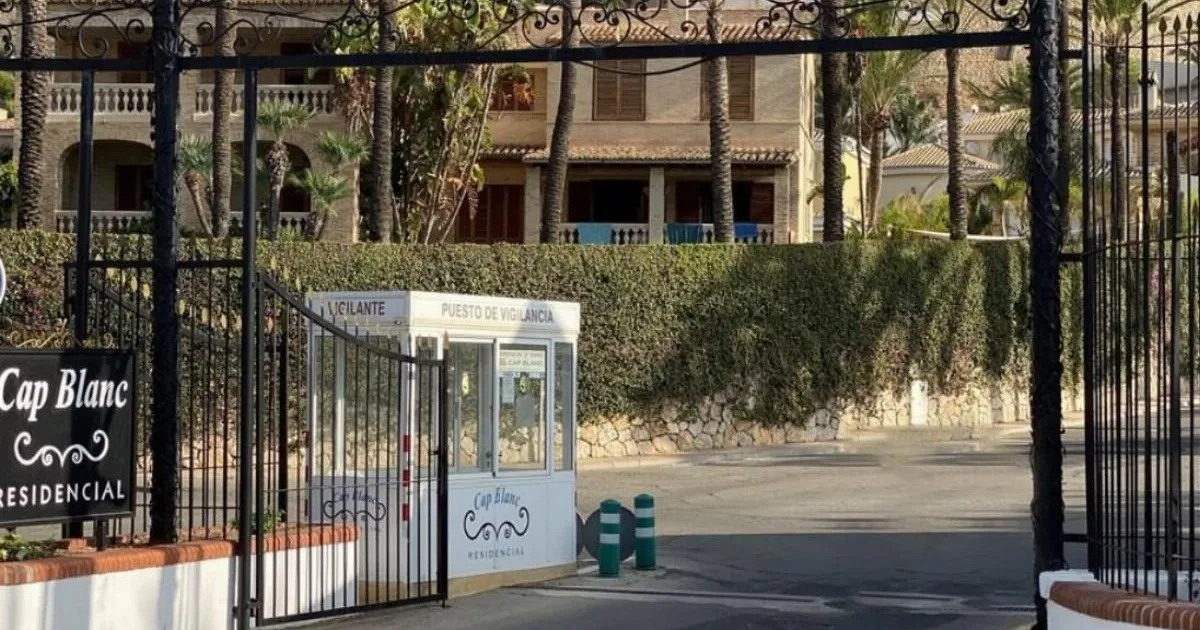
The sun was shining over Cap Blanc, an exclusive residential community tucked into the coastline south of Valencia, when a family holiday turned into an unthinkable nightmare. On Tuesday, inside a hot tub at a rented villa, the bodies of an Irish couple were found. The man was 50 years old; the woman was 45. It was their own teenage children, a 14-year-old and a 16-year-old, who made the devastating discovery. The teenagers, no doubt in a state of shock and terror, immediately alerted the owner of the property, and soon the peaceful estate was swarming with emergency services. For the family, however, it was already far too late. What should have been another sun-drenched day in a Mediterranean paradise became the cruellest moment of their lives, a moment that no parent, no child, and no grandparent could ever be prepared to face. The villa was situated in a quiet, gated community near Cullera’s lighthouse, with golden sand beaches and uninterrupted views of the Mediterranean Sea. It was the kind of place where people come to celebrate anniversaries, to escape the grey of northern European winters, to laugh over long dinners and watch the sun sink into the water. Instead, it will now be remembered as the place where two lives came to a sudden and unexplained end, in the most unexpected and harrowing of circumstances. The names of the couple have not yet been officially released, and the children are being cared for by social workers, but no amount of professional support can erase the image of what they saw on what should have been another ordinary morning in their family adventure.
Spanish police have launched a full investigation, but they have been careful not to jump to any conclusions. The Civil Guard in Valencia confirmed that the bodies of the man and woman, both Irish nationals, were found at a residential property in the municipality of Cullera. A local homicide unit has taken charge of the case, a detail that might seem alarming at first glance, but as Civil Guard spokesman Pablo Cea was quick to explain, “that does not mean this was a homicide.” He told the Irish Times: “It could be an accident or suicide—every hypothesis is open for investigation.” This is the cautious, methodical language of an inquiry that is still in its earliest stages, with far more questions than answers. Investigators will have to reconstruct the final hours of the couple’s lives, interviewing the children, the property owner, neighbours, and anyone else who may have seen or spoken with them in the days before their deaths. They will examine the layout of the villa, the condition of the hot tub, the electrical systems, the water temperature, and any substances found in the surroundings. They will also look at phone records and social media activity to understand the couple’s state of mind. The involvement of the homicide unit is standard practice for unexplained deaths, especially when they occur in unusual circumstances. It does not mean that police suspect foul play; it simply means that the case is serious enough, and mysterious enough, to require the most experienced investigators available. Until forensic evidence provides clearer answers, every possibility remains on the table, and the family must endure the agonising wait for news.
There are, tragically, many ways in which a hot tub can become a place of danger rather than relaxation. Drowning is the most obvious possibility, especially if someone loses consciousness under the water. Overheating and heatstroke are also well-documented risks, particularly when alcohol or certain medications are involved, as the combination of heat and substances can cause a sudden drop in blood pressure, fainting, and cardiac arrest. Electrocution from faulty wiring, damaged pumps, or poorly installed underwater lighting is another known hazard, and in holiday rentals where maintenance records are incomplete or standards are inconsistent, such risks cannot be dismissed. If the hot tub was enclosed or poorly ventilated, carbon monoxide poisoning could also be a factor. Even a perfectly healthy person can suffer from the shock of sudden immersion in very hot water, which can put unexpected strain on the heart. All of these scenarios will now be examined by forensic pathologists, electrical engineers, and other specialists as they work to determine exactly what happened on that fateful Tuesday morning. Foul play, of course, has not been ruled out, and detectives will explore whether there were any threats, conflicts, or unusual behaviours in the couple’s final days. They will also consider whether the deaths could have been deliberately caused, whether by the couple themselves or by someone else. The presence of the children in the villa adds an extra layer of sensitivity to the investigation, as police must gather evidence while also protecting the teenagers from further trauma. The hot tub itself will be drained, dismantled if necessary, and thoroughly inspected. A toxicology report, which can take weeks to complete, will be crucial in establishing whether alcohol or drugs played a role. Until then, the official cause of death will remain provisional, leaving room for speculation and, for those who loved the couple, an unbearable sense of uncertainty.
At the centre of this tragedy are two young people who are now facing a future their parents never got to see. The children, aged just 14 and 16, are old enough to understand the permanence of death but young enough to be completely unprepared for the loss of both parents in a single moment. They are being looked after by social workers, and a psychologist has been brought in to help them cope with the immediate shock and grief. It is impossible to overstate the scale of the emotional damage they have suffered. In one horrifying morning, they lost their mother and father, the security of their family unit, and the ordinary certainties of teenage life. They will need long-term psychological support, not only for the acute pain of bereavement but also for the likely post-traumatic stress that can follow such a shocking discovery. Relatives in Ireland have been informed, and arrangements will be made to bring the children home, where they will have to find a way to rebuild their lives without the people who raised them. The wider Irish community in Spain, a large and tightly connected network, has also been shaken by the news. Many have reached out to express their condolences and offer whatever practical help they can, even as they struggle to comprehend how such a tragedy could happen in a place as beautiful as Cap Blanc. The Irish Embassy and Consulate will provide assistance with the administrative and logistical challenges of repatriation, but no diplomat or official can restore what has been lost. What remains is a fragile support system, quietly encircling the children with care and trying to help them find a path through a grief that has no map and no schedule.
The setting of this tragedy only deepens its poignancy. Cap Blanc is an exclusive residential estate near Cullera, a municipality roughly 25 miles south of Valencia, in the heart of Spain’s popular eastern coastline. It is a place of privilege and tranquillity, with secure gates, manicured gardens, and properties that face the Mediterranean as if they were part of a postcard. The estate is close to Cullera’s famous lighthouse, and its golden sand beach is considered one of the most beautiful in the region. For years, this stretch of coast has attracted holidaymakers from across Europe, particularly from Ireland and the United Kingdom, who are drawn by the mild climate, the long sunny summers, the paella, and the relaxed pace of life. Cullera itself is a town of around 22,000 residents, a number that multiplies in July and August, and it has long been a favourite family destination. The contrast between the idyllic scenery and the sorrow unfolding behind the gates of one villa is almost too much to process. The same gentle waves that soothe visitors by day seemed indifferent to the emergency that was taking place just a few hundred metres away. The same golden sand that children build castles on was soon marked by the footprints of police officers. The exclusive community’s promise of safety and seclusion turned out to be fragile and, in the end, tragically broken. Tragedy does not respect property values or security checkpoints. It found the family even in this protected bubble, and it has left behind a silence that neighbours, holidaymakers, and the local community will not easily shake. In a place designed for escape, there is now nowhere to run from the memory of what happened.
As the investigation unfolds, the focus will shift to forensic evidence and legal procedure. Autopsies will be carried out by medical experts in Valencia, and the results will determine whether there were any natural causes, injuries, or signs of poisoning. Toxicology tests will establish whether alcohol, recreational drugs, or prescription medication played a role. Specialists may also be called in to evaluate the hot tub’s installation, the state of its electrical components, and whether the property owner failed to meet safety standards. Civil Guard officers will reconstruct the final timeline, examining digital records, interviewing witnesses, and checking whether there were any warning signs that might explain the tragedy. They will also consider the possibility of suicide, an uncomfortable but necessary line of inquiry in any unexplained death. The process is likely to be slow, methodical, and emotionally exhausting for everyone involved. There may also be legal questions about liability, especially if the hot tub is found to be defective and the rental company or property owner is judged to have been negligent. For the children, however, no legal outcome can bring their parents back. The Irish and Spanish authorities will work together to ensure that the repatriation of the bodies is handled with dignity and respect, but the emotional logistics of a family destroyed in an instant are far more complicated. This story is a painful reminder that death can arrive in the most benign of settings, that a hot tub on a sunny terrace can become the site of a family’s undoing. It is also a reminder that grief is not something anyone should face alone. Social workers, psychologists, police officers, neighbours, and strangers have already stepped in to help the children carry a burden that no teenagers should ever have to bear. In the long, difficult road ahead, that human kindness will matter more than any official finding. What happened at Cap Blanc may never be fully understood, but the lives lost there will not be forgotten, and the two young people left behind will need all the compassion the world can offer.