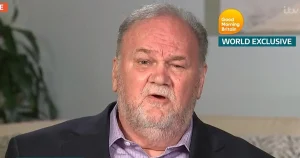


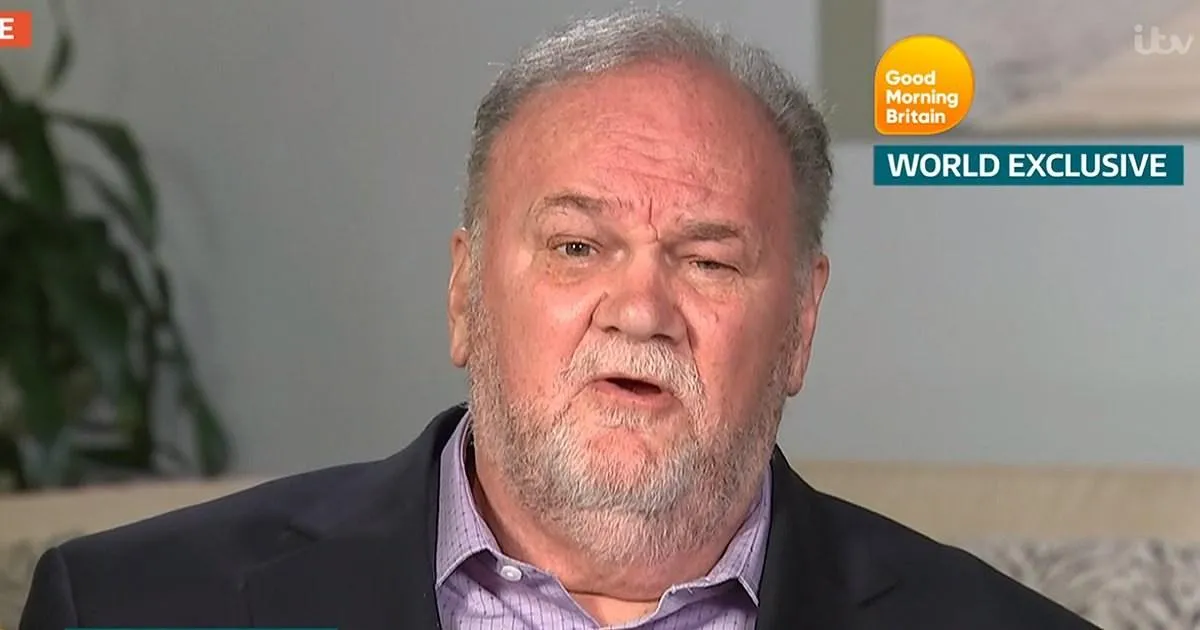
There are stories that unsettle us not simply because they are disturbing, but because they force us to reimagine a life we thought we knew. The allegations surrounding Thomas Markle Snr, the 82-year-old father of Meghan, Duchess of Sussex, are exactly that kind of story. According to a report in The Sun, Markle Snr is being investigated by police in the Philippines after his own son, Thomas Markle Jnr, reported him. At Markle Snr’s home in the city of Cebu, investigators are said to be preparing to seize evidence, including four large boxes that reportedly contain “hundreds, if not thousands” of indecent photographs and videos. The material is alleged to include images of children, in what a source close to the Duchess described as the kind of discovery that may finally explain why Meghan has remained estranged from her father since 2018. The source said: “Now maybe people will finally understand why she has had nothing to do with her father since 2018.” That sentence carries enormous weight. For years, Meghan’s decision to cut off her father was framed in the media as coldness, or as the inevitable consequence of a wedding-day dispute over staged paparazzi photographs. But the addition of an allegation of this magnitude changes the lens. No criminal charge has yet been brought, and Markle Snr has not publicly responded to the specific claims. The FBI is said to be looking into whether it should open an investigation on the American side, while Philippine authorities are reportedly moving forward. The story is still unfolding, but it already contains a deeply human dimension: a family fractured not only by fame and distance, but now by the possibility of a hidden life. Behind the headlines, there is a daughter who has built protective boundaries, a son who says he had no choice but to report his father, and an elderly man whose health has collapsed. It is a tangle of love, duty, betrayal, and suspicion—and it deserves to be told with care, not sensationalism.
For Thomas Markle Jnr, the moment of discovery was not a planned act of rebellion. He was looking for a mobile phone for his girlfriend when he came across an old LG device. That detour, by his account, led him into a place he never expected to find in his father’s home. He described finding old books that turned out to be filled with naked little girls, a computer desktop covered with row upon row of thumbnail pictures, and links to what he called “the most sickening child abuse imaginable—the worst of the worst.” He told The Sun that he was horrified, and that he knew immediately the material was highly illegal. He also knew that simply destroying it would not be acceptable. He made the painful decision to report his own father to the authorities, including the FBI Hotline, the National Center for Missing and Exploited Children, and state police in Pennsylvania, where Markle Snr had been living. “I have supported, cared for him and helped him for years—but that stops now,” Thomas Markle Jnr said. “I won’t speak to my father ever again unless I’m called to give evidence against him.” That is a devastating sentence to imagine oneself uttering. It suggests a rupture not just of legal obligation but of human trust. Friends say Thomas Jnr was left a “shaking wreck” by the discovery, and his reported words—betrayed, angry, disgusted—reveal a son wrestling with a terrible question: What do you do when the person who gave you life is also the person you believe has committed unforgivable crimes? There is no simple answer. Family loyalty is one of the deepest human instincts, and turning in a parent is an act that carries social stigma, emotional pain, and legal complexity. Yet Thomas Jnr says he chose to do it because he understood that inaction would make him complicit. It is impossible to know, from news reports alone, everything that happened inside that house. The investigation will determine what is true. But the image of a son, standing at the edge of an abyss, deciding to walk away from his father forever, is one that resonates far beyond this story. It is a reminder that the decision to tell the truth is not always clean or heroic; it can be messy, lonely, and devastating.
The details that have emerged about the alleged material are hard to read without feeling a sense of deep despair. According to reports, files were allegedly found on a hard drive alongside Markle Snr’s work documents, including his professional CV. That detail, if accurate, is deeply troubling because it suggests a level of normalcy, a coexistence of ordinary professional life and the darkest possible material. Among the files were said to be clips of preschool children either nude or engaged in sex acts. One image allegedly showed a man engaged in a sex act with an Asian girl, with the image stored inside the pages of an antique book titled Lewis Carroll Photographs Of Children: Four Nude Studies. The inclusion of a book connected to Lewis Carroll, a figure whose photographs of children have long been a source of debate and discomfort, adds a disturbing cultural layer. The alleged collection is not simply a handful of images; it is described as hundreds or thousands of photos and videos in four large boxes. This is not a stray file or a mistake. It is, if true, a private archive of abuse—an accumulation that suggests sustained engagement with illegal material over a long period. It is important to remember, especially in a story involving famous names, that behind every photograph and every video is a real child. Real children whose lives have been stolen by abuse, and whose images continue to circulate as permanent records of their suffering. The existence of such archives is one of the cruelest aspects of modern crime. A child may grow up, escape an abuser, or even find healing, only to discover that images of their worst day are still being traded and stored by strangers around the world. This case, if proven, would be a reminder that the production and possession of such material is not a victimless act. It is a violent, ongoing trauma. The legal system will now have to determine the accuracy of these allegations. But no matter who the accused person is, no matter what family drama surrounds him, the larger issue remains: for as long as these images exist, they will continue to harm the people inside them. That is ultimately why an investigation matters, why a son’s decision to report a parent matters, and why we should resist the urge to turn this into a soap opera or a tabloid curiosity.
The story is complicated further by the reality of Thomas Markle Snr’s physical condition. He is now 82 years old, and his health has been in sharp decline. He suffered a life-threatening stroke in 2022, and more recently experienced a blood clot that led to the loss of his left leg. In May, he reportedly left his home in the Philippines and flew back to the United States, where he had been living, to receive further care. There is something profoundly uncomfortable about investigating an elderly, ailing man for crimes that would have involved children. It is easy to imagine the image of a frail pensioner and to feel pity. But pity and accountability are not mutually exclusive. Serious illness does not erase the need for investigation, and the possibility of a trial—if charges are brought—would have to be managed with humanity and care. At the same time, the allegations have divided the Markle family even further. Meghan’s half-sister, Samantha Markle, has publicly denied the allegations and accused her brother of inventing the story for money. She told the Daily Mail: “There is no merit in these disgusting allegations whatsoever and my brother is disgusting for making them up. He wants to destroy our dad. Shame on him.” Those are angry, wounded words, and they are entirely understandable from the perspective of a daughter who may feel that her family is being torn apart by a brother she distrusts. But they also highlight how families in crisis often fracture into competing narratives. When a parent is accused of something this serious, siblings can find themselves on opposite sides of a chasm, unable to hear one another. One chooses the parent, another chooses the principle. Neither choice comes without cost. Samantha’s denial does not answer the detailed claims about boxes, hard drives, or thumbnails, but it does show that the emotional damage of such accusations is not limited to the accused. The entire family is now living under the weight of suspicion and public scrutiny. For Meghan, who has already spent years trying to create distance from the painful dynamics of her family, this new chapter may feel like the final confirmation that she was right to protect herself.
To fully understand the human dimensions of this case, one has to look back at the long, painful history between Meghan Markle and her father. Meghan was six years old when her parents divorced. She and her father were not always estranged; he was a presence in her early life, and she has spoken about him in interviews before their relationship broke down. The rupture occurred around her wedding in 2018, when Thomas Markle Snr was caught staging paparazzi photographs in the lead-up to the ceremony. He was supposed to attend the wedding, but ultimately did not, citing health reasons. What followed was a very public, very bitter family war played out in newspapers, interviews, and court filings. Meghan has said she tried to help her father, but that he made choices she could not accept. Since then, the distance has only grown. Markle Snr has never met his grandchildren, Archie and Lilibet, now six and four. Reports last year suggested that Meghan has no intention of seeing her father again. That decision has often been portrayed as unforgiving or manipulative—as celebrity estrangement designed to protect her brand. But the new allegations, if true, would cast that estrangement in a different light. A source close to the Duchess leaned into this point directly: “Now maybe people will finally understand why she has had nothing to do with her father since 2018.” This is not a claim that Meghan knew about the material. There is no suggestion that she did. It is simply a suggestion that perhaps what looked like coldness was actually boundary-setting, that Meghan’s instinct to keep herself and her children away from her father was not a celebrity whim but an act of survival. It is common for people who grow up in dysfunctional or harmful families to set boundaries that others cannot understand. They are often blamed for “abandoning” family members, for being ungrateful, for refusing to forgive. But boundaries are not cruelty; they are self-defense. For Meghan, the cost of setting that boundary has been enormous. She has been publicly condemned by members of her own family, caricatured in the media, and made to feel guilty for choosing a different path. If the allegations against her father are proven, many of those judgments may need to be re-examined.
Ultimately, this story is about more than the royal family, or the Markle family, or the tabloid headlines. It is about the reality of child sexual abuse imagery, the internet’s shadow economy of suffering, and the difficult, often agonizing work of bringing those responsible to justice. It is about the importance of taking reports seriously, especially when they come from someone willing to testify against a parent. Thomas Markle Jnr’s decision to report his father is a reminder that the people who uncover abuse are often not police officers or investigators, but ordinary people trying to live their lives. They open a drawer, find a box, or switch on an old phone, and suddenly they are confronted with something that shatters their world. What they do next can determine whether justice is possible. The authorities in the Philippines and the United States will now face the difficult task of investigating an aging man across international borders, gathering evidence, protecting potential victims, and ensuring due process. It will not be quick, and it will not be simple. It will require patience, compassion, and an unwavering focus on the children whose images may have been found. If Thomas Markle Snr is innocent, he deserves the chance to clear his name. If he is guilty, he must face the consequences, no matter how old or frail he is. But regardless of how this case resolves, it has already opened a door into a dark and painful world that exists far away from royal weddings and celebrity feuds. It has also confirmed something that Meghan Markle has said for years: her decision to separate herself from her father was rooted not in coldness, but in a complex history of pain. In the end, the most profound lesson may be about the stories we tell ourselves about famous people. We see a family estrangement and assume we know who is right or wrong. We see a daughter who cuts off her father and call her cruel. We see an elderly man in a wheelchair and feel sympathy. But the truth is often hidden in boxes, in old phones, in secret files—and sometimes only found after years of public judgment have already been passed. This story should be a reminder that human beings are complicated, that families are full of secrets, and that the search for truth must be allowed to continue, no matter how uncomfortable it becomes.