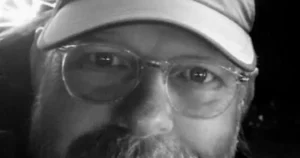

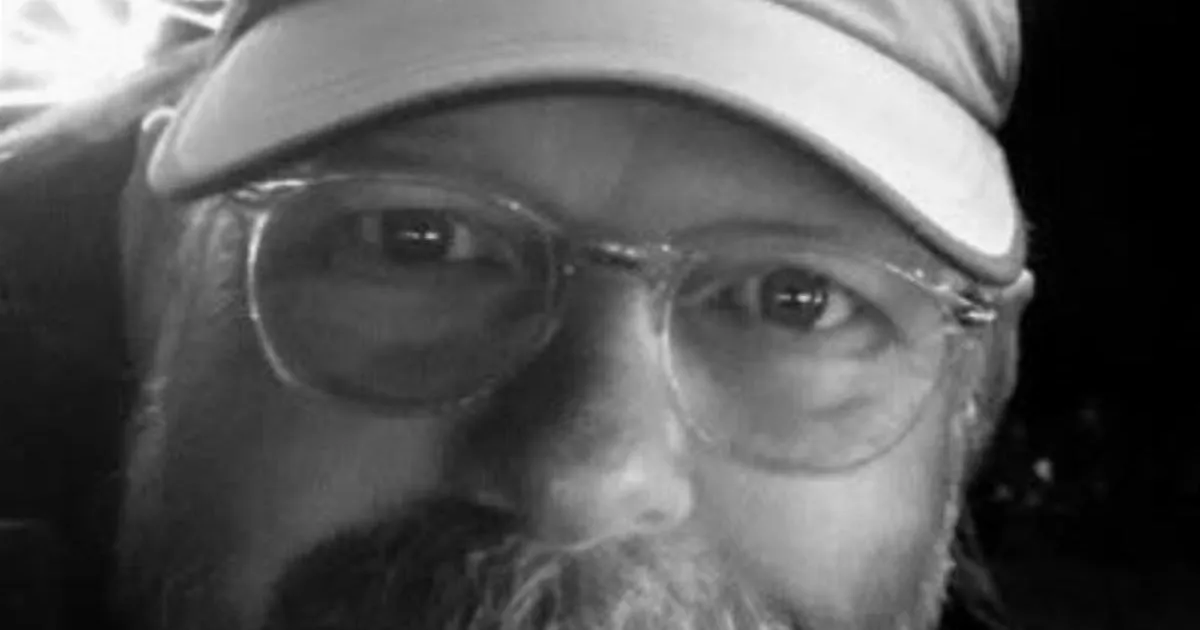
On a quiet September morning, Graham Pennycook set out for a walk he had likely taken many times before. The 64-year-old army veteran, a man described by those who loved him as dependable and quietly strong, headed toward the woods at Perham Down in Wiltshire, with his dog by his side. It was the kind of ordinary ritual that defines a life—fresh air, familiar paths, the loyal companionship of a pet. But that day, something went terribly wrong. Graham never came home. Instead, his dog returned alone, an image that carries a haunting weight: the animal trotting back to the house, perhaps confused or restless, while the person who had set out with such simple purpose remained unaccounted for. For Graham’s wife, Jacky, that moment must have been the beginning of a nightmare. The hours that followed would have been filled with worry, phone calls, desperate hoping, and the dawning realization that something serious had occurred. Police were alerted, and a search was launched. Later that same day, Graham’s body was found in a part of the woods near the polo field at Perham Down—a place described as popular with dog walkers, cyclists, and outdoor enthusiasts. At first, the circumstances of his death were not clear. But when a post-mortem was carried out, the truth emerged with devastating clarity: Graham Pennycook had not died of natural causes. He had been killed. What began as a tragic disappearance had become a murder investigation, and a community was left to grapple with the fact that violence had erupted in a familiar, peaceful corner of their world.
In the weeks that followed, Graham’s wife found the strength to speak about the man she had lost. Her words painted a portrait of someone who was not just a husband, but a cornerstone of his family and community. Jacky described him as a “kind and generous” man, a phrase that may sound simple but carries enormous meaning when spoken through grief. She called him “a pillar of strength,” someone “trusted by all” and “always on hand to help family and friends whenever needed.” Those words offer a glimpse into the life that was cut short. Graham was the sort of person people rely on without thinking—the one who shows up, who fixes things, who listens, who makes the world feel safer and more manageable. As an army veteran, he had served his country, and that sense of duty likely carried into his everyday life. He was someone you could count on, and the quiet void left by his absence is immeasurable. For Jacky, for their family, for friends and neighbours who knew him as a familiar face along the woodland paths, the loss is not just a personal tragedy but a communal one. The woods where Graham was found must now feel different—more shadowed, less serene. The paths he walked with his dog may now serve as a painful reminder of the day a normal outing turned into something unspeakable. Yet Jacky’s tribute, delivered with dignity amid unimaginable pain, also reveals a deep desire for justice. She did not simply mourn; she reminded the world who Graham was and why his death matters. In doing so, she invited everyone who knew him, and even strangers, to care about the outcome of this case.
The investigation into Graham’s death has been methodical and determined. For detectives, the first challenge was understanding what had happened. A body discovered in the woods is not always immediately recognized as the scene of a crime. It was only after the post-mortem examination that the true nature of the case became clear. That moment must have been shattering for Jacky and everyone close to Graham. To lose a loved one is agonizing; to learn that they were deliberately killed adds a layer of horror and anger that is almost impossible to process. The investigation has now entered its fourth week, and police are no closer to making an arrest. But they have made it clear that they are not giving up. Detective Chief Inspector Phil Walker, who is leading the case, stated emphatically that the commitment to establishing exactly what happened and who is responsible remains “absolute.” That word carries weight. It signals to the public and to any potential witness that this case will not go cold, that every lead will be pursued, and that the pursuit of justice for Graham Pennycook is not a matter of routine procedure but of deep resolve. The challenge, however, is significant. Graham was killed in a public place, during daylight hours, in an area that is commonly used by walkers and cyclists. Yet no one has come forward with a clear account of what they saw. The very ordinariness of the setting may have worked in the killer’s favor—people walking in the woods may not have registered the significance of what they were witnessing at the time. And that is precisely what the police are trying to change.
Detectives have now issued a specific and urgent appeal, hoping to jog memories and prompt someone to reconsider a seemingly unremarkable detail. They are particularly interested in two men who were seen acting suspiciously in the woods at Perham Down on the day of the murder. The timeframe they have given is broad enough to cover the entire day—between 9am and 6pm on September 24—but they have highlighted a specific window between 10am and 11am as especially important. This detail is crucial. It suggests the police have developed a theory about when the attack occurred or when the two men were last reliably seen. DCI Walker has asked a series of pointed questions designed to help potential witnesses think back to that morning. Did you see anyone who looked out of place? Did you notice two people whose behavior didn’t fit the rhythm of the woods—people who were lingering, who moved with purpose but without the relaxed demeanor of casual walkers? Have you seen these individuals before, perhaps in the area on a routine basis? Do you know their names? These are the questions that might unlock the case. The police are also interested in vehicles: any cars that were parked in an unusual place, that drove erratically, or that seemed to belong to someone who had no business being there. The mention of vehicles suggests that the suspects may not have been local or may have traveled to the woods with a specific intent. The appeal is carefully worded but deeply human—it is an invitation for someone to realize that the information they hold, even if it seemed trivial at the time, could be the missing piece that brings a killer to justice.
The broader community has been asked to play its part, and there is a sense that the investigation depends on the collective memory of ordinary people. Perham Down, as the police have noted, is a popular place for walking dogs, riding bikes, and taking exercise. On September 24, the fine weather and familiar routine would have brought many people into the area. Some of them may have crossed paths with Graham, or with the two suspicious men, without realizing that they were witnessing a moment of significance. The police are grateful for the engagement they have received so far, but they believe there are others who have not yet come forward. This is a common and frustrating reality in murder investigations: witnesses often assume they have nothing to contribute, that what they saw was too small or too ordinary to matter. But in cases like this, small details can be transformative. A description of a jacket, a car’s license plate, a voice overheard, a moment of eye contact—any of these could help investigators build a picture of what happen. DCI Walker’s appeal is not just a request for information; it is a call for people to examine their own memories with greater care and to trust that their contribution will be taken seriously. He has thanked the community for its support, but he has also made it clear that the investigation cannot succeed without a fuller picture. The killer or killers may have walked away from the woods that day believing they had committed the perfect crime, believing that no one had seen them, believing that the anonymity of the forest would protect them. But if witnesses come forward, that illusion will shatter.
For Jacky Pennycook, and for everyone who knew her husband, the hope is that justice will eventually be served. But justice, in a case like this, is not just about punishment. It is about confirming that a life mattered, that the taking of that life was not unnoticed, and that the community refuses to accept violence as an ordinary part of its world. Graham Pennycook went into the woods with his dog on an ordinary day and never came home. His dog returned, but the man who had walked out the door—the husband, the veteran, the pillar of strength—was gone. The image of that dog arriving alone is one that will linger. It is a reminder that the bonds between people, and even between people and their pets, are fragile and can be severed in an instant. The police investigation continues, and the appeal for information remains open. Anyone who was near the polo field or the woods at Perham Down between 9am and 6pm on September 24, especially those who saw two men acting suspiciously, is urged to contact Wiltshire Police. Anyone who saw a vehicle in an unusual place or driving oddly is also asked to come forward. The details may seem small, but they could make all the difference. As the weeks pass and the case moves forward, the memory of Graham Pennycook endures—in the grief of his wife, in the hearts of his friends, and in the determination of detectives who have promised not to rest until they find the person responsible. For Jacky, for the community, and for anyone who reads this story, the hope is that someone will find the courage to step forward and help bring closure to a family that has lost so much. In the end, it is not just about solving a crime. It is about honoring a man who was kind and generous, who was trusted by all, and who deserved a different ending to his ordinary walk in the woods.