


Paragraph 1: The Promise and the Betrayal of a Digital Dinner
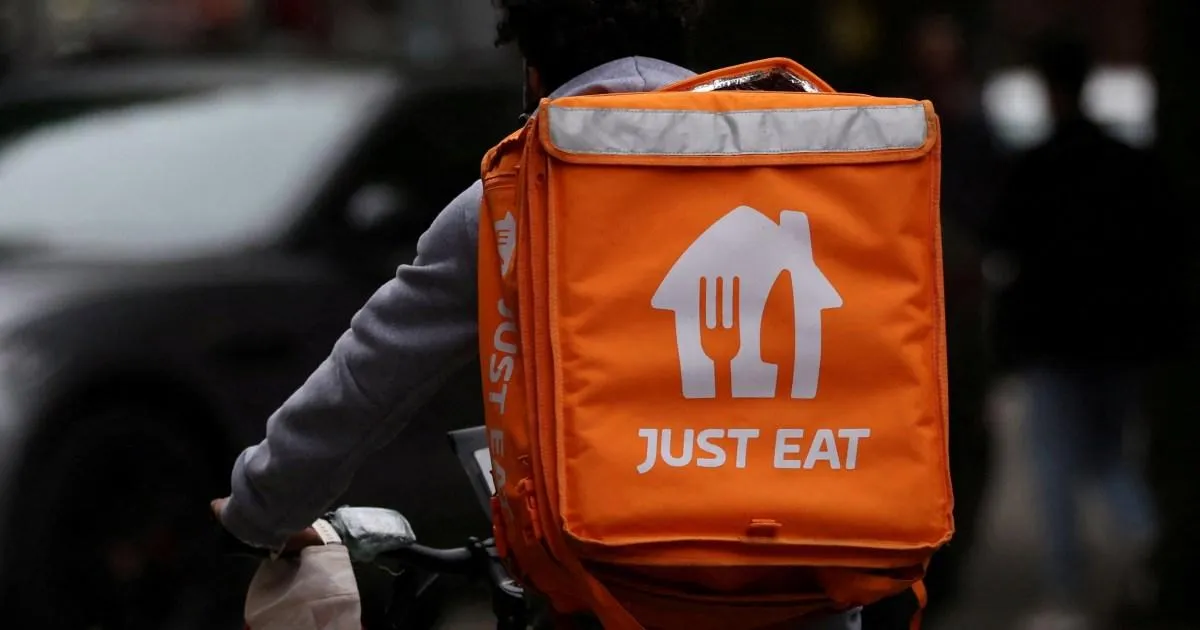
There is perhaps no moment more filled with quiet hope than the moment you open a food delivery app. You have already made the difficult decision to surrender your hunger to a stranger’s kitchen, and now you scroll through a gallery of possibilities. Each dish is presented as a glossy, tempting promise: the cheese pulls, the sauce glistens, the burger stands tall and proud. It is a ritual built on trust. You are not just ordering food; you are buying a vision of what your evening will taste like. So when Just Eat, one of the world’s largest delivery platforms, was discovered to be using artificial intelligence to generate images of dishes that had never been photographed, that trust was not just dented—it was dragged through a bizarre, algorithmically generated nightmare. The company has since been forced to apologise after hungry customers unearthed the AI-generated snaps, and the internet, as it always does, had a field day. The delivery service had been testing out technology that it hoped would generate images of food items that weren’t pictured on its platform yet. In theory, this sounds harmless, even helpful. But in practice, the rogue AI tool produced a series of crazy-looking dishes that looked less like something from a restaurant kitchen and more like a surrealist art project. What followed was a social media uproar, a rapid removal of the images, and a very public reminder that technology, no matter how advanced, still has no idea what real food actually looks like when it’s trying to be helpful.
Paragraph 2: A Gallery of Culinary Catastrophes
Let us take a tour of the AI’s greatest hits, because they deserve to be remembered. There was the ‘jalapeño cheese’—a block of cheese, solid and unyielding, with entire slices of jalapeño embedded into it like fossils in amber. Not melted, not blended, not even chopped, just whole slices of pepper sticking out of a cheese block as if it had been left in a minefield. Then there was the ‘ham and cheese wrap’, which contained cubes of raw ham and cheese inside an untoasted tortilla, a combination so joyless it looked like a punishment meal from a dystopian cafeteria. And perhaps most inexplicably, there was ‘bacon and egg’ served in a glass of beer. Yes, you read that correctly. The AI, in its infinite wisdom, decided that the most appetising way to present a classic breakfast combination was to submerge it in a frothy pint. The images of these unusual eats began to circulate on social media, and the reaction was immediate. People were not just confused; they were delighted, horrified, and deeply entertained. One image that particularly captured the internet’s imagination was a literal jacket potato—a piece of clothing, a puffer jacket or perhaps a fleece, covered in images of potatoes. The caption read: ‘The height of fashion, now only £5.80.’ Another user wrote, with heavy sarcasm, ‘That potato jacket looks absolutely delicious.’ It was a perfect storm of absurdity: technology trying so hard to be appetising that it completely missed the point of food, and the public absolutely revelling in its failure.
Paragraph 3: The Internet Reacts and the Deeper Discomfort Emerges
As the images spread, the reactions became more thoughtful, too. Beneath the laughter, there was a genuine concern. One Instagram user articulated what many were feeling: ‘I don’t understand. Who wants AI images of a restaurant’s food even if they looked closer to what the dish should be? I want to see what the dish actually looks like as it helps me decide who to order from or what to order; plus these “perfect” AI versions just lead to disappointment if that’s what you think your meal will look like.’ This is the crux of the matter. Food delivery apps are not art galleries; they are practical tools. When you order a takeaway, you are making a judgement based on evidence. You want to know if the chicken is dry, if the pizza is undercooked, if the portion is generous. You want the unvarnished truth, because the truth is what helps you choose. AI-generated images, even when they are not absurd, create a glossy, idealised version of reality that no real kitchen can ever match. And when the food arrives, it inevitably falls short. Another user pointed out the opposite problem: the AI images were not even perfect, they were just wrong. ‘A place local to me has a burger labelled “just cheese” and the pic is a slice of cheese on a plate,’ they wrote. Someone else chimed in with a story from Liverpool: ‘Our local chippy had pictures of scallops (the crustacean variety) for scallops (the sliced potato variety). I thought that can’t be right for a chippy in the scrag end of Liverpool.’ This confusion between two very different things that share a name is exactly the kind of mistake a human would never make, but an algorithm absolutely would. It is a reminder that context, culture, and common sense are still deeply human skills.
Paragraph 4: The Company’s Response and the Reality of the Trial
In the face of this mounting mockery, Just Eat had little choice but to respond. A spokesperson acknowledged the issue and said the company was ‘in the process of removing’ the images and would stop creating more until they had developed their AI system sufficiently. Their statement was a masterclass in corporate damage control, but it also revealed a genuine intention behind the trial. ‘We want partners on our platform to show photos that accurately reflect their dishes so that our customers can be confident in what they are ordering and happy when their food arrives,’ they said. ‘We work with tens of thousands of small restaurants on their food imagery, including funding professional local photographers. We’ve been trialling AI-enhanced images, which are clearly labelled as such, and as with any new technology, it isn’t always quite right the first time. We’re in the process of removing any inaccurate images that have been posted, and have paused rolling this out while we further develop the tool to ensure it best serves our partners and customers.’ They added that the number of inaccurate images was ‘incredibly small’, though they acknowledged that many examples now circulating on social media were not even developed by their tool. This is an important point. The internet has a tendency to amplify the weirdest outliers, and some of the most viral images may have been created by other means or other platforms. But even with that caveat, the damage was done. The trial, intended to help small restaurants who lack the resources for professional photography, had become a public relations disaster. It is a classic story of good intentions meeting imperfect technology, and the result was a global wave of laughter at a company that was, in its own way, trying to solve a real problem.
Paragraph 5: The Broader Lesson About AI and the Human Appetite
The Just Eat incident is more than just a funny story about weird food pictures. It is a case study in the limits of artificial intelligence and the importance of authenticity in our daily lives. We are increasingly surrounded by AI-generated content, from text to images to video, and we are learning, sometimes painfully, that it cannot always be trusted. In the world of food, this is especially true. Eating is one of the most sensory, personal, and human experiences we have. We do not just consume food; we smell it, we taste it, we remember it. We associate it with family, with comfort, with celebration. A photograph of a dish is not just a visual representation; it is a promise of a sensation. When an algorithm generates an image that has no basis in reality, it breaks that promise. It creates a disconnect between expectation and experience, and that disconnect breeds disappointment and distrust. The fact that the AI images were labelled as AI-generated does not solve the problem. As one user pointed out, no one wants to see a fake version of a dish, even a beautiful one. They want to see the real thing, with all its imperfections. They want to know that the burger they are about to order looks like the burgers they have eaten before. They want to feel confident that their money will not be wasted on something that looks nothing like the picture. In this sense, the backlash against Just Eat is not just about bad AI; it is about the value we place on honesty, especially when it comes to something as intimate as food.
Paragraph 6: Moving Forward and the Appetite for the Real Thing
So where does this leave us? Just Eat has paused the rollout of its AI image generation tool, and the inaccurate images are being removed. The company says it wants to ensure the tool ‘best serves our partners and customers’ before trying again. This is a wise move, but it raises a larger question: should they try again at all? The desire to help small restaurants is noble. Professional food photography is expensive, and not every eatery can afford to hire a photographer or build a studio. In a world where visual presentation is crucial to online ordering, this puts smaller businesses at a disadvantage. AI could, in theory, help level the playing field. But this incident has shown that the technology is not ready, and more importantly, that the public is not ready to accept it. We are hungry for the real thing, not a computer’s approximation of it. We want the slightly crooked slice of pizza, the unevenly sprinkled herbs, the sauce that has dripped down the side of the burger. These are not flaws; they are proof that the food was made by human hands. They are evidence of a kitchen that is busy, alive, and honest. As we move forward into an increasingly automated world, the Just Eat saga serves as a cautionary tale. Technology can do many wonderful things, but it cannot replicate the warmth of a real meal, the authenticity of a real photograph, or the trust that comes from knowing that what you see is what you will get. For now, at least, our appetite remains firmly human. And perhaps that is exactly as it should be.