


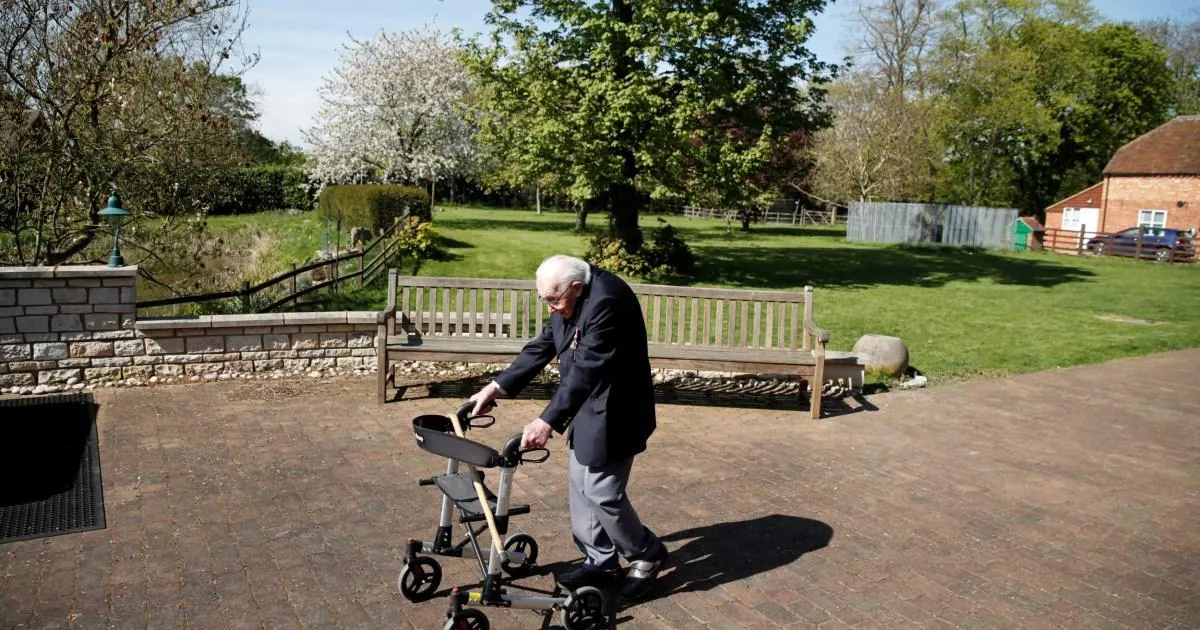
There are houses that are simply buildings, and then there are houses that become part of the national story. The Old Rectory in Marston Moretaine, Bedfordshire, belongs firmly to the second category. This is the family home where Captain Sir Tom Moore lived with his daughter Hannah Ingram-Moore and her family, and it is the place where, during the frightening early months of the pandemic, a 100-year-old war veteran took a walking frame and made his way slowly around the garden, lap after lap, until he had raised almost £39 million for NHS charities. The image of that steady, determined walk became a symbol of hope for a country that desperately needed one. Now the house is back on the market, but the price reduction says as much about the past few years as it does about bricks and mortar. The Old Rectory was first listed for sale in April 2024 with an asking price of £2.25 million. It did not sell. It was taken off the market at the end of 2024, then returned with a guide price of £1.95 million through the estate agency Michael Graham. Now it has been listed again on Rightmove, this time at £1.8 million. That is £450,000 less than the original asking price—a significant fall in any market. But a house with this much history, this much love, and this much controversy is not easy to price. The family are not simply selling a large home; they are trying to let go of a legacy that has been lived, examined, celebrated, and criticized in full public view. For most buyers, a seven-bedroom house in three and a half acres would be a dream. For the right buyer, though, it might also feel like a responsibility they are not sure they want to carry.
Set in the gentle countryside of Bedfordshire, The Old Rectory is an elegant Grade II listed property that offers both space and character. It has seven bedrooms, four bathrooms, and a separate coach house, which the family have been using as a gym. There are period details, high ceilings, and the kind of quiet grandeur that only an old rectory can provide. But no matter how beautiful the interiors are, the heart of the property lies outside. The garden is where Captain Tom made history. It was there, in the spring of 2020, with the country in lockdown and hospitals under terrible strain, that he began his daily walks. What started as a small personal goal—one hundred laps before his one hundredth birthday—quickly became a national event. People followed his progress on the news, sent donations, put up signs, and cheered from their windows. The garden became a stage. Television crews filmed from the end of the path. Cards and gifts arrived from every corner of the world, so many that the family eventually needed a dedicated building just to store them. For Hannah Ingram-Moore, the house was not merely where her father lived. It was where she watched him become a hero, where she cared for him as he aged, and where she said goodbye to him in February 2021. To walk through those rooms now is to walk through a time capsule of grief, pride, and memory. The lawn, the path, the coach house—all of it is steeped in the presence of a man who, at the very end of his life, gave something extraordinary to the world.
The story of Captain Tom’s remarkable final year began in crisis. When the first lockdown was imposed, the country was afraid, and ordinary people were confined to their homes with little to do except worry. Captain Tom, a veteran of the Second World War who had served in India and Burma, wanted to be useful. With the encouragement of his family, he set himself the challenge of walking around his garden one hundred times with a walking frame. The progress was humble. Each lap was short, and he needed to rest often. But the online fundraising page took on a life of its own, and the donations grew from thousands to millions. By the time he finished, he had raised nearly £39 million for NHS charities. It was a moment of pure, uncomplicated goodness, and it turned him into a national treasure. The Queen knighted him at a specially arranged outdoor ceremony at Windsor Castle. He was made an honorary colonel. His one hundredth birthday was marked by a flypast, and he recorded a charity single that reached number one. He became, for a few fleeting months, exactly what the world needed: proof that courage and kindness can still cut through fear. When he died in February 2021, the sorrow was felt far beyond his own family. People clapped on their doorsteps, laid flowers, and shared his photographs on social media. For his daughter Hannah, though, the grief was only the beginning. The family had to manage his estate, his foundation, and a public still desperate to stay close to him. The Old Rectory became a place of pilgrimage, but it also became the centre of a much more difficult story.
The trouble began with an application for planning permission. After Captain Tom’s death, the family explained that they wanted to build a Captain Tom Foundation Building in the garden. The stated purpose was simple and reasonable: to store the enormous number of cards, letters, and gifts that admirers had sent from all over the world, and perhaps to give visitors a place to view some of the tributes. The local council agreed, and permission was granted. What was actually built, however, was far more ambitious. The finished structure included a spa, with a sauna, and had cost an estimated £200,000. Central Bedfordshire Council took the view that the building was “at odds” with the Grade II listed home and ordered the family to bulldoze it. The family appealed, but the planning inspectorate backed the council. The decision made front-page news, and the Ingram-Moores suddenly found themselves cast in a role they had never expected: not just the grieving children of a national hero, but the subjects of a very public controversy. In the storm of criticism, the original purpose of the building—honouring Captain Tom’s memory—was all but forgotten. The charity itself also came under scrutiny, and Hannah Ingram-Moore stepped back from its board. It was a painful, humiliating fall from grace, made even harder by the fact that so much of the anger was directed at people who were still mourning a father. The house that had once felt like a refuge became a battlefield, and the garden where Captain Tom had walked became the backdrop for a different kind of story.
The property market watched this drama unfold from the outside. In April 2024, The Old Rectory went up for sale with an asking price of £2.25 million. The timing was not ideal. The spa demolition order was still hanging over the property, and the public memory of the planning battles remained fresh. Buyers with that kind of money do not usually want to purchase a conversation piece; they want to purchase a home. The house sat on the market without finding a buyer, and it was withdrawn at the end of the year. When it re-emerged, the guide price had fallen to £1.95 million. Now, with Michael Graham managing the sale and the listing active on Rightmove, the asking price has been cut again to £1.8 million. That represents a total reduction of £450,000 from the original guide price. For most people, that is not a small discount; it is the price of an entire house. The price cut raises an uncomfortable question: is the problem the property, or is it the story attached to it? The Old Rectory itself is a wonderful family home, with generous rooms, mature grounds, and the kind of peaceful atmosphere that is hard to find near London. But no buyer can truly separate the house from what happened there. Whoever moves in will not simply be living in a former rectory; they will be living in a site of national memory. Some people might be drawn to that. Others may feel overwhelmed by it. The falling price suggests that, in the end, the market takes a practical view: a home is only worth what someone is prepared to pay, and the number of buyers willing to embrace this particular inheritance may be small.
And yet, for all the controversy, the human story remains the most important part of The Old Rectory. Captain Sir Tom Moore was not a perfect symbol. He was a real man—a father, a grandfather, a soldier, a person with flaws and frailties like anyone else. His family loved him, cared for him, and tried, in their own imperfect way, to preserve his legacy. They made mistakes. They built a spa, and they lost the moral high ground. They have paid for that in ways that go far beyond the sale price of a house. They have seen their private decisions dissected in newspapers and social media, their grief turned into a public courtroom drama, and their father’s name attached to stories they would never have chosen. But no one can take away what Captain Tom achieved in that garden. The £39 million he raised saved lives and supported exhausted NHS staff. The hope he gave people during the darkest days of the pandemic was incalculable. The sound of his walking frame on the garden path was, for a few months, the sound of courage itself. Now the family is looking for a buyer to take on the next chapter. They are asking £1.8 million—still an enormous sum, but a more honest one than the original. Whoever buys The Old Rectory will inherit more than a building. They will inherit a story. They will have to walk into a kitchen that once held a hundred-year-old hero at its table, look out at a lawn that holds a nation’s gratitude, and decide what to do with all of it. That is not a simple task. But perhaps, in the right hands, it could be a beautiful one. The house is waiting. The memories are waiting. And Captain Tom, in the hearts of millions, is walking still.