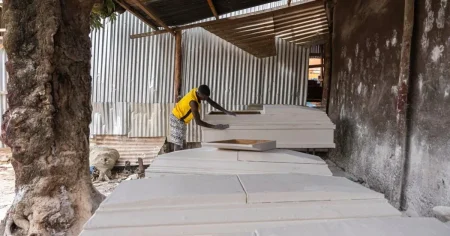



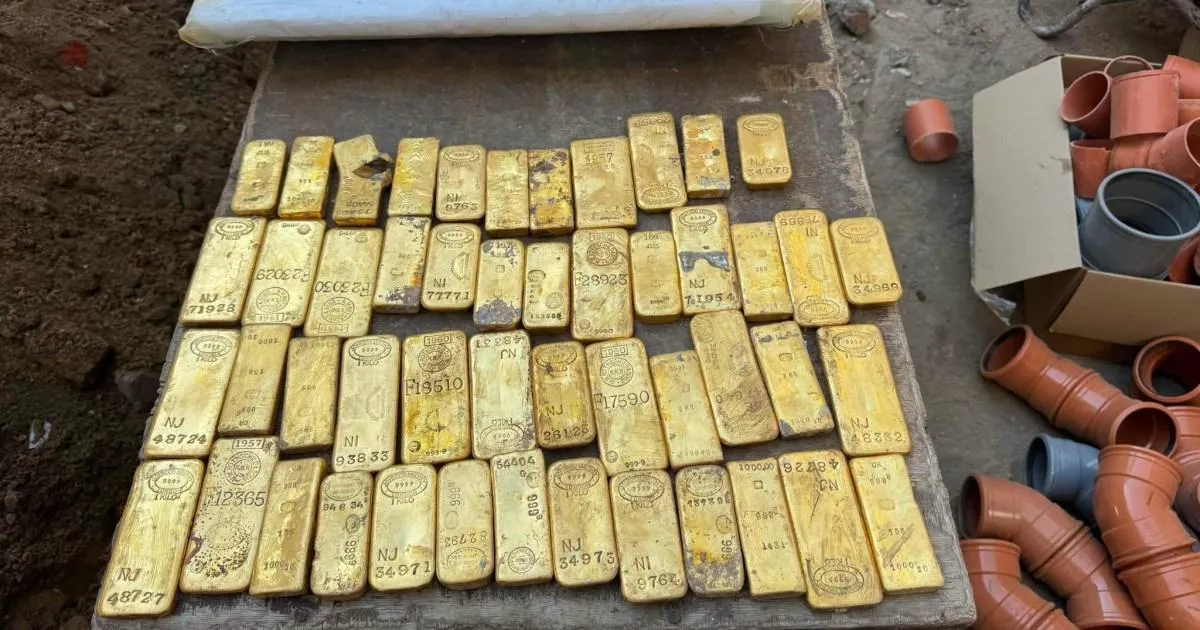
In the quiet, unassuming town of Dendermonde, Belgium, a group of construction workers embarked on what they thought would be a routine renovation project, completely unaware that they were about to unearth a secret that had been hidden for decades. The task was simple: install new sewage pipes in an old building’s foundation. As the team drilled and dug into the concrete and earth, their tools struck something that would change their summer forever. Amidst the dust and rubble, an 18-year-old student named Kobe, who was earning some extra cash with a summer job, noticed something glinting in the dirt. Initially, he dismissed the objects as ordinary one-euro coins, commonplace in any Belgian household. But as he brushed away the debris, he realized these were no ordinary coins; they were heavy, gleaming gold. Mixed in with the coins was a small, unmistakable gold nugget, and in that moment, the gravity of their discovery began to dawn on him. The sheer disbelief and amazement he described later to reporters perfectly captured the surreal nature of the moment—a mundane workday had suddenly transformed into a scene straight out of a pirate novel.
The initial shock quickly spread through the entire crew as they continued to excavate, uncovering not just a handful of coins but a veritable hoard of gold bars and bullion coins hidden deep within the building’s foundations. The sheer volume of the find was staggering. What they had stumbled upon was a fortune, an estimated €9 million worth of solid gold, which translates to roughly £7.6 million. This was not a collection of loose change; it was an entire treasure trove, deliberately and carefully concealed behind the walls and under the floors of a seemingly ordinary property. For the workers, the scene was one of chaotic wonder. Site manager Mario recounted the surreal experience, noting that the sheer number of coins and bars made the discovery feel almost impossible. The crew was immediately faced with a monumental dilemma. In a world where greed often dominates, their first instinct was not to divide the loot and disappear. Instead, their immediate and unanimous reaction was one of legality and integrity. Mario stated firmly that keeping the gold would simply be theft—the thought of stealing such an enormous sum was unthinkable. The young student Kobe echoed this sentiment with a rational clarity that belied his age, pointing out that a treasure worth €9 million cannot simply be hidden and kept. The decision was made: the entire haul would be gathered up and handed over to the local police, ensuring that the discovery remained a matter of public record rather than a criminal act, and the adrenaline-filled discovery site quickly became a secured location for a proper investigation.
While the builders’ honesty was commendable, the discovery immediately raised a complex and fascinating legal and ethical quagmire: who, exactly, owns this newly discovered wealth? The property itself is owned by CAW Oost-Vlaanderen, a welfare organization dedicated to providing social services and support to vulnerable people in the region. The organization’s director, Geert Hillaert, expressed his own profound shock and amazement upon learning what had been found hidden in their property. His thoughts, however, quickly turned toward the potential good this fortune could do for the charity’s mission. He spoke of the “enormous need we experience daily” in their work helping the homeless and those in crisis, suggesting that the treasure could be a lifeline to fund crucial programs. The situation, however, is far from simple. While the property owner might seem like the natural beneficiary, the law dictates a more nuanced process. The local prosecutor’s office has launched a full investigation to trace the origins of the gold, hoping to identify the original owner who hid it. The gold was likely hidden during a time of turmoil, possibly during the Second World War or a later financial crisis, or it could have been placed there by criminal elements laundering assets. Untangling this mystery is the police’s primary focus, as they sift through records and historical context to determine if there is a surviving heir or a victim of theft who has a legitimate claim to the fortune.
As the investigation unfolds, the legal path forward remains unclear, and the ultimate fate of the gold is far from decided. Belgian law provides a specific framework for treasure troves, but it hinges on the history of the find. Under the current legal code, the rightful owner or their heirs have a full five years to come forward, provide proof of ownership, and claim the treasure. If, after this five-year window, no one has stepped forward, the law dictates that hidden treasure found on another person’s property is split evenly between the landowner and the finder. This scenario could lead to a massive windfall for both the construction team and the welfare charity, transforming a stroke of luck into a life-changing event for everyone involved. However, there is a significant caveat: if the police investigation reveals that the gold is linked to any criminal activity, such as being the proceeds of a robbery, a historical crime, or laundering for a criminal organization, then this division rule does not apply. In such a case, the treasure could be seized by the state or returned to the original victims of the crime, taking the decision out of the hands of both the builders and the charity and placing it firmly in the domain of the justice system.
The discovery in Dendermonde has not only captivated the town but has also drawn international attention, highlighting the fascinating intersection of everyday work and historical mystery. The story of a young student’s summer job turning into a potential lottery win is an irresistible narrative, while the charitable angle of funding social programs adds a heartwarming layer to the saga. The local police have had to step in to manage the public’s reaction, issuing a clear warning for would-be treasure hunters to stay away from the construction site. They have emphasized that the area has been thoroughly searched and the gold has already been secured in a protected, undisclosed locationaca. The wave of curiosity and speculative excitement is natural, but the authorities are keen to maintain the integrity of the scene for the ongoing investigation. For the builders—Mario, Kobe, and the rest of the crew—their summer of hard work has become a story they will tell for a lifetime, a story defined not by what they found, but by their unhesitant decision to do the right thing.
For the welfare organization CAW Oost-Vlaanderen, the future hangs in the balance between incredible possibility and frustrating uncertainty. The director’s hope that the treasure could be used to serve the community’s most vulnerable members reflects the profound impact this discovery could have beyond its monetary value. If the gold is eventually returned to them, it would represent a generational windfall for a non-profit that relies on public funding and donations to make ends meet. However, the wait could be a long onehola. The legal process to establish ownership—or to definitively rule out an owner—can be a labyrinthine journey through legal archives and property deeds. The five-year waiting period is a long time to hold one’s breath, and the possibility remains that the gold could be linked to a crime, in which case the state might claim it. For now, the gold sits in a vault, a silent testament to a remarkable discovery, waiting for history to decide its fate.
This extraordinary event serves as a powerful reminder that fortune and history are often buried just beneath the surface of our everyday lives. The story of the Dendermonde gold is not just about the glittering metal itself, but about the people involved and the moral choices they made. The workers chose integrity over instant wealth, the charity sees potential hope, and the police seek justice and order. The discovery has sparked public imagination, raising age-old questions about ownership, luck, and the responsibility one has when stumbling upon a hidden legacy. Whether the treasure will ultimately fund social programs, enrich a long-lost heir, or be claimed by the state remains to be seen. But for now, the gold sits in a secure vault, a tangible link to a mysterious past, while the people of Belgium watch and wait to see if this extraordinary tale will end with a happy legacy for a charity, a life-changing payday for some honest workers, or a resolution to a long-forgotten crime.