


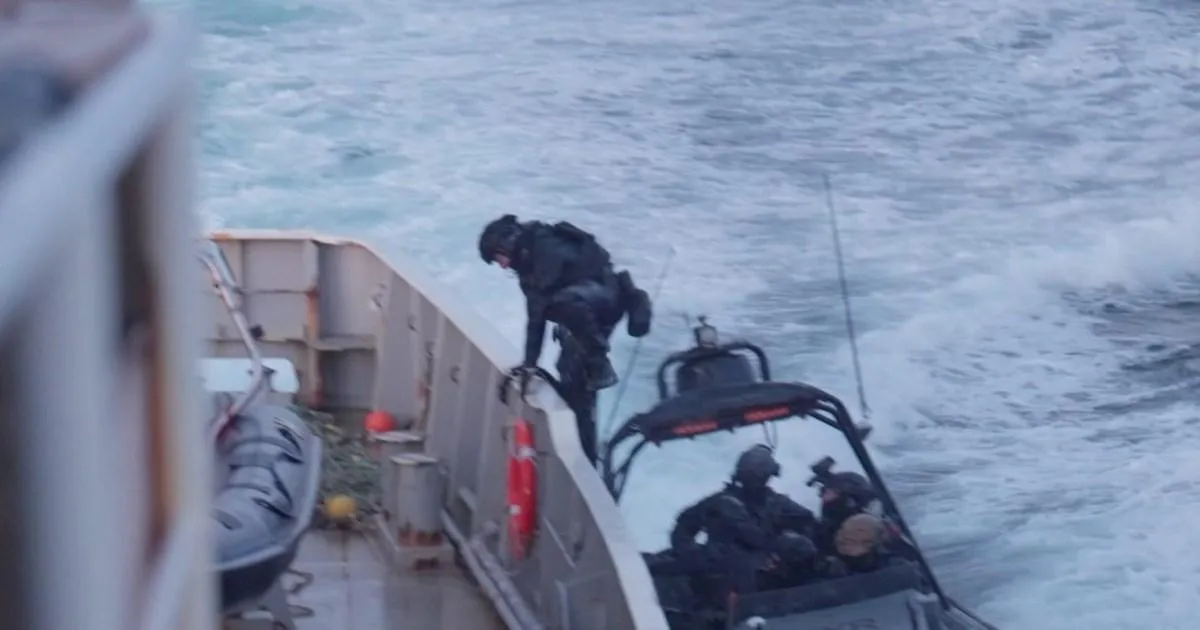
The high-seas drama involving the anti-whaling vessel Bandero has left 21 international activists, including two British nationals, in a state of distressing limbo. The crew, part of the Captain Paul Watson Foundation, were intercepted by Icelandic special forces late last Thursday after attempting to disrupt the activities of a local whaling ship. What began as an environmental mission has devolved into a tense standoff, with the activists now being detained aboard their own vessel in Reykjavík harbor. From the perspective of those trapped, the encounter was not merely a maritime enforcement action but a terrifying experience characterized by armed boardings and an abrupt loss of freedom that stands in stark contrast to their expectations of international legal norms.
Manolya Adan, a 36-year-old British marine biologist and spokesperson for the crew, has provided a harrowing account of their current conditions. According to Adan, the activists have been stripped of their personal communication devices, leaving them isolated from their families and independent legal counsel. She describes the atmosphere on board as one of forced uncertainty, where the crew is caught between conflicting reports of their future—ranging from immediate deportation to a month-long detention. As the Bandero remains anchored under the watchful eyes of a nearby warship, the crew reports dwindling supplies and deteriorating sanitary conditions, painting a grim picture of their daily reality while they wait for clarity on their legal status.
The detainees allege that their fundamental rights have been systematically disregarded during their time in custody. Adan describes being coerced into signing documents in Icelandic that she could not comprehend, noting that access to proper translators was inconsistent across the crew. Furthermore, the group reports instances of intimidation, claiming that authorities demanded phone PIN codes in exchange for the right to make a single phone call. The accounts from the vessel suggest a deeply unsettling experience, with allegations of invasive surveillance and degrading treatment that have left the activists feeling exhausted, frustrated, and increasingly suspicious of the integrity of the process they are being subjected to.
In contrast to the activists’ accounts, the Icelandic Ministry of Justice maintains that the operation was a standard, well-planned law enforcement procedure. Officials insist that the safety of everyone involved—including the Bandero crew—was the primary concern when the vessel refused to exit Icelandic waters. The government emphasizes that all suspects have been provided with court-appointed legal representation and interpretation services, in strict accordance with the law. They have invited any crew members who believe their rights have been violated to file a formal complaint with the Police Monitoring Committee, firmly distancing themselves from the claims of mistreatment while reiterating their commitment to a sustainable, science-based approach to the whaling industry.
This standoff highlights the enduring and often volatile friction between environmental activism and national sovereignty. While Iceland remains one of the few nations still permitting commercial whaling—an industry they defend as regulated and sustainable—activists view the practice as an indefensible anachronism. The Captain Paul Watson Foundation, long known for its confrontational tactics, has once again found itself at the center of a geopolitical storm. For those on board the Bandero, the inability to continue their mission is a source of profound hopelessness, as they watch from their forced confinement while the industry they set out to stop continues to operate just beyond their reach.
Ultimately, the plight of the Bandero crew serves as a stark reminder of the human cost of environmental protest. As they remain confined to their ship, the divide between the activists’ claims of human rights abuses and the Icelandic government’s insistence on legal transparency remains wide. Regardless of the outcome of the impending deportation process, the situation on the Bandero has ignited a necessary, if uncomfortable, debate about the treatment of protesters and the legitimacy of maritime interventions. As these 21 individuals wait for their next move, their story underscores the heavy personal price often paid by those who place themselves in the path of deeply entrenched global practices.