


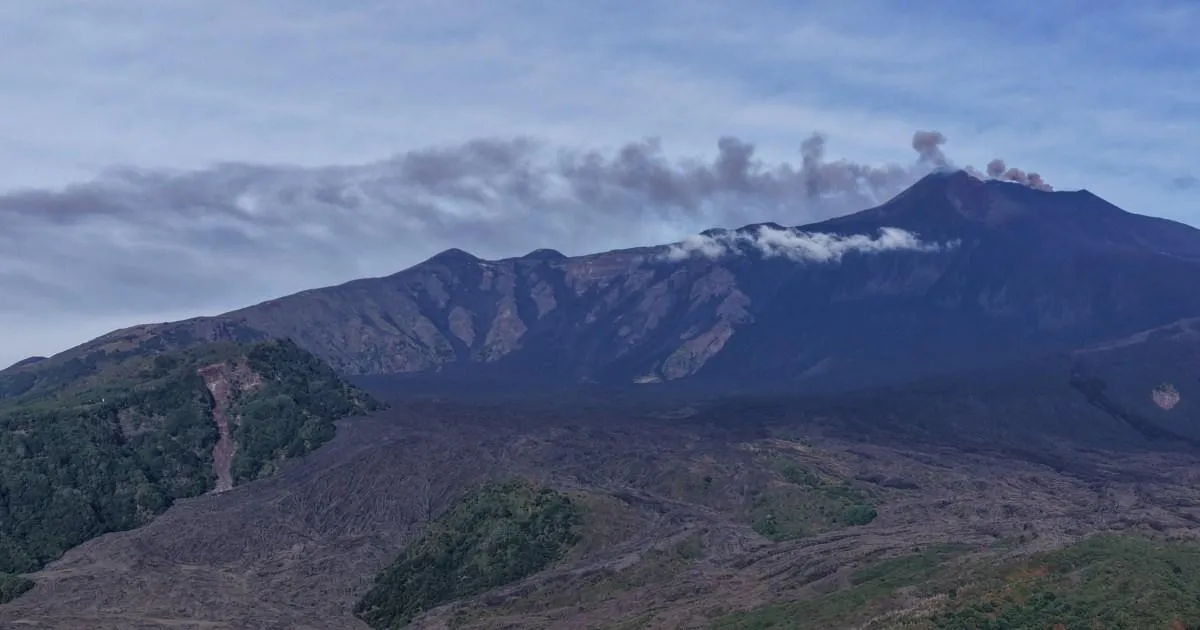
Mount Etna has erupted again, and for thousands of travelers this summer, the ancient mountain has become less of a postcard backdrop and more of an unpredictable force of nature. On the latest occasion, a column of volcanic ash billowed two and a half miles into the sky, turning the air over Sicily hazy and coating streets in a fine grey grit. The eruption sent a powerful message to the aviation world: the red VONA alert—Volcano Observatory Notice to Aviation—was issued, warning pilots that the atmosphere was no longer safe for routine flight paths. At Catania Airport, the main gateway to Sicily’s east coast, flight boards turned into rivers of red. Hundreds of flights were cancelled or diverted. The airport operator, SAC, said that 36% of flights bound for Catania were scrapped between August 6 and 12, with more than 600 flights landing instead at Palermo, Trapani, Comiso, and Lamezia Terme. Travelers with bookings were urged to check their status before setting out, but for many, the damage was already done: missed connections, lost luggage, abandoned holiday plans. The ash cloud was seen drifting toward Catania, the Italian transport hub, making it impossible for airlines to take risks. Volcanic ash is not like ordinary dust; it is made of fine, abrasive particles that can sandblast airplane windows, clog sensors, and melt inside hot jet engines. No airline wants to fly through that. So the only option was to wait. The wait, however, took place in the strange atmosphere of a summer terminal caught between seasons. Children dozed on backpacks, families queued at customer service desks, and outside the windows the volcano stood as a dark, smoking reminder that even the most technological forms of travel are ultimately at the mercy of the earth. Every year, thousands of visitors come to Catania specifically to see Etna. It is the draw, the reason they chose Sicily over other islands. And now the draw was also the thing preventing them from getting home. Announcements echoed in Italian and English, first apologising, then offering options that did not exist. Trains were full. Buses were longer. The next available flight was days away. For many, the eruption was not a spectacle; it was simply a logistical nightmare.
On one level, this is nothing new. Mount Etna erupts several times a year, and flight disruptions caused by volcanic ash are an accepted part of life in eastern Sicily. Residents joke about it the way other people joke about rain. But this year has been different, and not in a good way. The ash emissions have been unusually persistent, turning what might normally be a day or two of chaos into a summer-long ordeal. Just last month, Catania Airport was forced to shut down for five consecutive days because of ash—the longest closure since 2002. Those five days happened to include Ferragosto, the August 15 Italian public holiday and Catholic feast that traditionally marks the absolute peak of the Italian summer. To give a sense of what that means: Ferragosto is the moment when Italians themselves go on holiday, when cities empty out and beach resorts are packed to bursting. This year, though, the beaches below Etna were quieter, and many of the normally bustling towns along the nearby coast had empty tables and vacant sunbeds. The economic blow fell on hotels, restaurants, boat tour operators, and souvenir shops, many of which had been hoping for a bumper year after several difficult seasons. Instead, they found themselves posting photos of empty squares and telling visitors that no, the volcano did not have a timetable. Boris Behncke, a researcher at the National Institute of Geophysics and Volcanology’s Etna Observatory, summed it up clearly: “There have been many shorter interruptions — and stronger eruptions — over the past few decades, but this event is different because the ash emission from Etna’s summit has been much more persistent.” In other words, it is not the explosive power of the volcano that is causing the trouble; it is the refusal of the ash to stop coming.
Understanding why an ash cloud can ground so many flights requires a look at what volcanoes do to aircraft. The red VONA alert is the highest level in a color-coded system used by volcanic observatories to communicate with pilots. A red alert means an eruption is underway and ash is expected in the air. That ash is not like smoke from a forest fire. It is composed of tiny, jagged particles of pulverized rock and glass. Ingesting them into a jet engine at high speed can cause them to melt in the combustion chamber and then resolidify on the turbine blades, a process that can stall an engine in midair. Ash can also pit windshields and make them opaque, and it can interfere with electronic instruments. Because of this, pilots do not fly through volcanic ash clouds as a rule, and air traffic controllers route traffic around them. This was the same sort of alert that shut down European airspace in 2010 when Iceland’s Eyjafjallajökull volcano sent a cloud of ash across the continent. But there is a difference: Eyjafjallajökull was a one-off event that lasted a few weeks and then faded; Etna, by contrast, is a permanent resident. It sits just 22 miles from Catania, Sicily’s second city, close enough that its eruptions are both a tourist attraction and a recurring nuisance. In 2001, the volcano erupted an astonishing 16 times in a single year. Each time, life in Catania adjusted. Cars get washed. Street sweepers get busy. Flight schedules get rewritten. The mountain gives warning, but never quite enough warning.
The disruption has not remained contained to Sicily. Winds have carried the ash across the Mediterranean, and Malta—a tiny island nation that lies roughly 80 miles south of Sicily—has seen a fine grey dust settle on its streets and rooftops. For a country whose economy depends heavily on tourism and whose summers are usually all sun and sea breeze, the ashfall was an unwelcome greeting. Parts of northern Africa have also felt the effects, with the sky taking on a milky white appearance in some coastal areas. Ash does not respect border controls; it goes where the wind takes it. That is part of what makes volcanic eruptions so different from most other natural disasters. An earthquake or a flood is localized; an ash cloud is a traveler. For the scientists and civil protection agencies that monitor Etna, this means constant communication with colleagues in other countries. Gone are the days when a local eruption was purely a local story. Today, satellite images, computer models, and aviation bulletins ensure the whole region knows where the ash is going. It also means that travelers heading to Malta or North Africa should stay informed even if their flights are not directly to Catania. A volcano can close a piece of the sky hundreds of miles away from the crater itself. For the people of Malta, the sight of ash on their polished limestone balconies is a reminder of how small and interconnected the Mediterranean is. For the people of North Africa, it is another layer of summer heat and dust. And for those living in Catania, it is the newest chapter in a long love-hate relationship with the mountain that watches over them. Etna is not just any volcano; it is Europe’s tallest and one of the most active on Earth. It has been erupting for hundreds of thousands of years, and the ancient Greeks told stories of the giant Typhoeus imprisoned beneath it. In 1669, a massive eruption destroyed parts of Catania. In 1928, lava overwhelmed the town of Mascali. In 2002, a fissure sent lava rushing toward tourist facilities. And in the last two decades, paroxysmal explosions at the summit have become almost routine. Each eruption reshapes the landscape: new craters, new lava fields, new slopes. Scientists from around the world flock to Etna to study it, and for them, the current persistent ash emission is a fascinating scientific puzzle. For airlines, it is a scheduling problem. For locals, it is simply the weather. The volcano is at once a hazard, a research lab, a tourist product, and a sacred presence. The recent red VONA was not the first and will not be the last.
Stranded travelers tell the best stories, even if they do not appreciate them at the time. There was the American student who had flown to Catania to meet friends before a rail trip around Sicily; she spent her first three nights in a budget hotel near the airport because her friends’ flights kept getting cancelled. There was the British couple who had saved for a year for a ten-day holiday; their airline rerouted them to Palermo, where they spent two days waiting for a bus back to Catania, their hotel room quietly taken by someone else. There was the family of four from Berlin, seated on the terminal floor with a stack of pizzas and a folded map they no longer needed. None of these people will remember the ash cloud as a once-in-a-lifetime spectacle. They will remember the uncertainty, the crowded phone chargers, the broken sleep, and the endless repetition of the phrase “we don’t have any information yet.” The airport staff, meanwhile, had their own version of the chaos. Customer service agents dealt with frustrated passengers while secretly checking the volcano’s live camera feeds. Airline pilots flew extra positioning flights to destinations where stranded aircraft were waiting to be retrieved. Rental car companies raised prices, then lowered them, then ran out of cars. At the cafes inside the terminal, the demand for espresso tripled. Outside, in Catania itself, the ash became a part of daily life. It covered parked cars like a thin blanket of snow. It got into hair, lungs, and sandals. It made the sunset look apocalyptic and the mornings feel grey. The smell of sulfur lingered in the air, a reminder that the mountain was still grinding its teeth. Yet life went on. Markets opened. Vendors wiped their counters. Children kicked the ash into little clouds. The volcano had disrupted their summer, but it had not broken it.
Maybe the most striking thing about this summer’s activity is not the cancellations or the diverted flights, but the way everyone involved has adapted to an impossible situation. The volcano will not listen to reason. It cannot be bribed, soothed, or predicted with complete certainty. All that can be done is to watch, wait, and respond. For scientists, this means installing new sensors and refining their models. For pilots, it means reading VONA alerts before every takeoff. For residents of Catania, it means keeping a broom by the door. And for travelers, it means remembering that Italy is not a theme park; it is a living, breathing geological landscape. The advice from the airport operator was simple and honest: check with your airline before heading to Catania. But the deeper advice is to plan with flexibility, buy travel insurance, and understand that nature’s schedule takes priority over any booking confirmation. If a flight is cancelled, there is no point in shouting at the gate agent; the ash does not care. Instead, take a breath, find a coffee, and maybe look at the mountain that is causing all this trouble. It is, after all, the reason many people came to Sicily in the first place. Etna has always been here, and it will always be here, shaping the island, fertilising its soil, erupting in fits and starts. This summer’s ash will eventually be washed away by rain, and the airports will reopen, and the planes will fly again. But the memory of standing in a terminal at 2 a.m., watching red text glow on a departure board while the volcano rumbled in the dark, will stay with the travelers who lived through it. In a strange way, they got more than they bargained for: a real, unscripted encounter with one of the most powerful forces on Earth. And when they finally get home, they will have a story to tell—one with ash in its hair and smoke in its sky.