


For centuries, the Ark of the Covenant has remained one of history’s most elusive puzzles, existing somewhere between profound religious artifact and the stuff of Hollywood legend. While the 1981 classic Raiders of the Lost Ark cemented the chest into modern pop culture as a supernatural, face-melting object of myth, the reality is far more grounded in dirt, pottery, and patience. Archaeology is rarely about finding glittering prizes in a dramatic reveal; it is a slow, methodical process of connecting fragments of the past. Now, a dedicated team working in the West Bank at the site of biblical Shiloh believes they may finally be peeling back the layers on the very structure that once housed this legendary vessel.
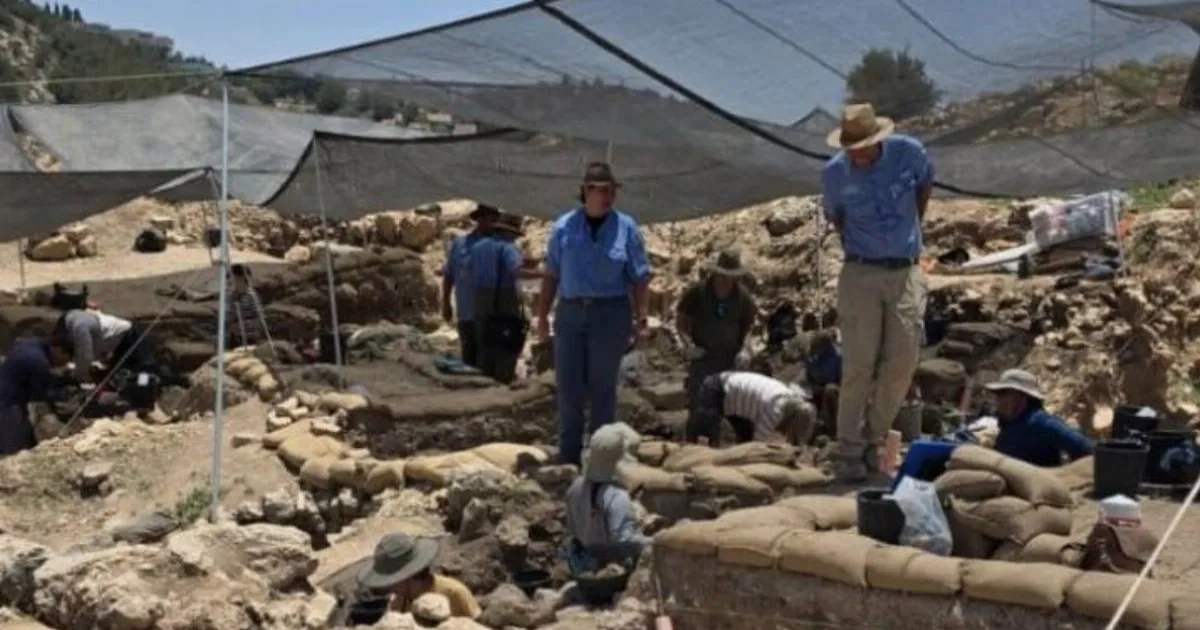
The excitement stems from recent excavations that have unearthed the southern wall of a massive, ancient, and monumental building. According to biblical accounts, the Israelites established the Tabernacle in Shiloh after the Exodus, using it as a portable sanctuary to house the Ark. By uncovering the full dimensions of this newly discovered structure, researchers are finding that its proportions align remarkably well with the descriptions found in scripture. Though skeptics—and the scientists themselves—remain cautious, the physical footprint of this building offers a compelling, tangible anchor for a story that has been told for thousands of years.
The site of Shiloh is historically significant regardless of the Ark’s presence. Located north of Jerusalem, it served as the original religious and political heartbeat for the fledgling tribes of Israel, acting as the place where Joshua partitioned the land and the high priest Eli presided. The team’s findings are bolstered by discovery of objects commonly linked to ancient worship: altar horns, ceramic pomegranate motifs, and even shells used for ritualistic purposes. Coupled with the discovery of over 100,000 animal bones—many of which show specific preparation patterns associated with priestly offerings—it is becoming increasingly difficult to dismiss the site as just another ruins complex.
Beyond the religious implications, the excavation is offering a deeper look at the daily lives and defenses of the ancient inhabitants. The uncovering of a sophisticated “bent-axis” gate system has provided historians with a clearer picture of how the city was protected. This specific architectural find is particularly poignant, as it matches descriptions involving the high priest Eli, who, according to lore, met his end by falling near the city gate upon hearing that the Ark had been captured in battle. History often feels abstract, but finding the physical remnants of the very gates described in these ancient dramatic accounts breathes a different kind of life into the narrative.
Despite this progress, the researchers are careful to temper expectations. We are not on the verge of lifting the lid off a gold-covered chest or witnessing any of the cinematic pyrotechnics that made Indiana Jones a household hero. Carbon dating and chemical analysis are currently underway, which will help pin down timelines and confirm the exact age of the destruction layers where these items were found. The team reminds us that science is not merely about confirming faith, but about collecting data. Every discovered stone and potsherd is a piece of a million-piece puzzle, and for now, the Ark remains exactly where it has been for millennia: safely tucked away in the shadows of history.
Ultimately, this study reminds us that we are perpetually searching for the origins of our cultural and spiritual foundations. Whether you view the Ark as a historical fact or a theological symbol, the work happening at Shiloh bridges the gap between myth and reality. The mystery may not be fully “solved” in the way moviegoers might hope, but for the archaeologists involved, the process is rewarding in its own right. They aren’t just digging for gold; they are digging for context. And in doing so, they have reminded us that even in an age of modern technology, the most profound answers are often still buried just beneath our feet, waiting for the right pair of eyes to notice them.