
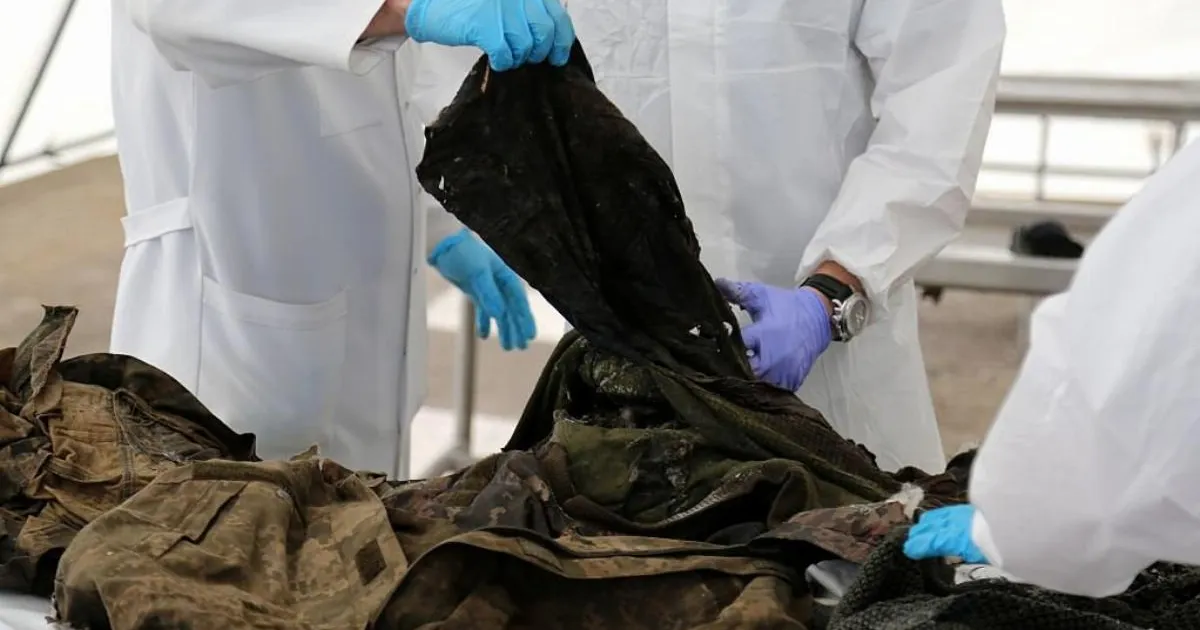
The discovery of explosives hidden within the remains of fallen Ukrainian soldiers has introduced a harrowing new dimension to the already devastating process of repatriating the war dead. For the families mourning their loved ones, the wait for a proper burial is a profound agony, but officials are now forced to navigate a gruesome and dangerous obstacle course. Investigators in the Kirovohrad region, which serves as a central hub for identifying unidentified servicemen, have publicly confirmed that Russian forces have been booby-trapping bodies. This cold-blooded tactic has mandated the implementation of strict, time-consuming safety protocols, as forensic teams must now treat every arrival not just as a tragedy to be honored, but as a potential explosive device that could kill again.
Taras Tarasenko, a key figure in the Kirovohrad investigative department, has spoken with heavy gravity about the reality his team faces. They are not merely performing autopsy work; they are engaged in a life-or-death search to ensure that when a grieving mother finally receives her son, she is not met with a lethal surprise. Grenades and other explosive materials have been found embedded within the remains, turning the solemn task of identification into a high-stakes bomb disposal operation. This reality has slowed the repatriation process to a crawl, placing an immense emotional burden on a team of 32 specialists who work tirelessly, around the clock, to restore dignity to those who gave everything for their country.
The cruelty reported by these forensic experts extends far beyond the use of explosives. Reports have surfaced indicating that Russia has attempted to obfuscate its own battlefield losses by dressing deceased Russian soldiers in Ukrainian military uniforms, a cynical ploy designed to avoid the social and financial obligations of informing their families of their deaths. Even more disturbing are the documented cases of returned remains that indicate systemic, barbaric mistreatment. Bodies have been delivered missing internal organs, while others bear the undeniable, sickening fingerprints of torture, leaving no doubt that some captives were subject to unimaginable suffering before they were killed.
One particularly harrowing case involves the journalist Viktoriia Roshchyna, who was captured in 2023. Her journey back home revealed the true depths of the abuse she endured at the hands of her captors. An autopsy conducted upon her return uncovered a horrific litany of brutality: broken bones, extensive bruising, and clear evidence of electric shock torture. Perhaps most chilling of all was the discovery that her brain, eyes, and trachea had been removed. These findings provide a harrowing snapshot of the dehumanization unfolding in places of detention, where the physical integrity of the victim is ignored in favor of sheer, calculated violence.
This pattern of atrocity is not an isolated phenomenon but rather a systemic manifestation of the cruelty observed throughout the invasion. When the Ukrainian military liberated the city of Izium, they uncovered a mass grave in the surrounding forests containing 436 bodies, most of whom were women and children. The forensic examination of that site revealed scenes that defied human compassion. Many of the victims showed signs of ropes around their necks, hands bound in captivity, and severe burn wounds. In some instances, the bodies of men were found with their genitals severed, providing graphic evidence of the sadistic methods used by occupying forces to intimidate and destroy those under their control.
As these investigations continue, the world is left to contend with a conflict that has discarded the most basic rules of warfare and humanity. The work being performed in Kirovohrad is more than just a administrative process; it is a vital act of defiance against a campaign of terror that attempts to erase the humanity of the victims even after their deaths. While the world may struggle to process the scale of these horrors, the investigators on the ground remain committed to their somber objective. They continue to labor through the fear of hidden explosives and the emotional toll of their findings, standing as the final guardians of the truth for thousands of families who simply wish to say goodbye to their loved ones in peace.