



For millions of people worldwide, the creeping shadow of vision loss is a devastating reality, often stemming from conditions like diabetic retinopathy that damage the intricate infrastructure of the eye. Until now, the retina—a delicate, light-sensitive layer at the back of the eye—has been notoriously difficult to heal. This is largely because the retina is protected by a unique “blood-retina barrier,” a complex network of highly specialized cells that regulate what enters and exits the eye. Because these specific cells are not found anywhere else in the body, scientists have struggled to find reliable, abundant, and effective ways to repair the damage once this barrier begins to fail.
A team of brilliant biomedical engineers at Duke University has recently achieved a clinical breakthrough that could change the future of ophthalmology. Led by Professor Sharon Gerecht, the researchers successfully pioneered a method to grow specialized retinal blood vessel cells from scratch. By using induced pluripotent stem cells (iPSCs)—mature cells reprogrammed to a primal, flexible state—the team created a “recipe” of growth factors that encourages these cells to transform specifically into retinal endothelial cells. This discovery moves us away from the current, expensive, and limited practice of harvesting cells from patients, offering a scalable solution that could make vision-saving treatments more accessible to everyone.
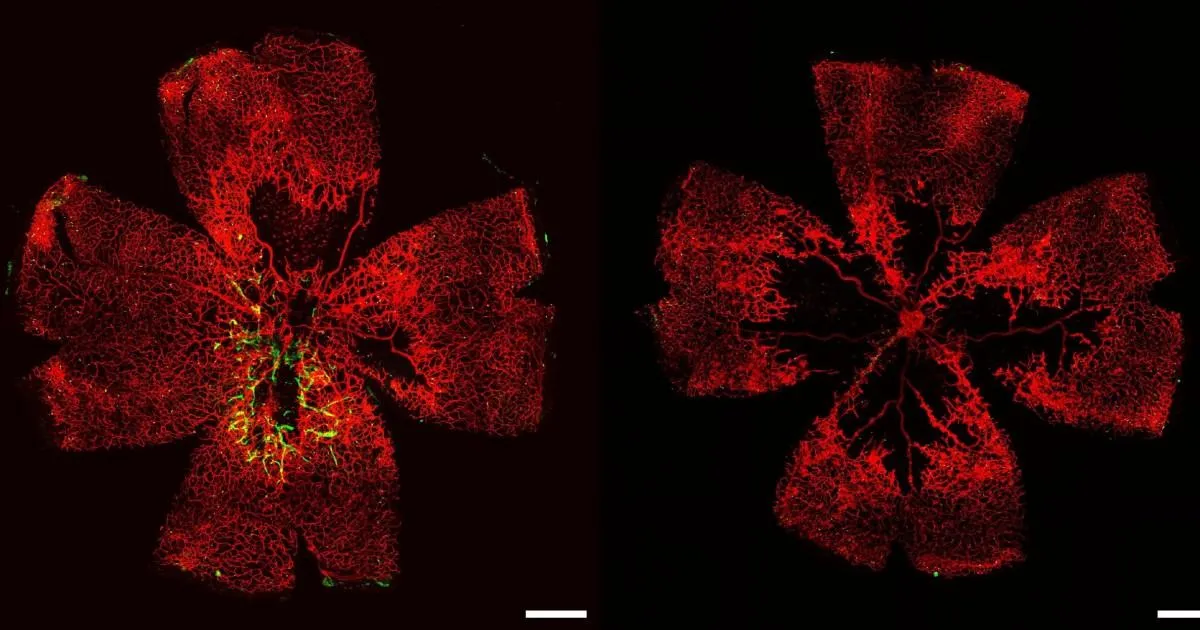
The true genius of this study lies in how these lab-grown cells behave once they are “deployed.” When the team introduced these cells into mouse models of retinal disease, the results were remarkable. The new cells didn’t just sit in the tissue; they actively integrated into the existing structure, repairing the damaged blood vessels and effectively reinforcing the eye’s protective barrier. By injecting these cells before total vision loss occurred, the researchers successfully restored function, stopping the progression of disease in its tracks. This suggests that the therapy could serve as a powerful preventative measure for those in the early stages of retinal breakdown.
Beyond the immediate potential for direct treatment, this breakthrough offers a transformative tool for medical research: the ability to build “human disease models” in a laboratory dish. By exposing these lab-grown retinal tissues to the harsh, high-glucose, and low-oxygen conditions typical of diabetes, the team was able to watch exactly how the retina deteriorates in real-time. This provides an unprecedented window into the mechanics of eye disease, allowing scientists to test new drugs and therapies in a controlled environment without the immediate need for animal testing. It is a leap forward in our ability to observe, understand, and stop pathology before it causes irreversible harm.
The implications for this technology are vast, and the research team is already looking toward the future. With a patent pending and plans for industry partnerships, they are moving quickly to bring these lab-grown solutions closer to clinical reality. Parker Esswein, a PhD student and co-author of the study, notes that while they are currently focused on the science of the barrier itself, the capacity to create consistent, high-quality human retinal tissue opens the door to personalized medicine. The dream is to eventually move from these successful animal trials to human applications, potentially saving the sight of millions who currently have nowhere else to turn.
Ultimately, this work represents a rare and vital bridge between basic cellular biology and sight-saving medicine. The retina is an extension of the brain, and healing it requires a level of precision that has long eluded us. By unlocking the secrets of how to grow and integrate these specialized cells, the Duke team has not only provided a roadmap for treating existing conditions but has also created a platform to decode the mysteries of eye disease. As the gap between lab-grown innovation and patient care continues to narrow, we find ourselves standing on the precipice of a new era where blindness caused by vascular disease may soon become a manageable, or even preventable, condition.