

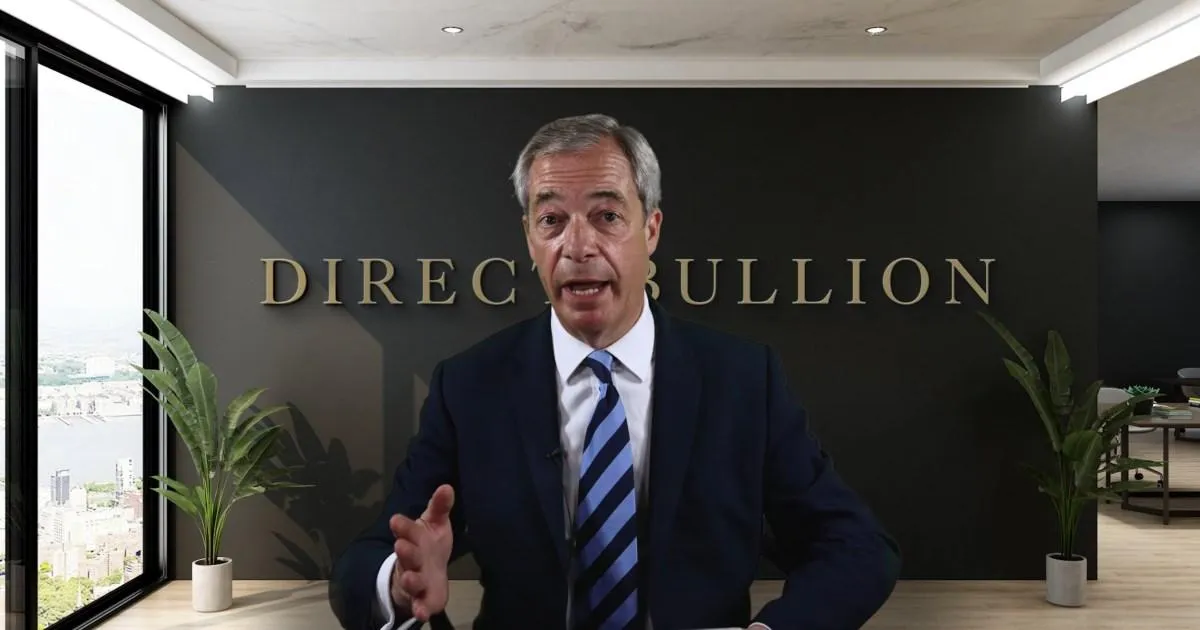
Nigel Farage’s recent financial disclosures have once again thrust the Reform UK leader into the center of a heated national debate regarding the intersection of politics, private enterprise, and public service. According to the latest register of financial interests, Farage earned a staggering £270,000 for just 12 hours of work over a three-month period—a rate equating to roughly £22,500 per hour—by serving as a brand ambassador for Direct Bullion. This remarkably lucrative arrangement highlights a recurring theme in his career: the blurring of lines between his public persona as a “man of the people” and his personal pursuit of high-earning commercial ventures. While supporters might view his ability to command such fees as a testament to his marketability, critics raise an eyebrow at the optics of an elected official prioritizing such roles alongside his parliamentary duties in Clacton.
Beyond his association with the gold bullion firm, Farage’s media ventures remain a centerpiece of his income. The records show he brought in an additional £18,402 for roughly six hours of presenting work on GB News, maintaining his position as one of the most handsomely paid broadcasters in the British political sphere. Interestingly, while these income streams remain robust, his footprint on the platform Cameo has effectively vanished. Having previously netted nearly £90,000 through the site—where fans pay for personalized celebrity videos—he stepped back from the service earlier this year following significant controversy, including the misuse of his clips by far-right organizations. This shift suggests a move toward more institutionalized revenue streams, distancing himself from the unpredictable nature of casual celebrity-for-hire platforms.
The stark contrast between Farage’s populist messaging and his private wealth has not gone unnoticed by his political rivals. Labour Party chair Anna Turley has been particularly vocal, accusing him of maintaining a façade of solidarity with the working class while fundamentally operating as a high-end service provider for the highest bidder. These accusations cut to the core of the criticism surrounding his career: the perception that his political brand—often built on the idea of being an anti-establishment outsider—is precisely what facilitates his ability to secure such elite, private-sector compensation. For those who view his political rhetoric with skepticism, these financial figures serve as empirical evidence that his personal motives may be far removed from the daily struggles of the voters he claims to represent.
However, the most significant cloud hanging over Farage’s finances involves not his active consulting, but a monumental “gift” received earlier this year. Reports indicate a £5 million donation from crypto billionaire Christopher Harborne, a figure so substantial that it has triggered scrutiny from the parliamentary standards watchdog. The investigation is focused on whether this massive infusion of capital should have been declared more transparently, particularly regarding any potential ties to his political activity during the lead-up to his election as an MP. The ambiguity surrounding the gift—which Farage has described at various times as both a security measure and a retrospective reward for his pro-Brexit campaigning—has invited intense public questioning and further fueled the narrative of a lack of financial clarity.
Adding fuel to the fire, Farage has taken a combative stance in the face of these inquiries, insisting that the funding is an “unconditional gift” he is free to spend as he sees fit—even joking about buying cars. This dismissive attitude, while technically consistent with his legal position, has done little to soothe public anxiety or satisfy the curiosity of those demanding greater accountability. When combined with the revelation that Harborne also bankrolled a £29,000 private flight for him to visit the Chagos Islands, the total picture is one of extreme, unconventional, and high-stakes financial patronage. For his constituents and the broader public, the question remains: if an elected official is supported by such vast, private wealth, how insulated does that distance them from the standard, often difficult, life experiences of the electorate?
Ultimately, this saga illustrates the growing discomfort with the modern “celebrity politician” model, where income is derived as much from personal legacy as it is from public office. Farage remains a polarizing figure, standing at the precipice of a legislative career while still operating with the mechanics of a high-net-worth commercial entity. As the parliamentary standards investigation progresses, the focus will likely remain on whether these financial arrangements represent a standard practice for influential public figures or if they constitute a dangerous conflict of interest. Regardless of the outcome, the data provides a rare, transparent glimpse into the sheer economic scale of Nigel Farage’s influence, sparking a debate on how much wealth is too much when it comes to the people who hold the keys to our national policy.