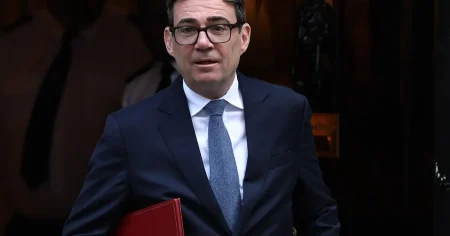


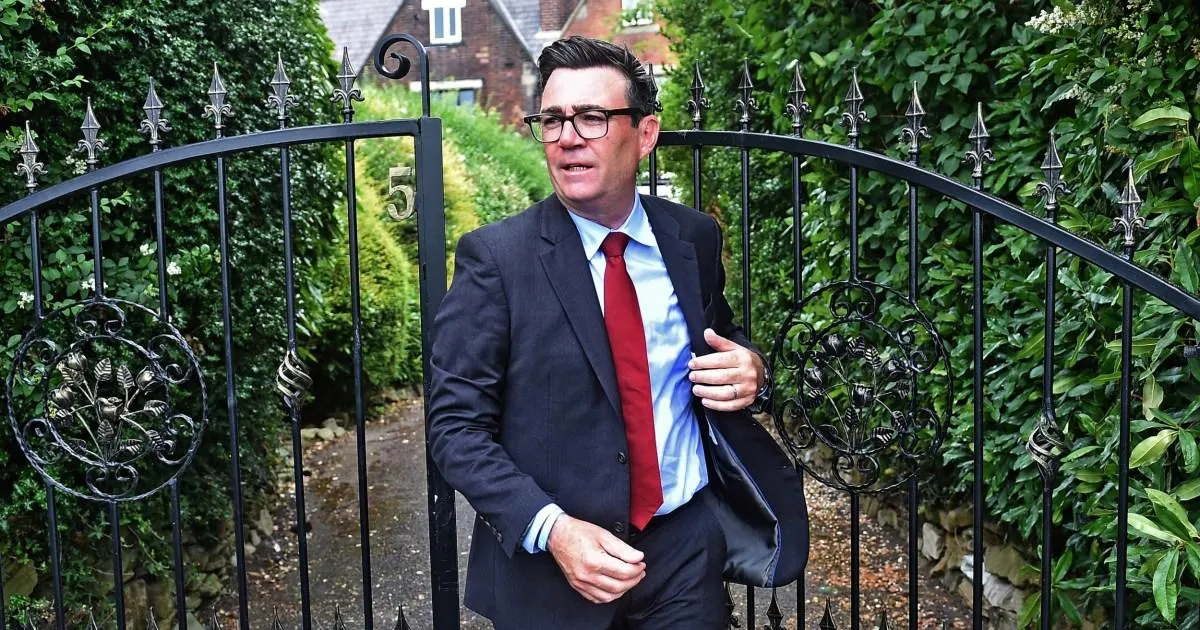
As the political landscape shifts with remarkable speed, Andy Burnham stands on the precipice of a historic transition. In just three weeks, he is expected to move into Downing Street, ushering in a new chapter for the United Kingdom. However, before he begins the practical work of governing, he faces the essential task of defining his purpose. This morning, at the People’s History Museum in his political heartland of Manchester, Burnham is set to outline a roadmap for his premiership. For those who have followed his career, his message is clear: the future of Britain lies not in the tightening grip of London, but in the radical empowerment of its diverse regions.
At the core of Burnham’s philosophy is “devolution”—a concept that seeks to fundamentally reorganize how the UK functions. Moving beyond the traditional practice of shifting personnel in Westminster, Burnham aims to overhaul the entire machinery of the state. He argues that the centralized, top-down model that has defined British governance for generations is no longer fit for purpose. His vision centers on a “federal UK” inspired by international systems like those in Germany or the United States, where regional autonomy is not just a secondary concern but a foundational pillar of national stability and growth.
To understand why this is such a significant change, we must look at how power currently flows. Since the late 1990s, the UK has experimented with devolving authority to Scotland, Wales, and Northern Ireland, though Westminster has often retained significant control over national policy and veto power. Under Burnham’s proposed, more ambitious framework, this process would evolve into a comprehensive transfer of responsibility. He envisions a country where local leaders and regional authorities have a genuine seat at the table, allowing them to shape policies that reflect their specific needs, economic realities, and community aspirations without having to filter every decision through the “distorting lens” of the capital.
The transition from his role as Mayor of Greater Manchester to that of Prime Minister provides Burnham with a unique perspective; he has been on the receiving end of Whitehall’s bureaucracy and now finds himself in a position to dismantle it. His platform promises to replace the rigid hierarchies of the past with a model that drives “good growth in every postcode.” By fostering local collaboration and autonomy, he believes the nation can move toward a new era where towns and regions are truly the masters of their own destiny. This is not merely a theoretical exercise; it is an ideological pivot that has been baked into his party’s recent platforms and legislation.
Of course, such a bold policy shift comes with inherent risks and internal political complexities. Critics and observers alike note that by handing power outward, the central government loses its ability to dictate the minutiae of regional affairs, but it also risks becoming a lightning rod for blame if local initiatives falter. Interestingly, under a truly devolved system, Burnham’s policies would grant significantly more authority to regional leaders across the entire political spectrum, including those from opposition parties. It is a gamble that trusts the competence of local leaders over the uniformity of the civil service—a move his supporters describe as putting “rocket boosters” on existing efforts to reinvigorate the British heartlands.
Ultimately, Burnham’s premiership will be judged by whether he can successfully move the needle on this transfer of power. If he manages to rebalance the relationship between Westminster and the rest of the nation, he may well be remembered for fundamentally updating the UK’s democratic structure for the 21st century. It is a vision of politics that is less about the personality in No 10 and more about the potential of the people and places governed from within it. As he steps onto the stage in Manchester today, the question isn’t just what he will say, but whether he can convince a nation long accustomed to central control that it is time to trust the regions to lead themselves.