


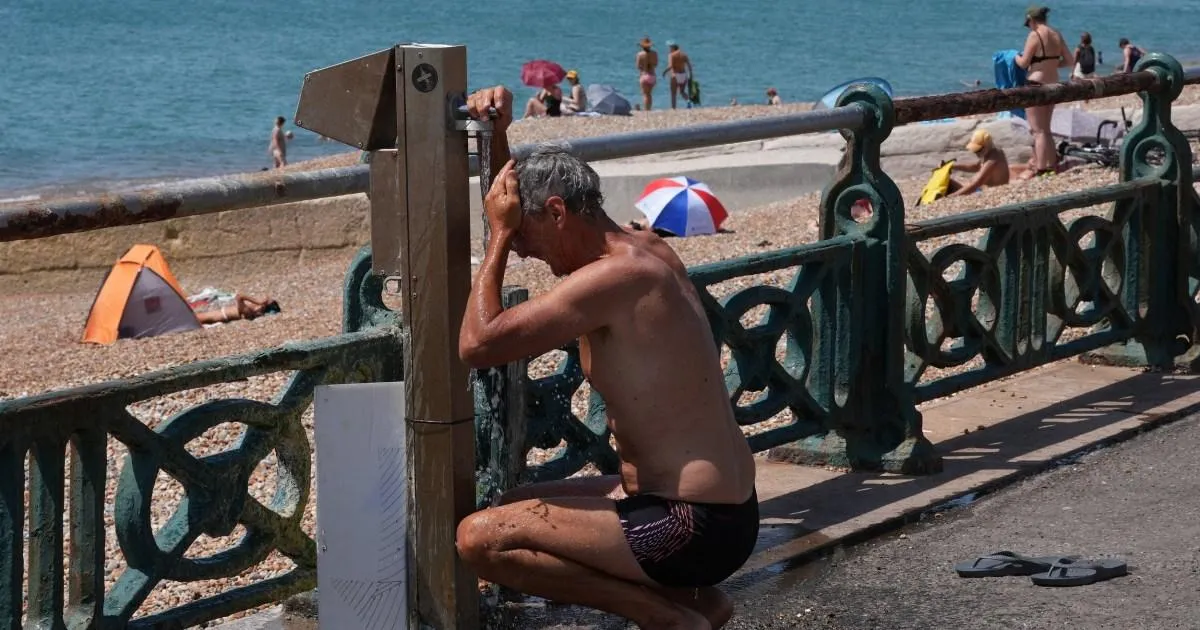
The recent, blistering heatwave that gripped the UK and Western Europe serves as a sobering reminder that we are entering an era of unprecedented climate volatility. Last week, millions of us watched in disbelief as temperature records were shattered on three consecutive days, turning our familiar cities into literal ovens. In densely populated hubs like London and Paris, the combination of narrow, concrete-laden streets and poorly insulated homes trapped the heat, leading to tragic consequences. With over 1,300 excess deaths across the continent and a heartbreaking spike in water-related accidents, the reality of this “new normal” is hitting home with brutal force.
It is difficult to process the fact that temperatures in the UK recently soared higher than those in Death Valley, one of the most inhospitable places on Earth. Experts like Jim Dale, founder of the British Weather Services, warn that we are no longer looking at historical anomalies, but rather the compounding results of decades of fossil fuel dependency. While heatwaves have occurred throughout history, they are now being amplified by climate change with terrifying precision. A natural 35C day is being pushed to 37C, and a 37C day is being shoved toward 40C. We are witnessing a rapid escalation of weather patterns that threaten to fundamentally alter the way we live.
Adaptation is now the most urgent item on our collective agenda, yet it remains a paradoxical challenge. Mr. Dale suggests that we must transform our urban landscapes by increasing green canopy coverage to provide natural cooling, painting buildings white to reflect solar radiation, and strictly enforcing ultra-low emission zones to curb the pollutants that trap heat. However, there is a dangerous “catch-22” here: as the public turns to air conditioning to survive, we risk further taxing the power grid and consuming energy often generated by the very fossil fuels that caused the heat in the first place. We are essentially fighting a fire while simultaneously pouring fuel on it.
Looking beyond the current week’s brief reprieve, atmospheric models suggest we should brace ourselves for yet another surge of extreme heat. A high-pressure system moving in from the Azores is poised to settle over the UK by the coming weekend, with early forecasts indicating London could hit the 30C mark once again by Tuesday. For regions in the south that are already parched, this lack of significant rainfall elevates the danger of drought, risking more widespread hosepipe bans and further straining our water resources. When the simple act of watering a garden or washing a car is penalized with a £1,000 fine, it serves as a stark reminder of how fragile our basic infrastructure has become.
The scientific consensus from the Met Office is hauntingly clear: the threshold to limit global warming to 1.5C is becoming harder to maintain, and the prospect of hitting the 2C tipping point much earlier than 2050 is a real, albeit ignored, threat. If we reach these figures, we aren’t just talking about uncomfortable summers; we are looking at a future plagued by persistent food shortages, severe water scarcity, and ecological collapse. Met Office scientists have noted that the UK reaching 45C on a regular basis is no longer a dystopian prediction reserved for distant, exotic locales—it is now a plausible, frightening scenario for our own backyards.
Ultimately, this is a call to collective action that demands more than just personal sacrifice; it requires a systemic shift in how we build and maintain our society. The fact that the Mayor of London is adopting heat-management strategies from Phoenix, Arizona—a city designed specifically for extreme desert conditions—proves that even our most moderate climates are now on the front lines of a global crisis. We are no longer living in a temperate zone in the way our grandparents did. We are “vying with desert worlds,” and if we want to preserve the future for the next generation, we must treat this crisis with the same urgency as a wartime emergency before the next, even hotter front rolls in.