

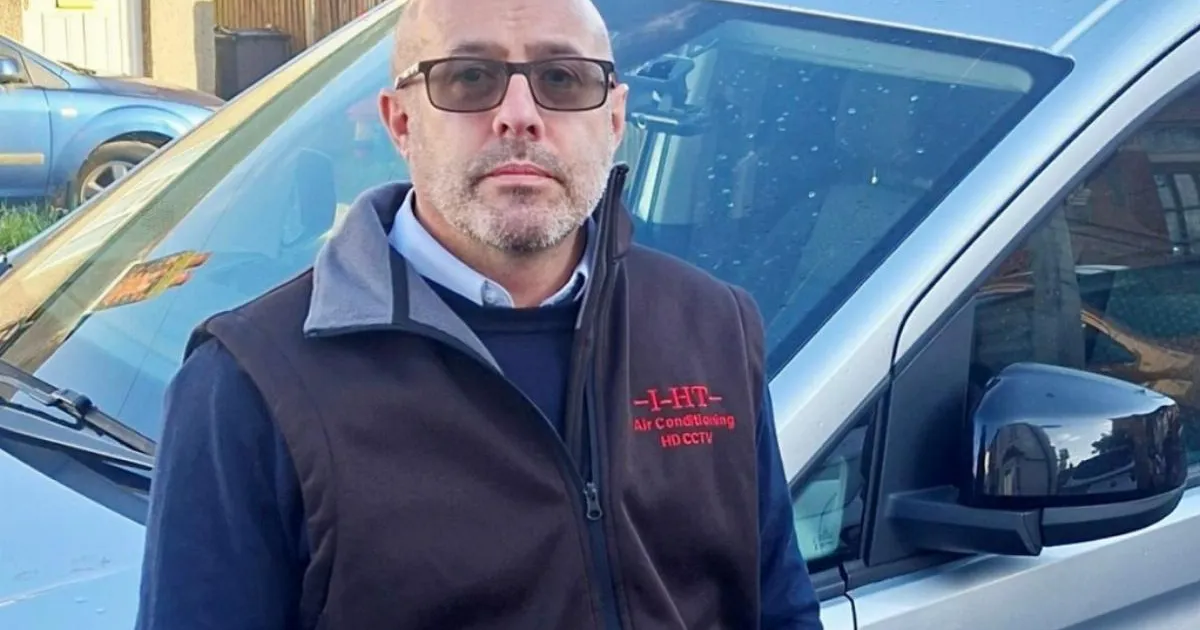
The story of Lee East, a 51-year-old van driver with 30 years of experience on the road, highlights the humiliating intersection between human biological needs and rigid public bureaucracy. While traveling along the A12 in Essex, Mr. East, who suffers from an enlarged prostate, found himself in a desperate situation requiring an urgent roadside stop. Dealing with a medical condition that makes bladder control unpredictable, he pulled into a lay-by, believing he had found a discreet moment to relieve himself. However, his experience quickly turned from a private struggle into a public ordeal when a contractor representing Waste Investigations Support and Enforcement (WISE) confronted him, turning a basic human necessity into a documented legal infraction.
The encounter, captured on camera, was described by Mr. East as deeply degrading. The enforcement officer, identified as Anna, did not merely issue a routine ticket; she proceeded to openly discuss Mr. East’s medical history and the frequency of his medication usage as part of the confrontation. During the recorded exchange, the officer remarked on the prevalence of prostate issues in men, essentially speculating—and perhaps inadvertently mocking—his condition while issuing a £200 fine. For Mr. East, a self-described law-abiding citizen, the experience of being scrutinized by a stranger regarding his intimate health issues was not just unpleasant; it felt like a deliberate act of ridicule that left him feeling “disgusting” and incredibly angry.
While the specific fine issued to Mr. East was eventually overturned upon appeal, the incident underscores a growing tension between local authority enforcement and the harsh realities faced by those who make their living on the road. The council, in its defense, maintains that it does not target individuals but rather focuses on “hotspots” to ensure public health and environmental standards. They argue that public urination creates unsanitary conditions and that their enforcement is a necessary step to maintain the cleanliness of communal spaces. They clarified that their officers do not work on commission, distancing themselves from the idea that these fines are merely a revenue-generating scheme designed to prey on vulnerable drivers.
However, the core issue remains the chronic lack of accessible, clean, and functioning roadside facilities for professional drivers. While the local authority acknowledged the challenges faced by the logistics sector, they insist that a “lack of facilities does not make illegal activity acceptable.” This places the burden of infrastructure failure squarely on the shoulders of the individual driver. For Mr. East, the aftermath has been one of anxiety; he has since installed a portable toilet in the back of his vehicle, sacrificing precious storage space to ensure he never falls victim to such a humiliating confrontation again. The logistical reality that someone with a medical condition can be fined for a natural urge in a place devoid of restrooms has left many arguing that the focus of these authorities should be on improving infrastructure rather than policing the unavoidable symptoms of the human condition.
The council’s stance highlights a “policy-first” approach that often ignores the human element of public service. They assert that they “balance the needs of all road users” with resident expectations, yet there is little balance in a scenario where a person with a known, common medical issue is interrogated about their medication by a stranger in a public lay-by. The incident has broader implications, suggesting that until National Highways and local authorities prioritize the development of adequate rest facilities along major arteries, drivers will continue to be caught between the mandate of their profession and the basic laws of biology. The, perhaps unintentional, cruelty of the interrogation serves as a reminder that empathy is often stripped away when private companies are contracted to enforce public morality.
Ultimately, Lee East’s story serves as a cautionary tale of how quickly a life can be disrupted by an unyielding administrative process. While the council continues to pledge that they will take a “proportionate and evidence-led approach,” the emotional scarring reported by Mr. East suggests that the current enforcement model—characterized by intrusive questioning and punitive fines—fails to account for human dignity. For now, Mr. East’s portable toilet stands as a symbol of both his personal initiative and the broader failure of a system that would rather punish a man for a medical necessity than solve the systemic shortage of rest areas that forced him into that vulnerable position in the first place.