

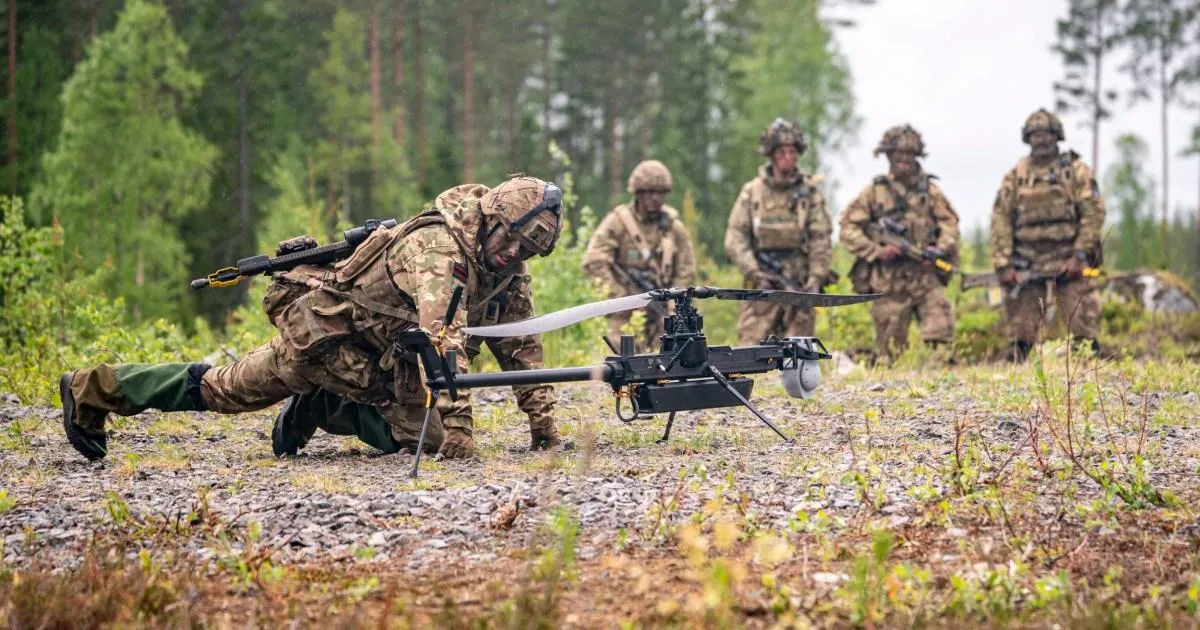
After months of political turbulence, including the high-profile departures of two former defence ministers, Prime Minister Sir Keir Starmer has finally unveiled a landmark investment blueprint for the British armed forces. Standing before staff at Molloy Aeronautics, the Prime Minister framed the strategy as a transformative moment for national security. While the final funding package falls slightly short of the ambitious totals initially requested by the Ministry of Defence—a friction point that triggered recent resignations—Starmer insists the £80 billion-a-year commitment by 2029 will fundamentally overhaul how the UK prepares for the future of global conflict.
The financial reality behind this pledge is complex, occurring under Chancellor Rachel Reeves’ strict fiscal mandate to curb national borrowing. To balance the books, the government has made the difficult decision to deprioritize other domestic ambitions, specifically signaling that various road and energy projects will be indefinitely paused to foot the bill. Starmer’s rhetoric emphasizes a shift toward fiscal discipline, framing these cuts as a necessary sacrifice to pivot the nation toward a more resilient form of defense. He continues to argue that these investments are not merely costs, but economic engines designed to drive UK innovation, job creation, and industrial growth.
At the core of this strategy is a recognition that the nature of warfare has shifted in the 2020s, with traditional heavy machinery like tanks and piloted aircraft losing ground to agile technology. The government’s shopping list reflects a clear focus on the future: a staggering £63 billion is earmarked for the nuclear deterrent and the SSN-AUKUS submarine program, while £5 billion is dedicated to a revolution in drone technology—heavily influenced by the tactical lessons learned on the frontlines in Ukraine. Beyond this, the plan allocates £11 billion to replenish depleted munition stockpiles, ensuring that Britain is not just capable of fighting via high-tech robotics, but also sustained in the event of a drawn-out conflict.
The modernization effort extends into the skies and cyberspace, with at least £8 billion committed to developing a next-generation stealth fighter jet in partnership with Japan and Italy. Furthermore, the government is prioritizing a £790 million investment in advanced air and missile defense systems, acknowledging modern threats that include sophisticated drone swarms. By funneling nearly £1 billion into AI-driven productivity and an additional £200 million specifically for AI deployment and defense, the military is making a calculated bet that software and autonomous intelligence will be just as decisive on the battlefield as steel and gunpowder.
Defending the plan, the new Defence Secretary, Dan Jarvis, emphasized that these choices represent a strategic recalibration rather than just a budget increase. He pointed to the £298 billion total projected spend over the next four years as proof of a hardened stance, noting that a significant portion of this is reserved for the day-to-day training and maintenance required to boost the immediate readiness of ships and aircraft. For Jarvis, the goal is to give British troops a distinct advantage through autonomous systems, ensuring they remain the best-equipped force in a volatile geopolitical landscape.
Predictably, the opposition has met this announcement with skepticism. Conservative shadow ministers have dismissed the plan as a transient document, arguing that with the current Prime Minister set to step down, these projected figures are subject to the whims of a successor, widely expected to be Andy Burnham. The Tories have criticized the government for failing to match the full initial demands of the Ministry of Defence, calling for deeper structural reforms in welfare rather than the current strategy. As Westminster prepares for this transition, the debate remains centered on whether these billions represent a lasting shift in British security, or if they are merely a hollow promise in an era of shifting political sands.