


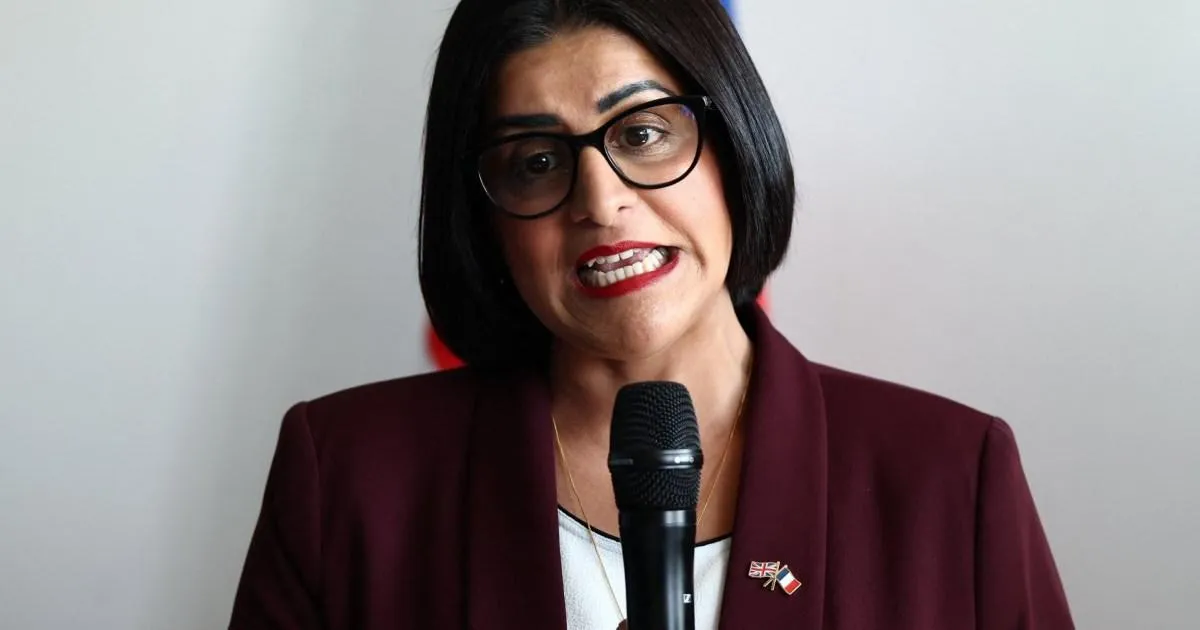
The British government, led by Home Secretary Shabana Mahmood, is set to introduce a controversial new policy that fundamentally changes the financial reality for those granted asylum in the UK. Under the proposed Asylum and Immigration Bill, individuals who have been granted refugee status will be expected to pay back a portion of the support they received from the state while their claims were being processed. This is being modeled after a student loan-style repayment framework, with reports suggesting a fixed, interest-free charge of £10,000. This debt would act as a mandatory hurdle; refugees would be required to clear this balance before they could apply for settled status, and the financial obligation would follow them even if they left the country and hoped to return in the future.
The government’s justification for this policy is rooted in the idea of shared responsibility and fiscal oversight. Home Secretary Shabana Mahmood has argued that while providing sanctuary is a moral imperative, the financial burden on the British taxpayer—currently costing billions—has become unsustainable. From the government’s perspective, the “generosity of the British people” should be acknowledged by those who eventually become net contributors to the economy. By implementing this repayment scheme, the Home Office aims to recoup some of the public funds spent on emergency housing and subsistence, framing the repayment not as a penalty, but as a reasonable expectation for those who have found safety and are ready to stand on their own two feet.
However, this proposal has sparked fierce backlash from humanitarian organizations, who view the policy as a punitive tax on some of the world’s most vulnerable people. Critics, including Imran Hussein of the Refugee Council, argue that the moment a person is granted asylum should be one of relief and stability, not the sudden arrival of an insurmountable £10,000 debt. For families fleeing the horrors of war, torture, and systemic persecution, the prospect of starting a new life in a foreign country is already a daunting climb. Adding a significant financial anchor at the starting line, they argue, effectively punishes refugees for seeking protection and creates a substantial barrier to their successful integration into British society.
Beyond the humanitarian concerns, there are serious doubts about the economic logic behind the scheme. Experts like Madeleine Sumption of Oxford University’s Migration Observatory have pointed out that the policy may actually be counterproductive. Because the refugee population typically enters the workforce in low-income brackets—with Home Office data showing that 60% of those in work eight years after their claim remain at or below the minimum wage—the government is unlikely to see a significant financial return. More concerningly, economists warn that an extra “tax” on these earnings could discourage people from entering the workforce or seeking better-paying roles, as the repayment requirement would function as a punishingly high marginal tax rate on their initial income.
The broader political context reveals a government caught in a balancing act. Shabana Mahmood is currently attempting to navigate a complex landscape: attempting to appease those who demand stricter immigration controls while also fulfilling a campaign promise to manage the asylum system more humanely and efficiently. Alongside this repayment scheme, she is expected to promote “safe and legal routes” for asylum seekers, an effort likely aimed at members of her own party who are wary of the hardline rhetoric surrounding migration. This mix of policies suggests a strategy meant to “depoliticize” the asylum process, even as individual measures like the debt requirement continue to stoke significant public and ethical debate.
Ultimately, this policy highlights the deepening tension between state budgetary concerns and the principles of humanitarian aid. While the government frames this as a matter of fairness and economic accountability, those working on the frontlines of the migration crisis fear it prioritizes optics over the reality of human recovery. As this bill moves toward parliamentary debate, the conversation will likely hinge on whether the UK views refugees as people to be invested in as future citizens, or as temporary recipients of aid whose “debt” must be balanced against the national budget. The outcome will set a tone for how Britain handles its international responsibilities in an increasingly complicated global climate.