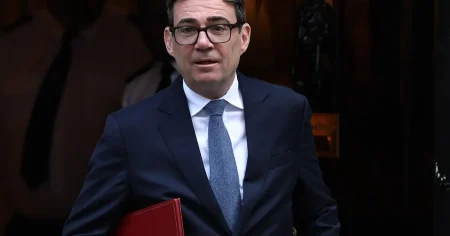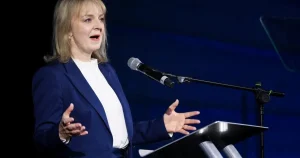



The atmosphere at the People’s History Museum in Manchester was electric as Andy Burnham took to the lectern, greeted by a crowd whose enthusiastic response underscored the significance of the moment. In a venue he affectionately calls one of his favorite places on earth, Burnham delivered a speech that felt markedly different from the cautious, stability-first rhetoric we have become accustomed to under Keir Starmer. While Starmer has publicly distanced himself from the concept of “radical change”—fearing it reeks of the instability seen during the Liz Truss era—Burnham leaned into it, positioning himself as a leader ready to tear up the Westminster rulebook to get the country back on track.
The ideological divide between the two men is striking. Within the last six months, Starmer expressed his exhaustion with politicians who promise seismic, radical shifts, arguing that the public craves calm and reliability over dangerous experiments. However, the rise of fringe political forces like Reform UK and the Green Party suggests that the British public is far less satisfied with the status quo than Starmer might believe. Burnham tapped into this sentiment effectively, arguing that Westminster and Whitehall are structurally engineered for conflict and that only a fundamental, ambitious rebalancing of power—via a massive devolution program—can fix the broken machinery of the state.
At the heart of Burnham’s vision is a concept he lightheartedly dubbed “No 10 North,” a northern nerve center designed to decentralize power away from London. Much like the iconic corner shop in Coronation Street, this office is intended to act as the beating heart of a “rewired Britain.” Burnham’s proposal is not just administrative; it is a promise to streamline government and place a laser-like focus on regional growth, regeneration, and the massive scaling up of council house construction. With his fellow Labour mayors watching from the front row, it was clear that this was not just a speech, but a manifesto for a new power dynamic between the regions and the capital.
Yet, for all the bold policy talk, the event was characterized as much by what was left unsaid as by what was boldly proclaimed. There was no Q&A session; once the speech concluded, Burnham exited the stage, reportedly bound for London to consult with MPs. This decision shielded him from the immediate scrutiny of the press and left the public guessing about his future Cabinet appointments. While he brushed off the “wild speculation” surrounding his potential team with a well-placed joke aimed at the BBC’s political editor, the absence of a briefing left many journalists—and voters—feeling that a vital opportunity for transparency had been missed.
Furthermore, the speech remained conspicuously quiet on the polarizing issue of immigration. While Burnham has expressed support for Home Secretary Shabana Mahmood’s platform, the lack of specific detail on such a defining issue left many listeners wanting. It is an ironic tension: in a speech calling for a “radical” new future, the lack of granular detail in his plans could be viewed as a vulnerability. Without a press grilling to flesh out these ideas, the audience was left with a powerful narrative of where the country had gone wrong, but only a broad, somewhat vague outline of how the mechanics of his vision would actually function in the real world.
Ultimately, Burnham’s appearance was a masterclass in reading the room and capturing a mood of restlessness. Whether or not his vision for a “rewired” UK represents a genuine shift or merely a change in tone remains to be seen. After two years of Starmer’s disciplined, steady-as-she-goes approach, Burnham’s performance certainly felt like a radical departure in style and ambition. Now, the challenge shifts from the stage to the streets; the audience and the nation are waiting to see if he can turn this vision from a compelling speech into the concrete reality of a government that finally delivers on its promises.