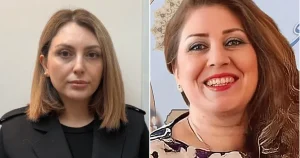

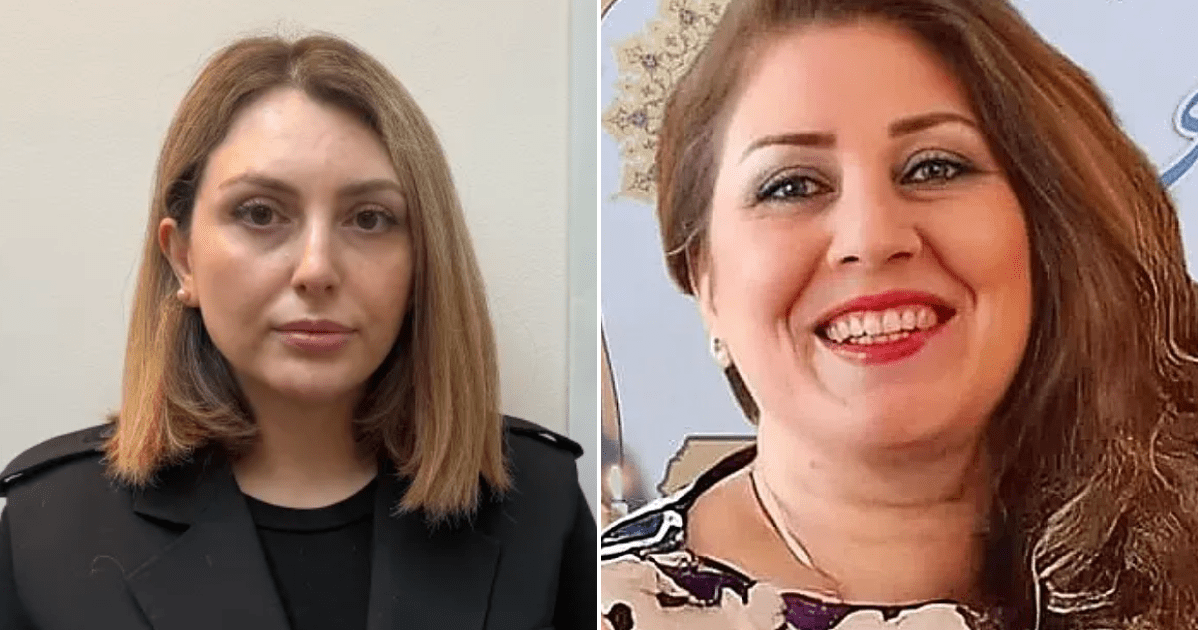
On September 20, 2022, Minoo Majidi walked out of her home in Kermanshah and into a storm she refused to ignore. Four days earlier, Mahsa Amini had died after being arrested by Iran’s morality police for not wearing her hijab properly, and that death had ignited a nationwide uprising known as Woman, Life, Freedom. Minoo joined the protest in her city not because she was looking for fame or martyrdom, but because she believed in something simpler and more powerful: that women and girls should be free to live without fear. That belief cost her everything. As she and other demonstrators fled a brutal crackdown, Iranian security forces repeatedly fired shotguns, and metal pellets struck her at close range. She died on a street in Kermanshah, a mother whose final act was an act of hope for a different country. Her daughter, Mahsa Piraei, now lives in Leeds, carrying grief that has hardened into a relentless demand for justice. At a press conference in central London, Mahsa said, “My mother wanted freedom and change. She wanted a better future for the younger generations.” But Minoo’s death was not a random tragedy, and Mahsa refuses to treat it as one. She says her mother was killed by a system: a system in which some people gave the orders, others carried them out, and those at the highest levels of power oversaw the violence. That is why Mahsa has turned to British leaders, including Andy Burnham, with a request that is both deeply personal and unavoidably political: bring the officials responsible for her mother’s death to justice before more families are torn apart by silence and impunity.
On the fourth anniversary of the Woman, Life, Freedom uprising, Amnesty International released a landmark report that gives a name and shape to what Mahsa’s family already knows too well. Iranian authorities, Amnesty concluded, committed crimes against humanity during their bloody suppression of the 2022 protests. The report names 87 Iranian officials who, Amnesty believes, should be investigated for war crimes. At least 49 children were killed, according to the report, and Amnesty documented 45 cases of sexual violence in custody, as well as torture and the use of deadly force against protesters. In total, the organization gathered evidence about the deaths of 377 protesters and bystanders, including 56 children. One of those children was Amirhossein Basati, a 15-year-old boy who was killed by an Islamic Revolutionary Guard Corps agent when he stopped to retrieve his slipper as he fled a mass shooting. The detail is almost unbearable: a teenage boy killed because he paused for a second to pick up something as ordinary as a shoe. Amnesty’s secretary general, Agnès Callamard, said the world has been “disconnected from reality” about the oppression inside Iran, and that the officials responsible have faced “no meaningful consequences.” The report is not just a catalogue of horror; it is an indictment. It argues that the crackdown was so systematic and widespread that it rises to the level of crimes against humanity, and it calls on the international community to stop looking away. For Mahsa, though, the report is also a mirror of her own life. She has spent years trying to make people understand what happened to her mother, and she is exhausted by a world that keeps offering words instead of action.
At the press conference in London, Mahsa sat with her mother’s picture on her jacket, a visible reminder that this fight is not abstract. She told Metro that the people of Iran are deeply disappointed and are losing their belief in international human rights. “We live with this pain day to day,” she said. “There has been no justice for my mother. They need to do something because otherwise the meaning of life is nothing.” She recalled how, since the Woman, Life, Freedom movement began, she and others had gone week after week to London and other cities across the United Kingdom, asking the British government to put Iran’s “terrorist regime” on the terrorist list. They were not listened to. She acknowledged that there has been some movement recently, but she believes it is not enough. “They need to isolate the regime as much as they can,” she said. “I want the UN to hear the voice of popular people of Iran and make the regime responsible for the many lives we lost.” These are not political slogans. They are the words of a daughter still waiting for justice. She lives with the pain of knowing that her mother’s killers have not been held accountable, and she watches as the world moves on to newer headlines and newer crises. The fourth anniversary of the uprising may be a date on a calendar, but for Mahsa, every day is an anniversary of loss. She is not asking for pity; she is asking for courage from the leaders who claim to defend human rights.
The pressure is not only on Tehran; it is also on London and the wider international community. Amnesty International is calling for an international criminal justice mechanism to be established urgently by the United Nations General Assembly to ensure that Iranian authorities responsible for crimes against humanity are held to account. The organization has appealed directly to the UK’s new Prime Minister to push for legal action when world leaders gather in New York next week, and Amnesty’s secretary general also called on Andy Burnham, who is set to travel to the UN General Assembly, to use his presence there to press the case. Callamard’s message to the Prime Minister was blunt: “At the Security Council, we would want them to stand up and say enough is enough. The paralysis of the Security Council is killing people in Iran.” She said she expects the UK to lobby and advocate with the United States, Russia, and China, and to play a leading role at the General Assembly in supporting a judicial mechanism. “The UK needs to stand up. It has the backbone, has the history, has the political know-how, and they must do more than what they have done so far for the people of Iran.” These words were not directed only at diplomats and lawyers; they were directed at anyone who still believes that statements of concern are enough when governments are committing crimes against humanity in broad daylight.
Amnesty’s demands go beyond the United Nations. The human rights group also wants individual countries to open their own investigations into Iranian officials under the principle of universal jurisdiction, which allows states to prosecute serious crimes regardless of where they were committed. Callamard said the UK has the legal resources “to do far more than they have done” to hold Iran to account, including conducting structural investigations into the chain of command, examining the systemic and widespread repression, and potentially going after individuals when they are on UK territory. She acknowledged that the UK has taken some steps: it led the call, alongside international partners, for a special session of the UN Human Rights Council to address the deteriorating human rights situation in Iran, and it supported the extension of the Independent Fact-Finding Mission on Iran to investigate the security forces’ crackdown on protesters. But she was careful not to let those gestures become an excuse for inaction. “They may have said the right thing at various times, but that is not enough,” she warned. Amnesty also wrote to Iran’s Supreme Leader and senior security officials to share their findings and to notify the 87 officials identified in the report, but they received no response. That silence is itself a message: the Iranian government believes it has nothing to answer for, because no one has made it answer yet.
Minoo Majidi was one woman among hundreds. But she was not a statistic, and her death was not inevitable. She was a mother who wanted freedom, a woman who believed that the younger generations deserved a future without fear. Her daughter Mahsa now carries that belief, along with her mother’s photograph, into rooms where power is supposed to sit. She has stood outside embassies, marched through British cities, spoken to reporters, and repeated the names of the dead, all in the hope that somewhere, someone with authority will decide that enough is enough. The Amnesty report gives her a tool, but tools are only useful if people are willing to use them. Callamard said the UK has the backbone, the history, and the political know-how to lead. The question is whether it has the will. For Mahsa, the stakes could not be higher. “We live with this pain day to day,” she said. “They need to do something because otherwise the meaning of life is nothing.” More than two years after her mother fell in Kermanshah, Mahsa is still standing, still asking, still waiting. The world can keep delaying, keep negotiating, keep issuing carefully worded statements. But every delay is a choice. Every silence is a verdict. Minoo Majidi went out to demand a better future, and she was killed for it. Honoring her means doing more than remembering; it means holding the people who killed her accountable, and making sure that the next mother who dares to protest does not have to become another name on another list.