

The sea between Java and Borneo has always been a busy corridor, filled with the comings and goings of people who depend on it for work, family, and survival. It is a living, breathing highway of boats and ships, from small wooden fishing vessels to large steel ferries, all moving across a watery landscape that can change from calm to violent in a matter of hours. In Indonesia, the ocean is not just geography; it is the very fabric of daily life, a source of food, trade, and connection. But in the early hours of this tragic day, that corridor turned into a scene of chaos and grief. A passenger ferry, Virgo Transport 8, was making its way from Surabaya to Banjarmasin when it ran into bad weather and rough seas. The ship carried 243 passengers and crew, a number that represents fathers, mothers, children, friends, and neighbors. When contact was lost, the world stopped for those waiting on shore. Search and rescue teams later confirmed one person had died and around 140 were missing. The lucky ones, 103 people, had been pulled from the water. But for every rescued person, there were families still waiting for news. The disaster is not just a maritime failure; it is a human tragedy that will leave scars on communities across Indonesia. The numbers are still uncertain, and the sea is still being searched, but the pain is already real. It is in the voices of officials struggling to keep their composure, in the faces of relatives staring at a whiteboard, and in the silence of phones that no longer ring. It is in the empty chairs at dinner tables, in the unopened messages on messaging apps, and in the prayers whispered in mosques and churches. For those who made it out of the water, survival brings its own complex feelings: relief mixed with guilt, joy overshadowed by sorrow. For those still waiting, the uncertainty is a kind of torture. They cannot move forward, cannot grieve, cannot hope completely. They are suspended between the life they had and the life that may be coming. This is the human cost of a tragedy that will not be measured in headlines alone, and it is only beginning to unfold.
The journey of Virgo Transport 8 began in Surabaya, Indonesia’s second-largest city, a bustling port known for its trade, industry, and history. It is a city of millions, a place where the sea is never far away, and where ships depart at all hours for destinations across the archipelago. The destination was Banjarmasin, a city on the southern coast of Borneo, separated from Java by the Java Sea. The route is well traveled; ferries move thousands of passengers across these waters daily, connecting islands and lives. On any given day, the sea can be calm and welcoming, reflecting the sky like a mirror and making the journey feel almost magical. But on this voyage, the conditions were dangerous. Winds picked up, waves grew taller, and the sky darkened as the ferry pushed forward through the night. At 2 a.m. local time, the vessel sent its last known position, less than 150 kilometers from Banjarmasin. Then all communication stopped. The Indonesian search and rescue agency released a statement that chilled the nation: “At the time of this statement, the ship cannot be contacted and its whereabouts are unknown.” Imagine the horror of that moment for the families. They had kissed their loved ones goodbye, watched the ferry disappear over the horizon, and expected to hear from them in a few hours. Instead, they were told the ship was gone, adrift somewhere in the dark sea. The uncertainty was unbearable. Had the ferry capsized? Had it broken apart? Were people still alive, clinging to debris? Without answers, hope and despair fought for space in every heart. The sea, which had always been a source of livelihood and connection, suddenly felt like an enemy. Even the most seasoned sailors on shore knew that a night in those waters could be deadly. The search area was vast, the weather was still rough, and every passing hour made the task harder. Yet the families held on to the only thing they had left: the hope that the sea would be merciful. They also held on to each other, forming a quiet circle of solidarity in the midst of chaos.
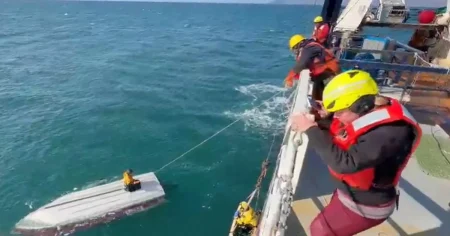
As news of the disaster spread, rescue operations swung into action with a sense of urgency that matched the gravity of the situation. The Indonesian search and rescue agency deployed ships, boats, and a helicopter to sweep the waters. Local fishermen and nearby vessels also responded, drawn by the urgent calls for help and the knowledge that every minute mattered. I Putu Sudayana, the local head of the agency, spoke to reporters with a mixture of exhaustion and determination. “We have carried out efforts to search for victims to the fullest extent,” he said. “There were passengers who had already been successfully evacuated by the units at the scene. We can inform you that the total number of evacuated passengers is 103 people.” Each rescue was a small victory, a life snatched back from the sea. Survivors were taken to a port in East Java, where they received medical attention, warm blankets, and a place to rest. But the rescue teams could not rest. Later, authorities received information suggesting that the ferry had overturned, a revelation that made the search even more urgent. Overturned ships are especially dangerous; they can trap people inside, and those who escape into the water face hypothermia, exhaustion, and currents. The helicopters flew low over the waves, searching for any sign of life. The crews scanned the water for debris, life jackets, and bobbing heads. They knew that the sea does not give up its victims easily. Every hour, the window for finding more survivors grew smaller, but the rescuers pushed on, driven by the knowledge that somewhere out there, someone might still be alive. The coordination between official teams and volunteer fishermen was remarkable, a reminder that in times of crisis, people come together. But the scale of the disaster was enormous, and the resources were limited. The sea was vast, the weather was unpredictable, and the fate of 140 people remained unknown. The rescuers knew they were racing against time, and they also knew that not every story would have a happy ending.
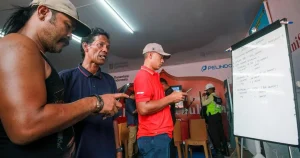
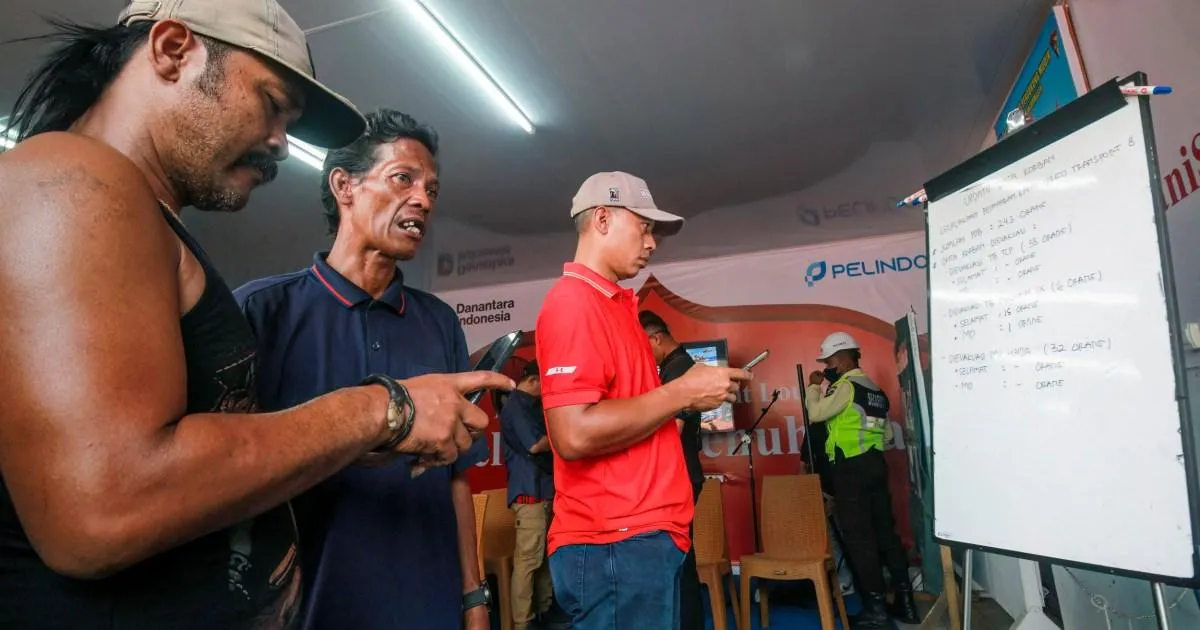
While the rescuers battled the sea, another battle was taking place on land. At the port and at emergency coordination centers, families gathered in a state of anxious limbo. A photograph from the scene showed relatives crowded around a whiteboard, reading the latest updates written in marker. Names were added, crossed out, and annotated with the words “safe” or “hospital.” Each update brought a wave of emotion. Some families wept with relief when they found their loved one’s name on the rescued list. Others stared in disbelief, unable to find the name they so desperately wanted to see. The atmosphere was thick with tension, broken only by sobs, prayers, and the murmurs of officials trying to comfort the distraught. Time moved in strange ways; minutes felt like hours, and hours felt like days. People clutched photographs, phones, and each other. They remembered saying goodbye at the dock, watching the ferry pull away, and promising to call when they arrived. Now those promises hung in the air, unfulfilled. The whiteboard was a cruel ledger of fate, separating the saved from the still unknown. But even in the midst of despair, there was a stubborn refusal to abandon hope. Mothers prayed, fathers paced, children asked questions that no one could answer. The human spirit, fragile and resilient at once, was on full display. Strangers offered water and comforting words. Volunteers held the hands of those who could not stand. Every time an official walked into the room, all eyes turned to him or her, searching for clues in the expression before a single word was spoken. The waiting was not passive; it was an active, agonizing struggle. And it was a reminder that the true impact of a disaster is felt long after the cameras leave, in the hearts of those who have to live with the outcome. In the midst of this, small acts of kindness shone through: a shared meal, a shoulder to cry on, a silent embrace. These gestures did not erase the pain, but they made it bearable. They reminded everyone that even in the darkest hours, humanity does not fade.
This tragedy is a painful reminder of the fragility of ferry travel in Indonesia, a nation made up of more than 17,000 islands. For millions of people, ferries are not a choice but a necessity. They are the bridges that connect the archipelago, carrying students, workers, traders, and families across the sea. Yet these vital links are often dangerously unsafe. The industry is marked by aging vessels, lax oversight, and a culture of cutting corners. Safety regulations exist on paper, but enforcement is inconsistent, and accidents happen with troubling frequency. The Virgo Transport 8 disaster is not an isolated case. Just last month, a ferry caught fire near Madura, an island off the coast of Surabaya, and five people died. Each incident leaves behind a trail of grief and a familiar set of questions. Why were safety standards not followed? Why were passengers put at risk? Why does it take a catastrophe to bring attention to a problem that has been ignored for years? The answers are complex, but the underlying truth is simple: people deserve safe passage. They deserve to board a ferry with the same confidence they have in their own homes. They deserve to know that the life jackets are where they should be, that the captain is sober, that the ship is not overloaded, and that the weather will be taken seriously. These are not unreasonable demands. They are basic rights. But in many parts of Indonesia, they remain unmet. The sea is a harsh teacher, and it has taught this lesson many times. The question is whether the government and the shipping companies will finally learn it. The families of the victims are not asking for miracles; they are asking for accountability. They are asking for a future where no one has to fear the journey home. Until that becomes a priority, the sea will continue to claim too many lives. The world is watching, and the memory of this disaster should not be allowed to fade without action.
As the search for the missing continues, the world watches with bated breath. Every passing ship, every helicopter, every rescue worker is a symbol of hope. But the outcome of this disaster will not be measured only in the number of survivors or victims. It will be measured in the way Indonesia responds. Will the authorities conduct a thorough investigation? Will they hold accountable those responsible for the conditions that led to this tragedy? Will they finally invest in safer ships, better training, and stricter enforcement? These are the questions that must not be forgotten once the headlines fade. For the families of the 243 people on board Virgo Transport 8, life will never be the same. Some will welcome their loved ones back with tears of joy. Others will have to say goodbye to someone they never imagined losing. The sea, which connects so many lives, has also become a place of sorrow. But out of this sorrow, there is a call to action. Indonesia has the opportunity to honor the victims by building a future where no one fears the journey home. The world has seen too many disasters like this, and each one is a warning that is too often ignored. The memories of the lost should not be allowed to fade into statistics. They should be a catalyst for change. Until then, the search continues, the prayers continue, and the hope remains that the sea will give back what it has taken. The waves keep moving, the winds keep blowing, and the families keep waiting. They wait for a phone call, for a knock on the door, for a name to appear on a list. In their hearts, they know that even if the worst has happened, their loved ones will never truly be gone. They live on in the stories, in the memories, and in the love that no disaster can erase. But the living also need justice. They need to know that their loss was not in vain. And they need to believe that one day, the waters around Indonesia will be safer for everyone. That is the only way to turn this tragedy into a legacy of change. That is how the lost will be honored.