

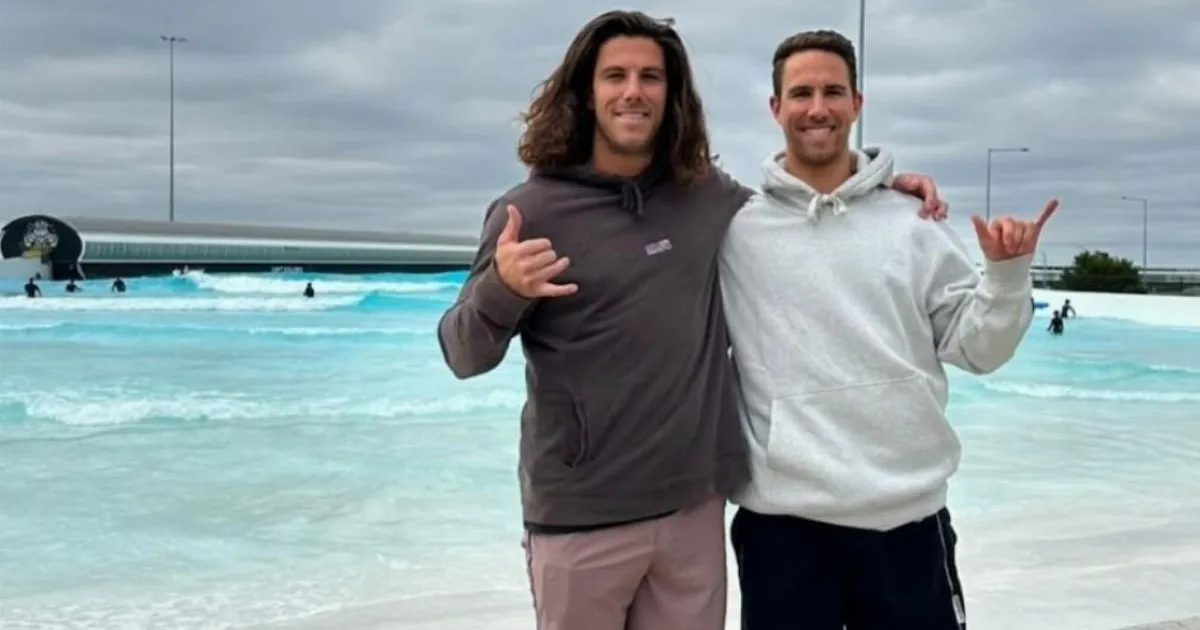
On a stretch of Mexico’s Pacific coast, where the desert meets the sea and surfers come for long waves and quiet nights, a trip that should have been about sun and saltwater ended in an unspeakable tragedy. Jake Robinson, 30, and his older brother Callum Robinson, 33, had traveled from Australia with their close friend Jack Carter Rhoad, a 30-year-old American, for what was supposed to be an adventure along Baja California’s rugged shoreline. Instead, in April 2024, the three young men were shot dead, their bodies discovered at the bottom of a four-metre-deep well, each with a bullet wound to the head. The news sent shockwaves through the surfing community on both sides of the Pacific, transforming a beloved holiday spot into the backdrop of a nightmare. Three men — Jesús Gerardo, Irineo Francisco and Ángel Jesús — were later arrested and charged with aggravated homicide. Prosecutors alleged the killings were not born of deep hatred, but of something far more mundane and cruel: a desire to steal the victims’ phones and car tyres. As the trial unfolded, a new and even more disturbing layer emerged, with testimony that the accused not only carried out the murders, but allegedly mocked their victims as they pleaded for their lives.
The woman at the centre of that testimony is Ari Gisell, 23, the former girlfriend of Jesús Gerardo. She is already serving a 20-year prison sentence after pleading guilty to instigating the robbery that allegedly set the deadly chain of events in motion. In court, Gisell described how her then-boyfriend sent her to approach the Robinson brothers in Punta San José, a small fishing village and surf spot on the Baja coast. Her task was simple and sinister: ask the surfers for fuel, but more importantly, take note of what they had. She told the court she did exactly that, telling Gerardo that the men had “good tyres and good phones.” But in her testimony, she was careful to insist that she was not encouraging him to rob the men — she was simply describing what she saw. Whether she understood at the time where her words would lead, no one can know. But what came next, according to her account, was a chillingly methodical plan. Gerardo went to his mother’s house, then returned to the beach with his stepson, who had apparently brought a change of clothes to disguise himself. The stage was set, and the three friends, asleep in their tents, likely had no idea that they were being watched.
Gisell’s testimony grew grimmer as she recounted what Gerardo allegedly told her when he returned. She said he described shooting one of the men “with a gun when they opened the tent door.” The image is haunting: a peaceful campsite, the sound of the ocean, and then the sudden violence of a stranger forcing his way into their night. Gerardo allegedly told Gisell that the victims had cried and pleaded for their lives before they were killed. He allegedly joked about the moment, laughing at the fear of three young men who were simply in the wrong place at the wrong time. He also allegedly mocked his own stepson for being too scared to take part in the murders. When the pair returned to Gerardo’s mother’s home, they were in the victims’ vehicle, according to Gisell. The inside of the car was splattered with blood. Gerardo had three phones in his pocket and two chain necklaces in his hands — small, personal items that once belonged to men who had their whole lives ahead of them. The casual cruelty of the alleged jokes, the taking of keepsakes, the violence carried out in the dark: together it paints a picture of utter disregard for human life.
The investigation into the disappearances and deaths revealed just how isolated and brutal the crime was. The bodies of Jake, Callum and Jack were found in a well about 159 miles south of Ensenada, a popular tourist hub on the Baja peninsula. The location was remote, difficult to reach, and clearly chosen to hide the evidence of what happened. Investigators also found a burnt-out white pickup truck, tents, and a phone believed to be linked to the surfers, scattered about four miles from where the bodies were discovered. The trail of evidence connected the victims to their accused killers, but it also told a story of a frenzied attempt to cover up the crime. The discovery of the bodies, and the subsequent arrests, ended weeks of agonizing uncertainty for the families, but it opened a new chapter of horror as details emerged. The accused men now face aggravated homicide charges, and the trial has drawn international attention, not only because of the senselessness of the deaths, but because of the chilling testimony that has come out of the courtroom. For the families of the victims, nothing will bring their sons back, but they have made it clear that they want the men responsible to finally understand the weight of what they took.
In an emotional statement released through ABC, Debra and Martin Robinson, the parents of Jake and Callum, spoke about the trial with a mix of grief and determination. They described the proceedings as “incredibly important and overwhelmingly difficult.” Their words, read out to the public, carried a raw, parental pain that no statistic or news headline could capture. “We want the men accused of murdering our sons to see, in person, the human consequences of what happened,” they said. “Callum and Jake were not simply victims in a case file – they were our sons, deeply loved by their family and friends, with lives, dreams and futures that were brutally taken away.” The statement was a reminder that behind every crime are real people, families who will spend the rest of their lives missing someone. Jake and Callum were brothers, surfers, sons, and friends. Jack Carter Rhoad was an American with his own circle of loved ones, a young man who joined his friends on what should have been an unforgettable trip. Instead, their lives were ended over the contents of their pockets. The parents’ decision to attend the trial in person, to look at the accused, is an act of immense bravery — a refusal to let their children be reduced to evidence in a case file.
As the trial continues, the world watches a case that has become a symbol of both senseless violence and the resilience of those left behind. The accused men’s fate is now in the hands of the court, and the testimony of Ari Gisell may prove central to the outcome. But beyond the legal details, the story of Jake, Callum and Jack is one of grief that crosses borders. Australian parents attending a trial in Mexico, an American family mourning alongside them, a surfing community united in sorrow — all of it points to how small and connected the world really is. The alleged jokes about the victims’ desperate pleas for mercy are hard to hear, but they also sharpen the urgency of the search for justice. No amount of prison time can undo the damage, but holding the accused accountable can send a message that such cruelty will not be tolerated. The three friends came to Mexico looking for waves, adventure, and freedom. They found instead a darkness that robbed them of everything. And yet, in the midst of this tragedy, there is also a quiet dignity in the way their families have refused to look away. They have chosen to sit through the painful testimony, to face the men accused of killing their children, and to remind everyone that Callum, Jake and Jack were more than victims. They were loved. And they mattered.