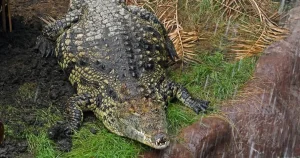


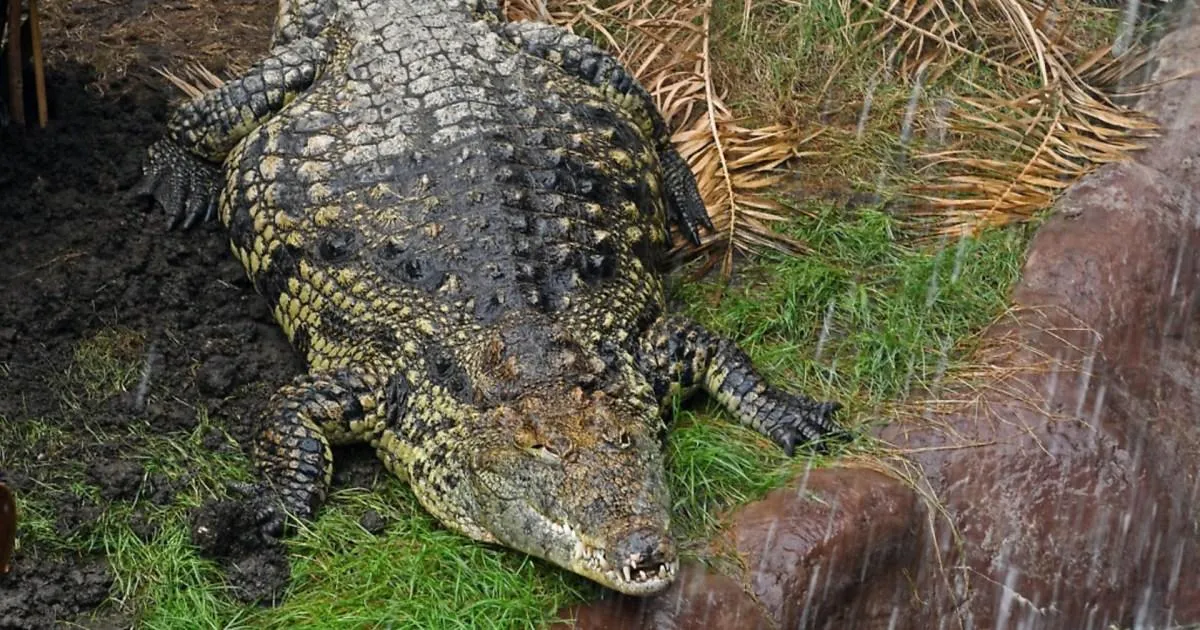
The recent reopening of Johnsons of Old Hurst zoo near Huntingdon serves as a sobering reminder of a harrowing incident that shattered a peaceful day out. Just weeks ago, what should have been a memorable visit for a family turned into a nightmare when a three-year-old boy was allegedly thrown into a 15-foot-deep crocodile enclosure. The zoo, which had understandably closed its doors to the public following the trauma, officially announced it would be fully operational again as of late June. As visitors return to the site, the shadow of that terrifying afternoon lingers, prompting many to reflect on how such a tranquil family attraction could become the stage for such a shocking event.
The details of the rescue remain the most profound part of the story, highlighting incredible courage in the face of absolute horror. When the toddler fell into the pit, the natural instinct for most would be paralyzing fear, but the zoo owners and their family took immediate, decisive action. Tracey, the wife of the zoo director, famously leapt into the enclosure without hesitation to save the child, assisted by her husband, Andy, and their son, Edward. Their bravery likely prevented a far more tragic outcome, and it is a testament to their dedication that they were willing to risk their own lives to retrieve the boy from deep within the habitat of such dangerous reptiles.
The perpetrator of this alleged attack has raised difficult questions regarding public safety and the nature of care for vulnerable individuals. Police arrested a man on suspicion of attempted murder; however, he was later released on bail after authorities deemed him unfit for interview due to his complex health needs. Witnesses present at the zoo that day noted that the individual appeared to be accompanied by two carers. Their accounts—suggesting that these caregivers were allegedly distracted by their mobile phones and lagging several meters behind—have sparked a fierce public debate about the responsibilities of those tasked with supervising vulnerable people in public spaces.
The legal and administrative fallout of the incident continues even as the zoo begins to welcome guests once more. The suspect is expected back in police custody this September, and the authorities are still meticulously piecing together the timeline of events. Meanwhile, the incident has highlighted systemic failures far beyond the zoo’s gates. Reports have surfaced that nearly 40 staff members at Addenbrooke’s Hospital accessed the young victim’s medical records without authorization. The hospital is now conducting an internal investigation and has reported the breach to the Information Commissioner’s Office, seeking to understand how the private data of a child—already a victim of a horrific assault—was treated with such a startling lack of professional discretion.
For the community in Huntingdon and the staff at Johnsons of Old Hurst, the return to “business as usual” is layered with complexity. While the crocodile exhibit itself has been reopened, the aura surrounding the zoo has fundamentally shifted. For the local community, the event feels like a communal wound that has not yet had sufficient time to heal. Reopening the site is a logistical necessity for the business, but one can only imagine the weight that decision carries for the owners, who were themselves the ones physically pulling that young boy to safety. It serves as a stark reminder that even in the most controlled environments, the unpredictability of human behavior can lead to moments of profound devastation.
Ultimately, this story is about the delicate balance between public openness and the duty of care. As society moves forward, we are left to grapple with the disturbing nature of the attack itself and the subsequent failures of professional oversight at the hospital. While the boy is receiving medical care and the legal process is slowly churning toward a resolution, the public is left waiting for answers. We are left to contemplate the fragility of our daily lives and the vital importance of vigilance—not just from institutions, but from ourselves—in protecting the most vulnerable among us from the unthinkable.