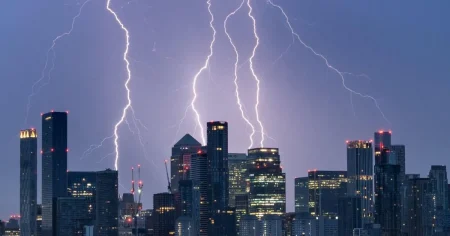



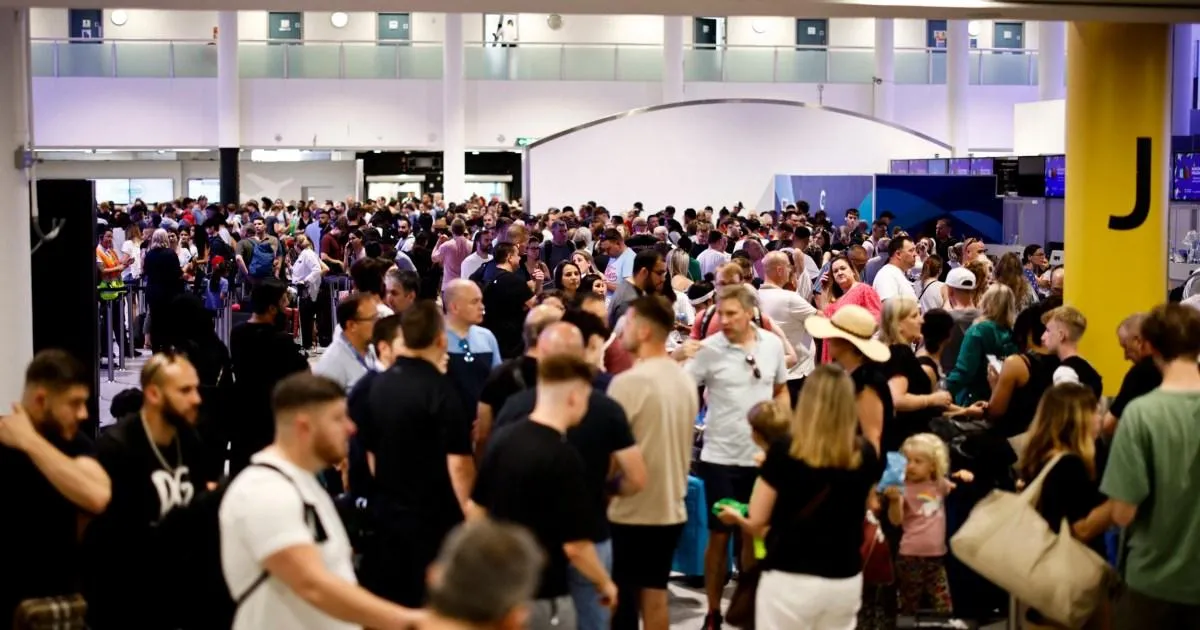
The recent transition from a stifling UK heatwave to volatile, storm-ridden skies has thrown Britain’s primary travel hubs into a state of chaotic uncertainty. As the sweltering heat that gripped the nation gave way to intense meteorological instability, major airports like Heathrow and Gatwick found themselves at the mercy of the elements. For hundreds of thousands of passengers, this meant a sudden shift from planning summer getaways to enduring agonizing wait times, as nearly 800 flights were caught in the crossfire of Mother Nature’s turbulent mood swings.
The sheer scale of the disruption is staggering, with flight tracking data indicating that the knock-on effects were felt across both inbound and outbound terminals. At Heathrow alone, hundreds of flights were delayed, while Gatwick experienced a similar wave of complications. For some, the inconvenience was measured in hours, but for others, the reality was much grimmer; one British Airways flight from Santiago, originally scheduled for a morning arrival, was pushed back nearly twelve hours, leaving passengers stranded in a limbo that stretched well into the evening. These numbers represent more than just statistics on a screen—they reflect exhausted families, missed appointments, and the immense frustration of travel plans unraveling in real-time.
Behind these delays lies a technical challenge that is far more complex than simple rain or wind. According to Eurocontrol, air traffic controllers have been forced to orchestrate a massive navigation effort to steer aircraft away from a vast, unstable air mass stretching from northern Spain all the way up to southern Sweden. This “broad area of hot, unstable air” has made the skies over the UK and Europe inherently dangerous for standard flight paths. When professional air traffic control services describe a situation as having a “large degree of uncertainty,” it is a sobering reminder that, despite our advanced technology, we remain largely at the mercy of the atmosphere when it chooses to be unpredictable.
The severity of the storms was felt on the ground just as acutely as it was in the air. Beyond the runway, the weather left a trail of destruction, including a property in Streatham, London, where a lightning strike ignited a fire that destroyed the roof. In Crawley, similar stories of damage emerged, underscoring the intensity of the electrical storms that disrupted the summer calm. While authorities have extended amber weather warnings for heat in certain regions, the real adversary for travelers has become the combination of lingering high temperatures and the volatile, convective storms that feed off that lingering warmth.
Airlines like EasyJet have been forced into the unenviable position of pre-emptively canceling departures, adding to the sense of urgency for those currently at the airport. While carriers are offering refunds and accommodation, the logistical nightmare of rebooking hundreds of passengers amidst a widespread, system-wide disruption is a massive undertaking. Gatwick and Heathrow have both issued standard advice, urging travelers to keep a vigilant watch on the status of their flights before even attempting the commute to the terminal, as the conditions are expected to rattle schedules for the foreseeable future.
As the storms continue to develop through the night, the message for the traveling public is one of patience and cautious planning. We often take for granted the precision of modern aviation, but periods like this serve as a humbling prompt that nature occasionally insists on having the final word. Whether you are currently waiting in a departure lounge or navigating the complexities of a canceled flight, the situation is a testament to the unpredictable nature of our climate. For now, the best strategy remains staying informed, keeping in touch with airline operators, and bracing for a period where the fluidity of the weather dictates the rhythm of the runway.